Chiron in Leo — where it hurts, and why that becomes the gift you give others.
You know that moment when someone says "just be yourself" and your stomach drops because you're not entirely sure who that is anymore? When the spotlight finds you and instead of basking in its warmth, you feel exposed, fraudulent, like everyone can see through the performance you didn't even know you were giving? This is the territory of Chiron in Leo—where the wound and the gift live in the same bright, terrible space where authenticity is supposed to flourish.
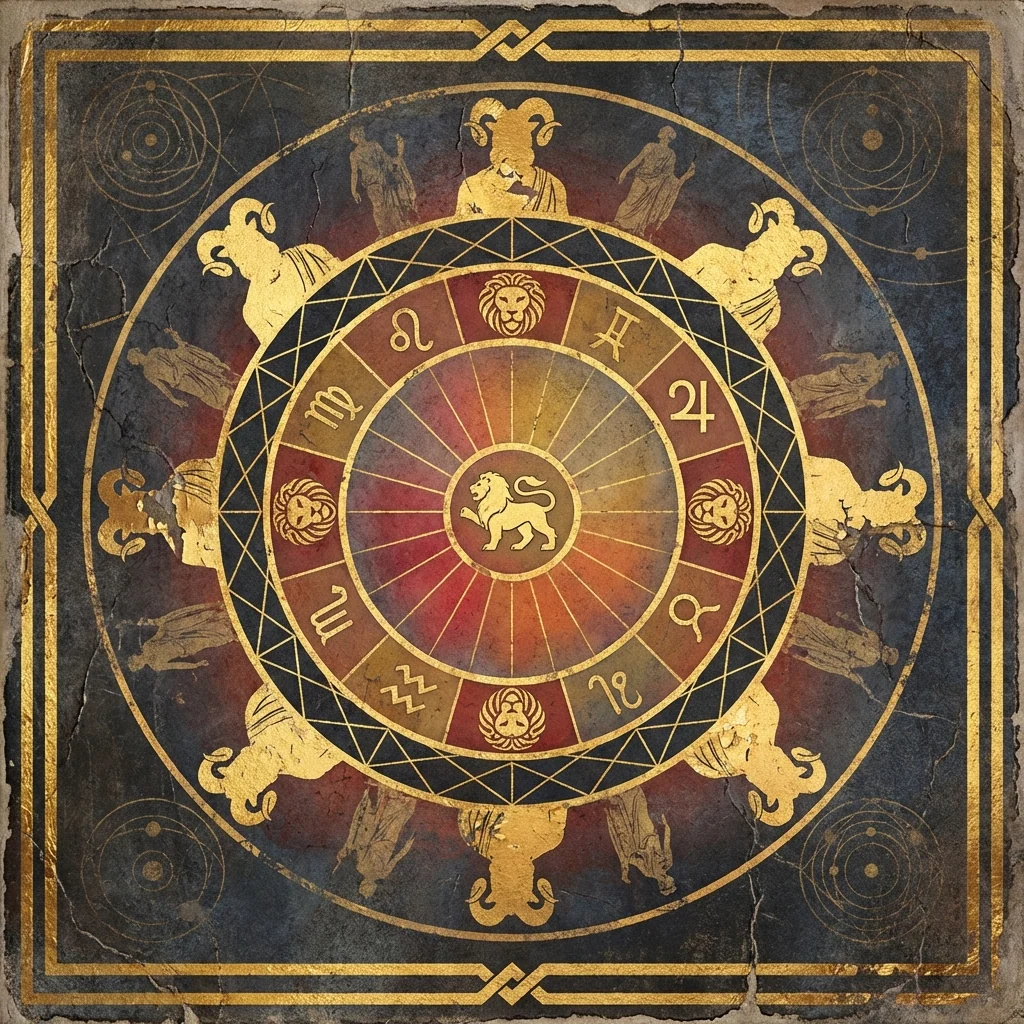
The Stage Where Nothing Feels Real
Chiron in Leo carries the wound of authenticity itself. Not the wound of being ignored or overlooked—that would be too simple. Instead, it's the deeper cut of never quite trusting that who you are is enough. You learn early to perform yourself rather than be yourself, often because being yourself wasn't safe, wasn't celebrated, or wasn't even particularly welcome in the rooms where you needed to belong.
The mythology speaks to this directly. Chiron, the wounded healer centaur who could heal others but never himself, placed in Leo becomes the one who can help others shine but struggles to trust their own light. Leo, ruled by the Sun, governs the realm of creative self-expression, the ego structure that allows spirit to manifest in the world. When Chiron occupies this territory, it creates a fundamental questioning of the relationship between who you are inside and who you show the world.
This isn't simple stage fright. It's something more existential—a wound that makes you wonder if there's a "real self" underneath all the learned responses, all the ways you've shaped yourself to be acceptable, impressive, or safe. The irony cuts deep: Leo energy thrives on authentic expression, yet Chiron here makes authenticity feel like the most dangerous risk of all.
The Making of the Wound
The origins often trace back to early experiences where your natural radiance—every child has it—was either criticized, ignored, or co-opted. Perhaps you were the child whose creativity was constantly corrected, whose enthusiasm was deemed "too much," or whose genuine expressions were met with such lukewarm response that you learned to manufacture something more palatable instead.
Sometimes the wound forms not from rejection but from the opposite—from being made into a performer too early, celebrated only when you delivered what others wanted to see. The child who becomes the family entertainer, the one whose worth gets tied to their ability to shine on command, learns to distrust the difference between genuine radiance and manufactured charm.
In other cases, you might have grown up in the shadow of someone else's overwhelming presence—a parent, sibling, or figure whose light was so bright it made you doubt your own luminosity was real or valuable. You learn to be the supporting actor in other people's stories, becoming exceptionally good at helping others shine while remaining uncertain about your own gifts.
The wound deepens through repetition. Each time you choose the safe performance over the risky authenticity, each time you dim your light to avoid threatening others or being disappointed yourself, the pattern strengthens. Eventually, you can become so skilled at reading what others want and delivering it that you lose track of what wants to emerge from your own depths.
The Particular Pain of Leo's Wound
What makes Chiron in Leo especially challenging is that Leo is the sign of the heart, the center, the place where life force expresses itself most directly. When wounded here, the very core of creative self-expression becomes suspect. You might find yourself constantly second-guessing your impulses, wondering if your enthusiasm is genuine or performed, if your confidence is real or compensation.
The wound often manifests as a split between your private self and your public persona. Privately, you might feel uncertain, self-critical, constantly aware of the gap between who you think you should be and who you fear you actually are. Publicly, you may have learned to project confidence so convincingly that others see you as naturally charismatic, never suspecting the effort it requires.
This creates a particular kind of loneliness—the isolation of being celebrated for a performance while your authentic self remains unseen and untested. You become skilled at giving others what they want while remaining uncertain about what you want, what you value, what would emerge if you stopped managing the impression you make.
Consider Maya, an accomplished theater director whose Chiron in Leo manifested as an ability to draw extraordinary performances from others while being unable to trust her own creative instincts. She could see exactly what each actor needed to access their authentic expression, could create the safety for others to be vulnerable and real on stage, yet her own creative choices felt forced, calculated, never quite genuine enough. Her wound taught her to become an exceptional midwife for other people's authenticity, but she couldn't extend the same generous permission to herself.
The healing came gradually, through recognizing that her "performance anxiety" wasn't about competence—she was clearly skilled—but about the deeper fear that her genuine creative impulses weren't valuable enough to trust. The breakthrough occurred when she started treating herself with the same generous curiosity she offered her actors, approaching her own creative process as something to explore rather than something to get right.
Working With the Wound That Teaches
The path through Chiron in Leo isn't about becoming fearlessly confident—that would miss the point entirely. Instead, it's about developing a different relationship with authenticity, one that includes uncertainty, imperfection, and the ongoing process of discovery rather than demanding a fixed, polished identity to present to the world.
The teaching begins with recognizing the sophistication of the defense system you've built. Your ability to read rooms, to sense what others want, to craft presentations of yourself that work—these aren't weaknesses to overcome but skills that point to your deep sensitivity to the interplay between individual expression and collective response. The wound has made you an expert in the dynamics of authentic versus performed presence.
The next step involves experimenting with what you might call "authentic imperfection"—allowing others to see the parts of you that aren't polished, that don't know what they're doing, that are genuinely uncertain rather than strategically vulnerable. This requires a fundamental shift from trying to be impressive to being willing to be real, which often feels far more dangerous.
Practice becomes crucial. Start small—moments where you let your genuine response show before you've calculated its effect. Notice what happens when you express enthusiasm without first checking if it's appropriate, when you admit uncertainty instead of projecting confidence, when you follow a creative impulse without guaranteeing the outcome will be good.
The healing often accelerates when you begin helping others with their own authenticity struggles, but from a different position than before. Instead of being the one who helps others shine while remaining hidden yourself, you learn to be visible in your own process of becoming real. Your wound becomes a gift not because you've transcended it, but because you've learned to work with it consciously.
The goal isn't to eliminate the sensitivity to others' responses—that sensitivity is part of your gift. Instead, you learn to use it as information rather than instruction, developing the capacity to stay connected to your own creative impulses while remaining aware of the impact you're having. You discover that authenticity isn't a fixed state to achieve but an ongoing practice of alignment between inner impulse and outer expression.
Eventually, the wound transforms into a particular kind of wisdom about the courage required for genuine self-expression. You become someone who can help others navigate the territory between hiding and performing, teaching through your own willingness to be real rather than right, genuine rather than impressive.
The 36 Codex maps these deeper psychological patterns with precision, showing how your wound becomes your greatest teacher when worked with consciously rather than defended against unconsciously.