Chiron in Sagittarius — where it hurts, and why that becomes the gift you give others.
You know the feeling of your own certainty crumbling. The moment when the philosophy you've carried like armor suddenly feels thin as paper, when the meaning you've built your life around reveals itself as hollow. You've tasted the particular humiliation of discovering that your grand vision was just another story, your spiritual certainty just another form of blindness. This is where Chiron in Sagittarius begins—not with wisdom, but with the wound of believing you had it.
The centaur Chiron, half-beast and half-divine, carries within his very form the tension between the earthbound and the transcendent. When placed in Sagittarius, the sign of the archer's quest for ultimate meaning, this tension becomes a teaching wound that cuts to the heart of how we seek truth, meaning, and spiritual understanding. Those born with Chiron in Sagittarius carry within them both an insatiable hunger for wisdom and the recurring experience of having that hunger lead them astray.
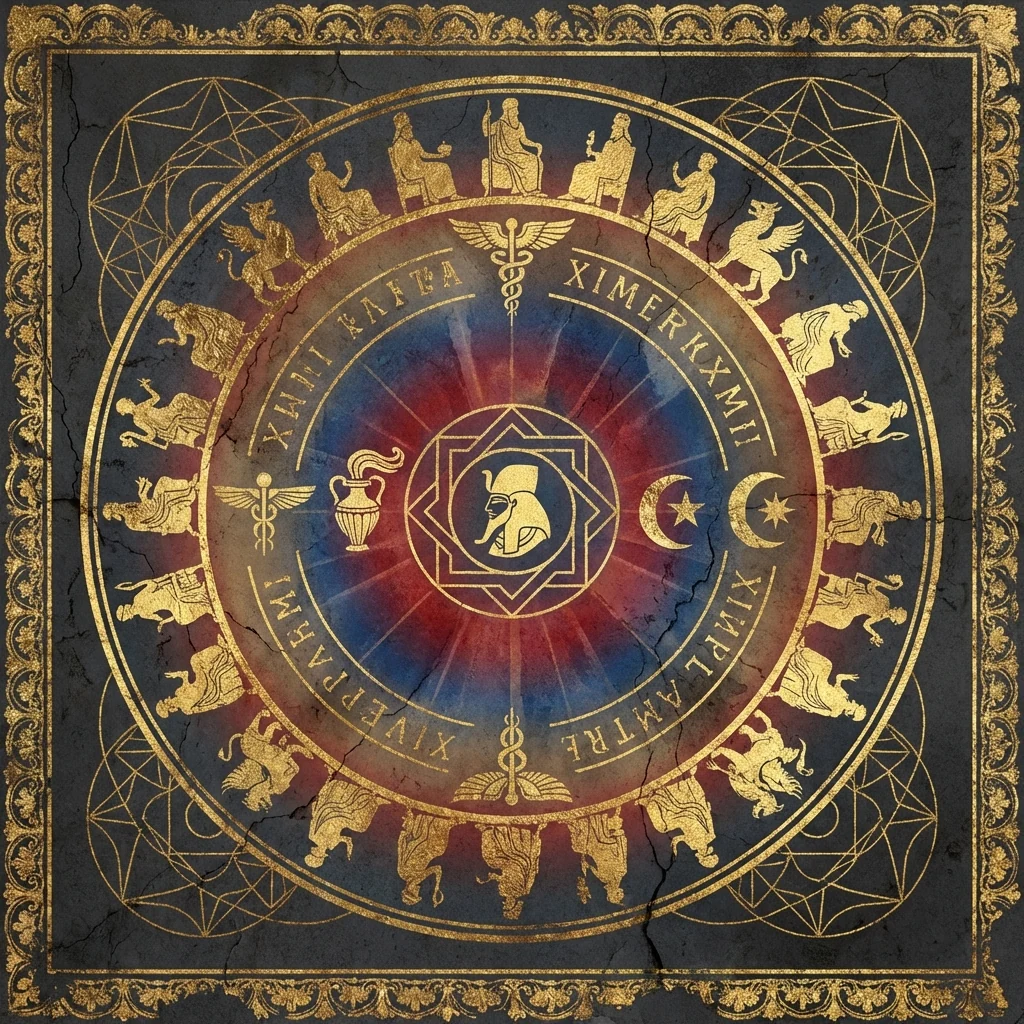
The Arrow That Misses Its Mark
Sagittarius operates through three distinct phases, each offering its own variation of Chiron's teaching wound. In the first decan, The Poisoned Arrow, we encounter the wound of misdirected purpose. Here the archer's arrow flies with tremendous speed and force—the Eight of Wands depicts this swiftness, this singular focus of will. But when Chiron inhabits this space, the arrow carries poison rather than healing, force rather than wisdom.
Those with Chiron in early Sagittarius often wound others with their certainty. They become crusaders for causes that later embarrass them, teachers who realize they were teaching from ignorance, spiritual seekers who discover their path was actually a form of spiritual bypassing. The wound here is not just being wrong—it's the realization that your very capacity for conviction, your ability to inspire others with your vision, has been a source of harm.
The teaching emerges slowly, often through repeated cycles of enthusiasm followed by disillusionment. You learn to hold your truths more lightly, to offer your insights as possibilities rather than pronouncements. The poisoned arrow becomes a healing one when you recognize that wisdom is not a destination but a quality of attention—not what you know, but how you hold what you think you know.
The Bridle of Necessary Opposition
The second decan, The Bridle, brings us to Chiron's encounter with the Nine of Wands—the card of the wounded defender, the one who has learned strength through adversity. Here the centaur's dual nature comes into sharp focus. The wound of Chiron in middle Sagittarius manifests as the inability to integrate belief and experience, higher vision and earthly reality.
These individuals often find themselves torn between their spiritual aspirations and their human limitations. They may become religious or philosophical rebels, constantly fighting against the institutions and belief systems they once embraced. Or they swing the other way, becoming rigid fundamentalists who use doctrine as armor against their own doubts. The bridle represents both the attempt to control the beast-nature and the chafing against that very control.
The teaching wound here is the discovery that the spiritual path is not about transcending the human condition but about embracing it fully. The centaur cannot become purely divine by rejecting the horse-body, nor can it find peace by giving in entirely to animal nature. Integration requires holding the tension, allowing the bridle to guide without strangling, letting the divine and earthly natures work together rather than against each other.
Consider someone with this placement who spent years pursuing spiritual practices designed to eliminate ego, desire, and emotional turbulence—only to discover that their pursuit of transcendence had made them emotionally unavailable to their family, intellectually rigid, and subtly prideful about their spiritual accomplishments. The wound is the recognition that their highest aspirations had become a sophisticated form of escapism. The teaching comes through learning to bring their spiritual insights down to earth, to let their philosophy serve love rather than replace it.
The Horse's Skull and Sacred Exhaustion
The final decan of Sagittarius presents us with A Horse's Skull, corresponding to the Ten of Wands—the card of burden, completion, and sacred exhaustion. Here Chiron's wound takes on the quality of spiritual burnout, the recognition that the quest for meaning can become its own form of oppression.
Those with Chiron in late Sagittarius often carry the wound of having sacrificed too much on the altar of their beliefs. They are the ones who gave everything to a spiritual teacher who proved false, who spent decades in a religious tradition that ultimately felt empty, who pursued meaning so relentlessly that they lost touch with simple presence. The horse's skull represents the death of the vehicle—the recognition that the very means by which we've sought wisdom may need to die for wisdom to actually arrive.
This placement often manifests as a deep weariness with all forms of seeking, teaching, and meaning-making. These individuals may go through periods of profound spiritual drought, where every philosophy feels hollow and every teacher seems fraudulent. The wound here is not just disillusionment but exhaustion—the bone-deep tiredness that comes from carrying too much purpose for too long.
Yet this death of the seeking-mind becomes its own form of teaching. When the horse dies, the rider must continue on foot. When the familiar vehicles of meaning break down, consciousness is forced to encounter what remains when all the stories fall away. The teaching of this placement often emerges as a hard-won appreciation for ordinary presence, for meaning that doesn't need to be pursued because it's already here in the simple fact of being alive.
Working with the Teaching Wound
Chiron in Sagittarius teaches through the repeated cycle of seeking, finding, losing, and seeking again—until gradually the seeking itself transforms. The key is learning to differentiate between wisdom and knowledge, between meaning and explanation, between faith and belief.
Those with this placement often become wounded healers in the realm of meaning-making itself. They develop a unique capacity to help others navigate spiritual crisis, philosophical doubt, and the collapse of belief systems. Their own journey through the wilderness of seeking makes them reliable guides for others lost in the same terrain.
The practical work involves learning to hold beliefs as working hypotheses rather than absolute truths, developing what the Zen tradition calls "don't-know mind"—a capacity to remain open and curious even in the face of uncertainty. It means learning to teach from questions rather than answers, to offer guidance without claiming authority, to seek truth without grasping after certainty.
The wound becomes medicine when you stop trying to heal it and instead let it teach you. Your uncertainty becomes a source of authentic humility. Your doubt becomes a form of spiritual discrimination. Your philosophical restlessness becomes a way of staying awake to mystery. The arrow finds its mark not by aiming more carefully, but by recognizing that the target was never separate from the archer in the first place.
For those drawn to understand how Chiron's placement in their own chart shapes their path of healing and teaching, The Book of the Pattern offers detailed guidance through the intricate landscape of personal wounding and wisdom, showing how each celestial signature contributes to the unique medicine you're here to offer the world.