Counting the sky — how to find the weather system you live in.
You walk into a room and immediately sense whether the energy feels familiar or foreign. Perhaps you thrive in spaces thick with emotion and unspoken understanding, or maybe you come alive where ideas crackle through the air like electricity. Some people gravitate toward environments that pulse with action and urgency, while others find their rhythm in places that honor substance, craft, and the patient accumulation of real things. This instinctive recognition of your natural habitat points to something deeper than preference—it reveals your dominant element, the atmospheric signature that runs through your entire birth chart like a prevailing wind.
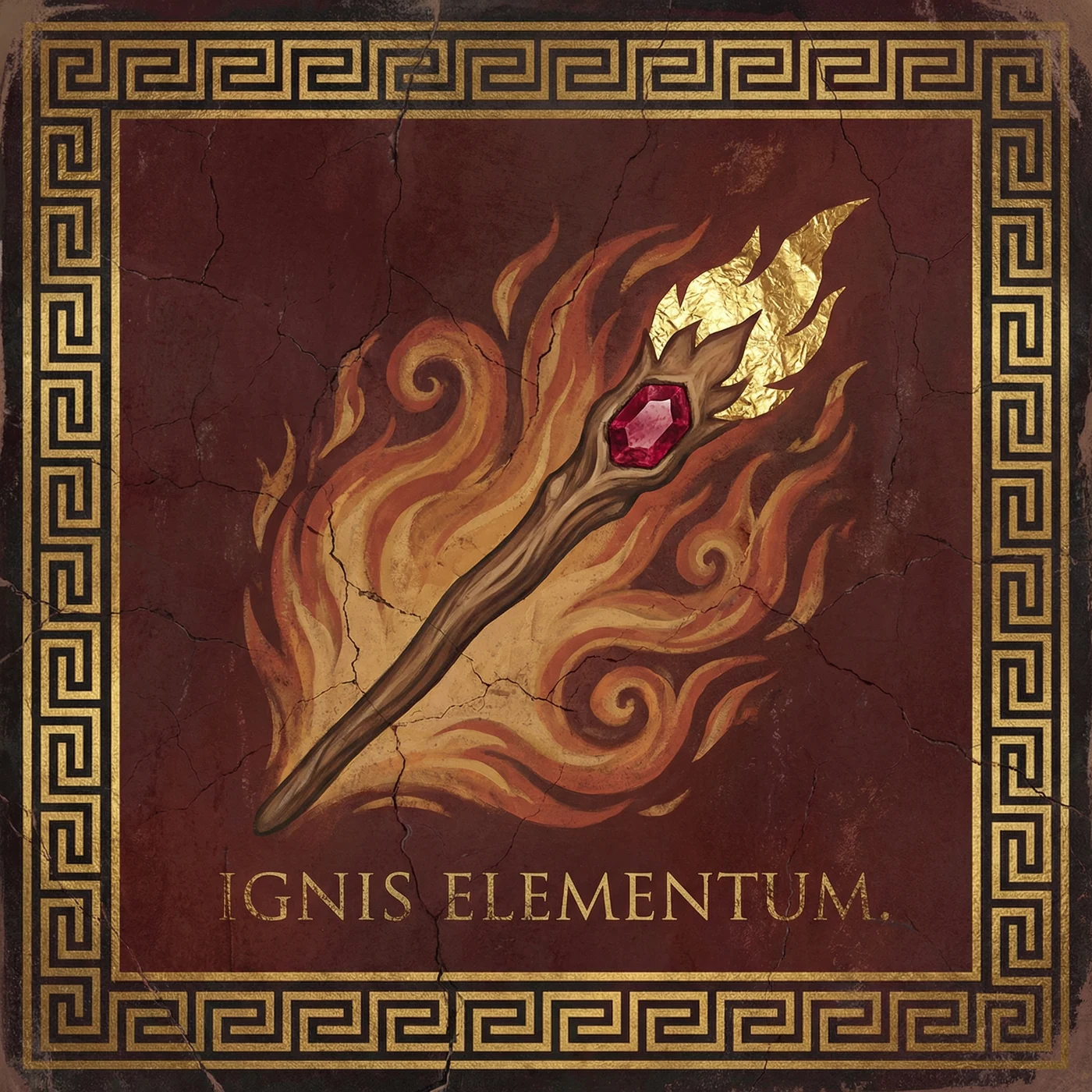
The Elemental Foundation of Character
Your dominant element emerges from counting the placements in your birth chart—not just the Sun, Moon, and rising sign that casual astrology emphasizes, but all ten traditional planets distributed across the twelve signs. When fire, earth, air, or water claims the majority of your planetary positions, that element becomes the fundamental climate in which your entire psychological ecosystem operates.
This dominance creates what ancient astrologers understood as the temperamental foundation of character. Just as a geographical region develops distinct patterns of weather, flora, and fauna based on its climate, your psyche develops characteristic patterns of response, motivation, and expression based on your elemental majority. The dominant element doesn't override the complexity of your individual placements—rather, it provides the underlying atmospheric conditions in which all your other traits must learn to function.
Consider someone with seven planets in fire signs. Their Mars in Aries operates differently than it would in someone with heavy earth placements, because it's supported by an entire ecosystem that naturally understands urgency, initiation, and the value of bold action. Conversely, their Venus in Taurus—though technically in an earth sign—must adapt to an overall climate that prizes spontaneity over security, creating an interesting tension between the planet's earthy expression and the chart's fiery atmosphere.
The Four Elemental Climates
Fire dominance creates what we might call a climate of becoming. These charts pulse with the need for movement, growth, and the constant assertion of will into the world. Life feels most real when something is happening, when energy is being generated and directed toward visible outcomes. The fire-dominant person experiences stagnation as a kind of spiritual suffocation—they require regular opportunities to initiate, compete, create, or otherwise burn their vital force in service of something meaningful.
In the fire climate, emotions run hot and clear. Anger burns bright and then subsides, enthusiasm blazes with infectious intensity, and love expresses itself through grand gestures rather than subtle demonstrations. These individuals often struggle with patience not because they're inherently impatient, but because their elemental nature requires forward momentum to maintain psychological health. They're natural pioneers, drawn to situations where their capacity for courage and quick action can make a real difference.
Earth dominance establishes a climate of substance. Here, life gains meaning through tangible accomplishment, sensory pleasure, and the gradual accumulation of real value. These charts operate on geological time—slow to change but capable of tremendous endurance and productivity once properly established. The earth-dominant person finds security not in promises or possibilities but in what can be touched, measured, and relied upon over time.
This elemental climate prizes craft over inspiration, preferring to perfect existing systems rather than invent entirely new ones. Emotions here tend toward steadiness—they build slowly, run deep, and resist sudden shifts. Love expresses itself through practical care, loyalty, and the patient construction of shared resources. The earth-dominant individual may appear resistant to change, but this resistance serves a vital function: it ensures that only genuinely valuable innovations survive the filtering process of their careful consideration.
Air dominance creates a climate of connection and circulation. These charts thrive on the exchange of information, ideas, and perspectives. Life feels most vital when the mind is engaged in learning, communicating, or synthesizing different viewpoints into coherent understanding. The air-dominant person requires intellectual stimulation the way others require food—without it, they begin to feel psychologically malnourished.
In the air climate, emotions tend toward complexity and changeability. Feelings are processed through analysis and discussion rather than simply experienced in the body. Love expresses itself through conversation, shared interests, and the pleasure of mental compatibility. These individuals excel at seeing patterns, making connections between seemingly unrelated phenomena, and adapting their approach based on new information. They struggle most when forced into rigid systems that don't allow for questioning, modification, or multiple perspectives.
Water dominance establishes a climate of depth and flow. Here, life's meaning emerges through emotional authenticity, intuitive understanding, and the capacity to merge with something larger than the individual self. These charts operate like sensitive instruments, constantly receiving and processing subtle information from their environment. The water-dominant person requires regular access to solitude, reflection, and activities that honor their inner life.
This elemental climate experiences emotions as the primary source of information about reality. Feelings aren't just reactions—they're a sophisticated guidance system that reveals hidden truths about people and situations. Love expresses itself through empathy, devotion, and the willingness to sacrifice individual desires for the wellbeing of cherished others. These individuals may appear overly sensitive to those operating from different elemental climates, but their sensitivity serves as both their greatest vulnerability and their most valuable gift.
The Decan Layer: Elemental Variations
The thirty-six decans add nuance to elemental expression by revealing how each element manifests across different seasonal contexts. Fire shows three distinct faces through its decans: Aries I, THE AXE, brings raw martial force; Leo II, A CROWN OF LAURELS, offers the mature confidence of Jupiter; while Sagittarius III, A HORSE'S SKULL, carries the sobering wisdom that comes from fire's encounter with Saturn's limitations.
Earth similarly reveals its range through decans like Taurus II, A LINGA-YONI, where Venus and Saturn collaborate to create sustainable pleasure, contrasted with Capricorn III, THE THRONE, where earth achieves its ultimate expression of consolidated power through the Sun and Mercury's union. Each earth decan represents a different strategy for building lasting value in the material world.
Air decans demonstrate the element's intellectual versatility: Gemini I, THE APPLE OF EDEN, brings Jupiter's expansive curiosity to Mercury's domain, while Libra III, A GYROSCOPE, achieves the rare balance of Jupiter, Mercury, and Saturn working in harmony—the mind's capacity for both breadth and precision. Aquarius II, HEAVEN AND EARTH, shows air's revolutionary potential when Mercury, Venus, and Mars align to bridge theoretical understanding with practical innovation.
Water decans reveal the element's emotional spectrum: Cancer I, A MOTHER AND CHILD, expresses water's nurturing potential through Venus and the Moon's collaboration, while Scorpio III, A CROW, shows water's capacity for transformation through the intense alchemy of Venus and Mars. Most notably, Pisces II, THE NET, governed by Jupiter and Mars and corresponding to the Nine of Cups in tarot, represents water's ability to manifest happiness through the marriage of expansion and decisive action.
Working With Your Elemental Climate
Understanding your dominant element provides a framework for making choices that support rather than exhaust your natural constitution. Fire-dominant individuals thrive when they have regular opportunities for leadership, creative projects, or physical challenges that allow them to burn their abundant energy constructively. They benefit from partnerships with earth-dominant people who can help translate their visions into sustainable realities, but they must guard against relationships that demand constant suppression of their natural enthusiasm.
Earth-dominant people flourish when they can work at their own pace toward goals they consider genuinely worthwhile. They need time to properly evaluate opportunities before committing, and they require environments that reward thoroughness over speed. Their relationships work best with air-dominant partners who can help them stay flexible and open to new possibilities, though they must resist the tendency to become so security-focused that they miss important opportunities for growth.
Air-dominant individuals require variety, intellectual challenge, and regular social stimulation to maintain psychological health. They benefit from careers that involve communication, education, or synthesis of complex information. Their relationships thrive with fire-dominant partners who can provide the energy and direction that air sometimes lacks, but they must guard against scattering their attention across too many interests without achieving depth in any.
Water-dominant people need regular solitude, creative expression, and work that feels emotionally meaningful rather than merely profitable. They require relationships with partners who respect their sensitivity rather than trying to toughen them up, and they flourish in environments that honor intuition alongside rational analysis. Their challenge lies in learning to set appropriate boundaries that protect their emotional wellbeing without isolating them from the human connection they ultimately crave.
Your elemental climate doesn't determine your destiny, but it does reveal the atmospheric conditions in which all your other traits must learn to operate. Understanding this climate allows you to make choices that work with your nature rather than against it, creating the conditions in which your unique combination of planetary placements can fully express their potential.
The Book of the Self offers a complete analysis of how your dominant element interacts with every other factor in your birth chart, revealing the specific ways your elemental climate shapes your approach to relationships, career, creativity, and spiritual development. This personalized exploration shows not just what your element means in general, but how it manifests through your particular combination of planetary placements, aspects, and house positions.