Creation, romance, children — everything you make for joy.
You know the moment when you first stepped onto a stage, picked up a paintbrush, or held your newborn child. That electric recognition that something essential in you had found its proper expression—not the careful, measured self you present to the world, but the creative force that burns brightest when it has nowhere to hide. This is the territory of the Fifth House, the astrological realm where your authentic nature emerges through the act of creation itself.
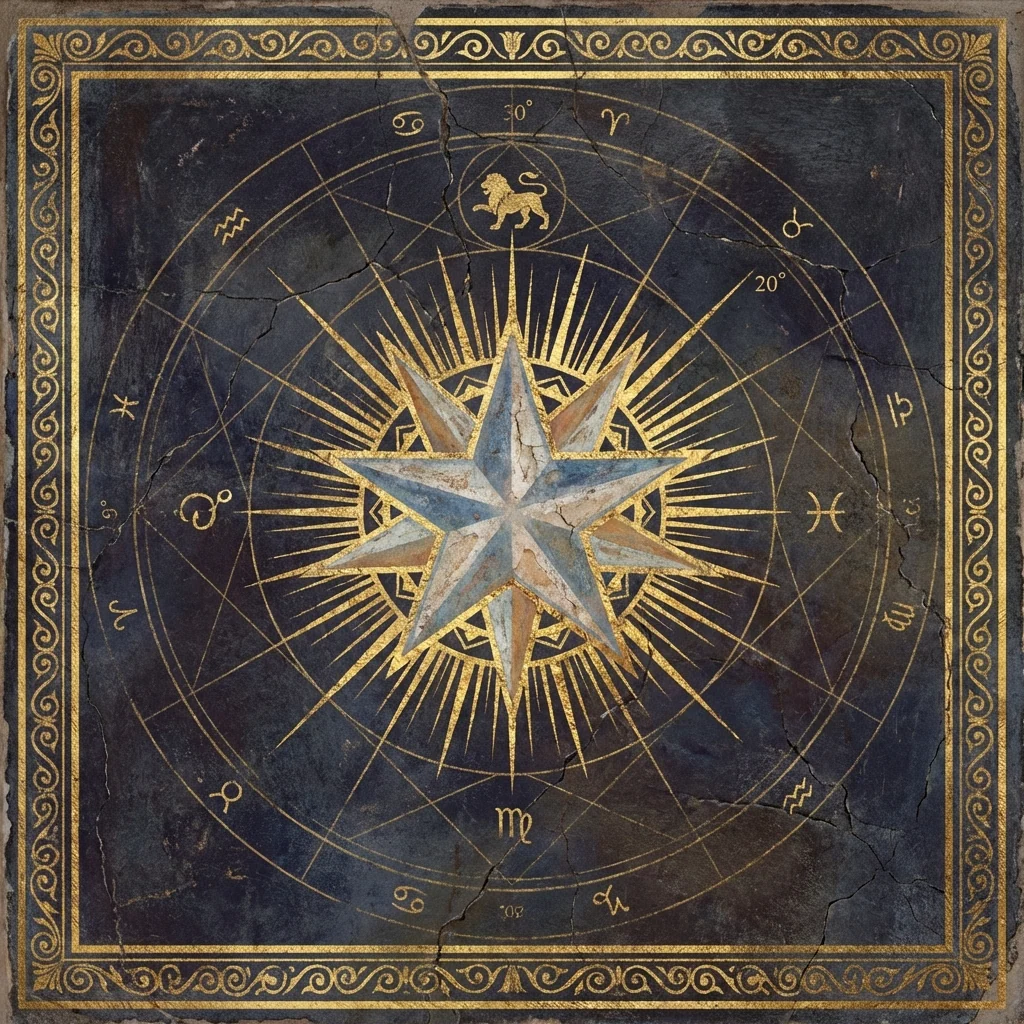
The House of Creative Fire
The Fifth House governs everything you make that didn't exist before you touched it: children, art, performances, love affairs, games, and speculative ventures. But calling it simply the "house of creativity" misses its deeper truth. This is the domain where your essential self emerges through the risky act of bringing something new into being—whether that something is a painting, a pregnancy, a theatrical role, or the vulnerable gamble of romantic love.
Ancient astrologers understood this house as the realm of "good fortune" and pleasure, but not the passive kind that falls into your lap. This is earned pleasure—the satisfaction that comes only from having risked genuine expression. When you write a poem that surprises even you, when you improvise a guitar solo that seems to channel something beyond your conscious skill, when you find yourself laughing with complete abandon at your own terrible joke—these moments reveal the Fifth House in operation.
The house's connection to Leo and the Sun illuminates its essential nature. Just as the Sun radiates energy outward without calculation or restraint, Fifth House activities demand that you pour yourself forth without guarantee of return. A painter doesn't create to receive specific praise; an actor doesn't perform to control the audience's exact response. The creative act itself—the sheer expression of inner fire—is both the means and the end.
The Ancient Chambers of Self-Expression
The Fifth House tradition stretches back to Hellenistic astrology, where it was called the "Place of Good Fortune" and associated with children, pleasure, and what we might now call self-actualization. Medieval astrologers refined this understanding, linking the house specifically to activities that brought joy through personal expression rather than mere consumption.
The connection to children reveals something profound about all Fifth House activities: they involve bringing forth something that carries your essence but lives independently in the world. Your biological children, your creative works, your performances—all bear your mark while developing according to their own nature. This is why the Fifth House governs both literal procreation and the broader creative impulse. Every authentic creative act is a kind of birth.
Traditional astrology also assigned gambling and speculation to this house, which puzzles some modern practitioners until they recognize the common thread: the willingness to risk something valuable (money, reputation, emotional safety) for the possibility of joy. Whether you're betting on cards, auditioning for a role, or falling in love, you're wagering your current security against the chance of genuine aliveness.
The house's association with games and sports follows the same pattern. Play is practice for creative expression—the safe rehearsal of risk-taking that builds the courage necessary for larger acts of self-revelation. Watch children absorbed in elaborate make-believe scenarios, and you see the Fifth House developing its capacity for bringing inner worlds into manifest form.
Beyond Hobbies: The Laboratory of Becoming
What distinguishes Fifth House creativity from mere recreational activity is the element of authentic self-revelation. Plenty of people paint landscapes or play music without engaging Fifth House energy. The difference lies in whether the activity serves as a vehicle for expressing something genuinely personal—some aspect of your nature that cannot emerge any other way.
Consider the difference between singing karaoke to popular songs versus writing and performing your own material. Both involve music and performance, but only the latter demands that you reveal something uniquely yours to the world. The Fifth House is activated when your creative work becomes a mirror in which you discover aspects of yourself you didn't know existed.
This is why Fifth House activities often feel simultaneously exhilarating and terrifying. When you're truly creating rather than merely crafting, you never know what will emerge. The painter begins with an intention but discovers the painting teaching them something unexpected. The writer sits down with a plan but finds the characters developing beyond their conscious design. This element of creative surprise—the sense that something is working through you rather than entirely from you—marks authentic Fifth House expression.
The house's connection to romantic love makes perfect sense in this context. Falling in love is perhaps the most common Fifth House experience: you risk emotional safety to create something new (the relationship) that will express aspects of yourself impossible to access alone. The beloved becomes both inspiration and audience for parts of your nature that only emerge in love's creative laboratory.
The Actor's Paradox
Sarah had spent fifteen years as a corporate lawyer, successful by every external measure but increasingly aware of a creative hunger that partnership track and salary increases couldn't satisfy. At thirty-eight, she enrolled in acting classes—"just for fun," she told colleagues who raised eyebrows at this seemingly frivolous pursuit.
But something unexpected happened during her first scene study. Playing a grieving widow, Sarah accessed depths of emotion she'd never allowed herself in "real" life. The controlled, articulate attorney discovered a raw, intuitive performer who communicated through gesture, tone, and presence rather than argument and analysis. Colleagues began commenting that she seemed different—more vibrant, more present in meetings, less armored in casual conversation.
Sarah's Fifth House was being activated not simply because she was "doing something creative," but because acting provided a laboratory for exploring aspects of her nature that her professional identity had kept safely contained. Through the paradox of pretending to be someone else, she discovered who she actually was beneath the layers of learned behavior and social expectation.
Within two years, Sarah had transitioned to part-time legal work and was booking small theatrical roles. But the real transformation wasn't professional—it was the integration of her discovered emotional range into every aspect of her life. Her relationships deepened, her legal work became more intuitive and effective, and she developed what friends described as an "aliveness" that seemed to light up rooms.
This exemplifies how Fifth House activation works: the creative practice becomes a vehicle for discovering and integrating previously hidden aspects of the self. The external creative work—the paintings, performances, or love affairs—matter less than the internal expansion they facilitate.
Working with Your Creative Laboratory
The Fifth House asks not that you become a professional artist, but that you find regular practices that allow authentic self-expression to emerge and develop. This requires moving beyond the safe territory of competence into the fertile uncertainty of genuine experimentation.
Begin by identifying activities that make you lose track of time—not because they're entertaining distractions, but because they engage you so completely that your usual self-consciousness dissolves. These often point toward natural Fifth House outlets. Pay attention to creative impulses you've dismissed as impractical or foolish; the Fifth House specializes in what seems unreasonable to more cautious parts of your nature.
Establish regular practices that prioritize expression over achievement. Write morning pages with no intention of creating literature. Dance alone in your living room with abandon rather than technique. Sing loudly in your car without worrying about pitch. These "pointless" activities create the inner spaciousness necessary for more substantial creative work to emerge.
Notice your resistance to being seen in your creative experiments. The Fifth House demands an audience—even if that audience is just yourself—because creative expression is inherently communicative. Practice sharing works in progress, performing before you feel ready, and allowing others to witness your creative process rather than only polished results.
Most importantly, develop tolerance for creative failure and surprise. Fifth House expression succeeds not when it meets predetermined goals, but when it reveals something previously hidden about your nature. The painting that doesn't match your vision but teaches you something about color; the poem that says nothing you intended but captures something you didn't know you felt—these apparent failures are actually Fifth House victories.
Your birth chart holds the specific keys to your creative laboratory. The sign on your Fifth House cusp, any planets residing there, and the condition of your Sun all provide clues to the particular flavor of self-expression that will most effectively activate this vital dimension of your nature.
The Book of the Self maps these personal creative territories in detail, showing how your unique astrological signature points toward the specific practices and creative risks that will unlock your most authentic expression. Your creative fire awaits—not as entertainment or hobby, but as the laboratory in which your most essential self learns to shine.