Three times a year the messenger appears to walk backwards. What it is, what it isn't, and what to do with it.
You know the feeling. The email that never sent, carrying the deadline you can't miss. The text message misunderstanding that somehow unravels three months of careful relationship building. Your laptop deciding, with perfect timing, to corrupt the one file you forgot to back up. Everyone blames Mercury retrograde, and you want to dismiss it as convenient mythology. But something about the timing feels too precise to ignore.
The phenomenon we call Mercury retrograde isn't actually happening to Mercury at all. It's happening to us, to our perspective, to the way we're positioned in space relative to the swift messenger planet. Three or four times each year, Mercury appears to reverse direction against the backdrop of stars, moving backward through the zodiac for approximately three weeks before resuming its normal forward motion. This apparent reversal occurs when Earth, traveling in its larger, slower orbit, overtakes Mercury in its smaller, faster one—like passing a car on the highway that momentarily seems to drift backward relative to the landscape beyond.
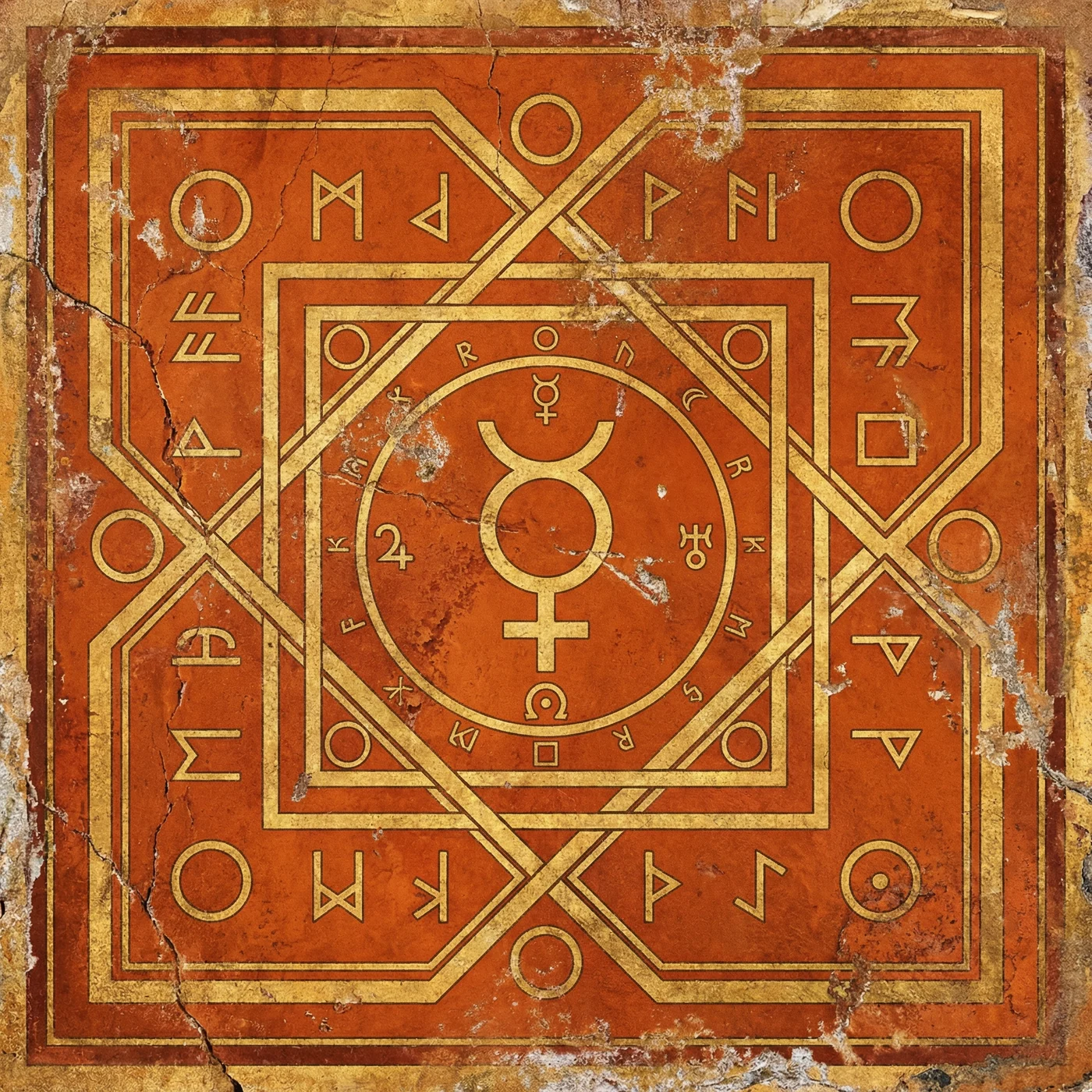
The Ancient Technology of Observation
Our ancestors noticed this celestial choreography long before they understood its mechanics. To the Babylonians, these periods marked times when the messenger of the gods had turned his attention inward, toward the underworld, carrying communications between the living and the dead. The Egyptians saw Thoth withdrawing his quickening influence from human affairs, leaving mortal minds to operate without their usual divine assistance. What they observed through patient sky-watching, we've confirmed through orbital mechanics: Mercury retrograde describes a real phenomenon with measurable effects on how we experience time, communication, and mental processing.
The retrograde periods occur within specific sections of the zodiac, and this placement determines the particular flavor of disruption or opportunity each cycle brings. When Mercury stations retrograde in the first decan of Gemini—THE APPLE OF EDEN, ruled by Jupiter and Mercury, corresponding to the Eight of Swords—the reversals tend to involve mental overwhelm and the paralysis of too many options. Communications break down not from lack of information, but from information overload. The mind, usually so agile in Gemini, finds itself trapped in a prison of possibilities, unable to choose a direction.
Different territory entirely opens when Mercury reverses in Virgo's second decan—THE HAMMER AND THE ANVIL, ruled by Venus and Saturn, aligned with the Nine of Pentacles. Here, the retrograde pressure forges precision from chaos. Systems that seemed perfectly organized reveal their hidden flaws, but this breakdown serves the deeper purpose of refinement. What emerges after Mercury stations direct carries the mark of true craftsmanship, tested under pressure and improved through careful attention to previously overlooked details.
The Shadow Period: When Reversal Begins Before It Begins
Most discussions of Mercury retrograde focus only on the approximately twenty-one days when the planet appears to move backward. But experienced astrologers track a longer cycle that includes the "shadow period"—the degrees of the zodiac Mercury will traverse three times: once forward, once backward, and once forward again. This extended timeline, lasting roughly two months from start to finish, reveals the retrograde as a process of review, revision, and integration rather than simple disruption.
The first pass, while Mercury moves forward through what will become the retrograde zone, plants seeds of the themes that will require attention. You might notice the first hairline crack in a project's foundation, the initial signs that a communication style isn't working, or the subtle emergence of an old pattern you thought you'd outgrown. Most people miss these early signals, dismissing them as random minor annoyances.
When Mercury stations retrograde and begins its backward journey, these themes intensify and demand conscious attention. The crack becomes a fissure; the communication breakdown becomes unavoidable; the old pattern resurfaces with enough force to disrupt your current trajectory. This isn't punishment or cosmic bad luck—it's an opportunity for conscious revision that wouldn't otherwise occur.
The final pass, after Mercury stations direct and retraces its steps through the same territory, integrates the lessons and corrections of the retrograde period. If you've done the work of conscious review during the backward phase, this final transit can bring remarkable breakthroughs and improvements. If you've simply gritted your teeth and waited for it to pass, you'll likely find yourself dealing with the same issues again in a few months.
A Working Example: The Communications Audit
Consider Sarah, a freelance graphic designer whose Mercury retrograde periods had become legendary for their technological disasters. During the most recent cycle, which occurred in Virgo's first decan—A TREE BEARING FRUIT, ruled by the Sun and Mercury, corresponding to the Eight of Pentacles—she decided to treat the retrograde as a communications audit rather than something to survive.
In the shadow period leading up to the station retrograde, Sarah began noticing small inefficiencies in her client communication. Email threads that should have been phone calls. Project briefs that assumed shared understanding where none existed. File naming systems that made perfect sense to her but confused collaborators. Instead of dismissing these as minor annoyances, she started a retrograde journal, documenting each instance where communication broke down or required extra effort.
When Mercury stationed retrograde, these small issues amplified dramatically. A major client presentation was delayed when the file sharing system failed. Another project stalled when she realized her design brief had been based on a fundamental misunderstanding of the client's needs. Rather than panic, Sarah used these breakdowns as diagnostic information. The retrograde wasn't causing arbitrary chaos—it was revealing systemic weaknesses in her professional communications that needed addressing.
During the three-week retrograde period, instead of starting new projects, Sarah redesigned her entire client onboarding process. She created templates that forced clarity around project scope and expectations. She established backup systems for file sharing and implemented regular check-in calls to catch misunderstandings before they derailed deadlines. She even reached out to three former clients whose projects had ended uncomfortably, using the retrograde energy to revisit and repair those professional relationships.
When Mercury stationed direct and began its final pass through the retrograde degrees, Sarah's refined systems were tested with incoming new projects. The difference was remarkable. Communications that previously would have required multiple clarifying emails now flowed smoothly. Technical glitches that used to cause panic were quickly resolved through backup systems. Her client relationships deepened through the structured check-ins, and several former clients returned with new projects after their repair conversations.
Working With Rather Than Against the Current
The key to navigating Mercury retrograde productively lies in understanding its essential nature: this is not a time for pushing forward with business as usual, but for turning attention backward to review, repair, and refine. The period offers a natural pause in the forward momentum of life, creating space for the kind of careful attention we rarely give to the systems and communications that support our daily activities.
During retrograde periods, prioritize revision over initiation. This is the time to update your resume, reorganize your filing systems, revisit old projects that were never quite finished, and reconnect with people you've lost touch with. The universe supports backward-looking activities during these cycles, while forward momentum often meets unexpected resistance.
Pay particular attention to the sign and decan where the retrograde occurs, as this reveals the specific life area calling for review. A retrograde in Cancer suggests examining your relationship to home, family, and emotional security. In Capricorn, the focus shifts to career structures, professional reputation, and long-term goals. In Libra, partnerships and collaborative relationships need attention, while Aries retrogrades call for a review of personal initiative and leadership style.
Document the themes that emerge during each retrograde, particularly in the shadow period leading up to the station. These early signals often point toward the deeper work the retrograde period offers. Rather than seeing breakdowns as random chaos, treat them as diagnostic information about systems that need upgrading.
Most importantly, resist the cultural pressure to maintain normal productivity during these periods. Mercury retrograde offers a gift that our forward-focused culture rarely provides: permission to slow down, look backward, and consciously refine the foundations that support everything else. When you work with this energy instead of against it, what initially appears as disruption reveals itself as an opportunity for genuine improvement.
The ancient observers who first tracked these cycles understood something our efficiency-obsessed culture has forgotten: progress isn't always linear, and the most significant advances often require strategic retreats. Mercury retrograde creates the conditions for this necessary backward movement, ensuring that our forward momentum is built on solid, consciously examined foundations rather than unconscious habit and momentum.
Your birth chart holds the key to understanding how these cycles specifically affect your life—which communication patterns need regular review, which life areas require periodic system updates, and how to most productively use these natural pause periods. The Book of the Self reveals not only your natal Mercury's placement and aspects, but also tracks the upcoming retrograde cycles and their specific implications for your unique astrological signature.