The four adapters — the endings that are actually transitions.
You recognize them immediately—those moments when the conversation pivots, when what seemed settled suddenly isn't, when the ground beneath certainty shifts just enough to make you question what you thought you knew. The friend who answers your direct question with a story that seems unrelated but somehow captures everything. The colleague who responds to crisis not with rigid protocol but with an intuitive adaptation that saves the day. The part of yourself that, just when you think you've figured out your next move, finds three other possibilities you hadn't considered.
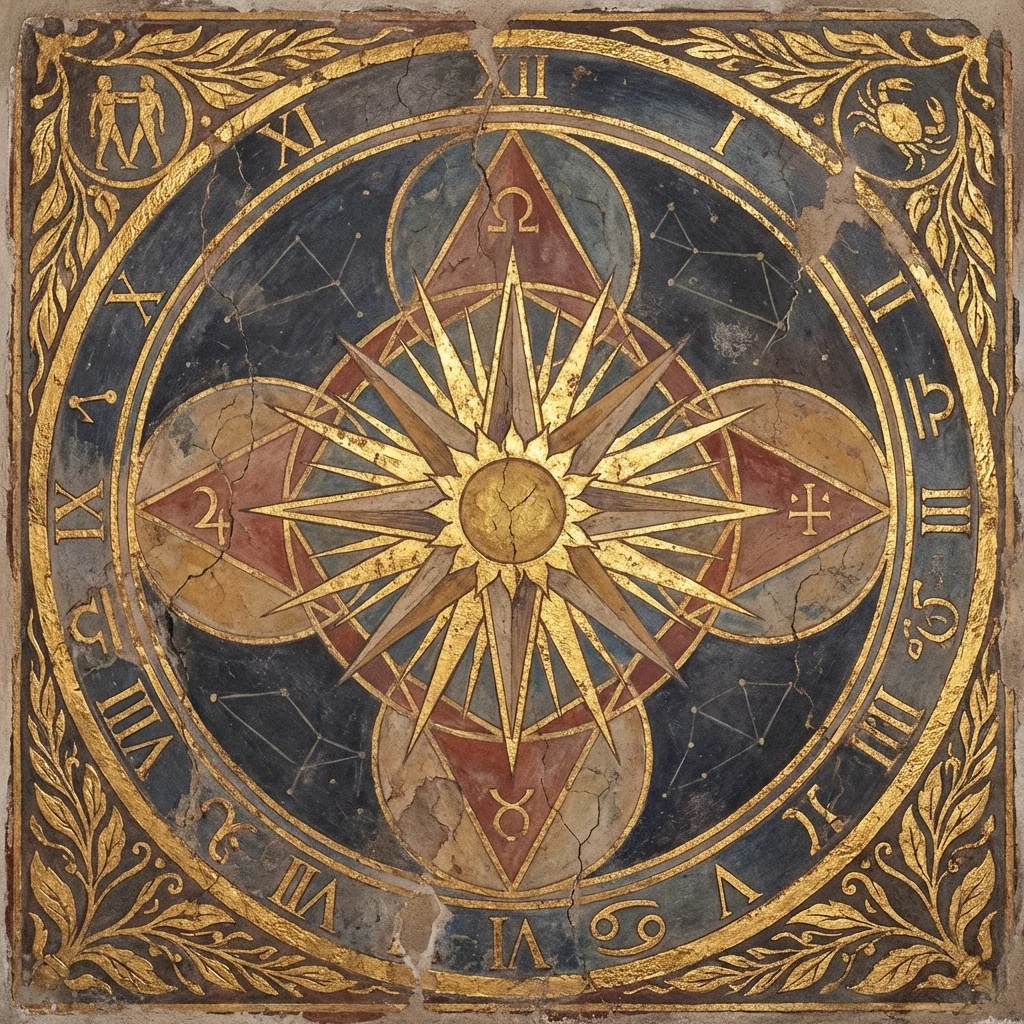
This is the signature of the mutable signs: Gemini, Virgo, Sagittarius, and Pisces. They are the shape-shifters of the zodiac, the signs that refuse to hold still long enough for you to pin them down completely. While cardinal signs initiate and fixed signs sustain, mutable signs transform—and in doing so, they keep the whole system alive.
The Art of Perpetual Translation
Mutability is not chaos, though it can appear so to those who mistake flexibility for inconsistency. The mutable signs operate according to a different logic entirely: they are the translators between worlds, the mediators who take one thing and render it into another. Gemini translates experience into language, Virgo translates chaos into order, Sagittarius translates the particular into the universal, and Pisces translates the bounded into the boundless.
This is why mutable signs so often seem to change the subject—they are not abandoning the topic but revealing its connections to everything else. When a Gemini responds to your practical question with three theoretical tangents, they are showing you the hidden networks that link your immediate concern to larger patterns. When a Virgo takes your grand vision and breaks it down into a hundred small tasks, they are translating inspiration into manifestation. The mutable signs understand that nothing exists in isolation, and their gift is making those invisible connections visible.
The ancient astrologers placed the mutable signs at the end of each season, in those liminal weeks when one natural cycle yields to another. Spring's certainty dissolves into summer's abundance through Gemini's questioning intelligence. Summer's peak transforms into autumn's harvest through Virgo's discriminating wisdom. Autumn's clarity becomes winter's depth through Sagittarius's expanding vision. Winter's containment opens into spring's renewal through Pisces's dissolving compassion. They are the hinges upon which the year turns.
The Sacrificial Moment
There is something inherently sacrificial about mutability, particularly in its final expression. The third decans of the mutable signs—doubly mutable, as they carry both the sign's essential nature and the decan's transformative power—hold a particular poignancy. They arrive in those crucial ten days before each equinox and solstice, when the current season must die for the next to be born.
Consider A Horse's Skull, the image of Sagittarius III, ruled by the Sun and Saturn together. This is not the living horse of adventure and exploration that characterizes earlier Sagittarius, but the skull that remains—the essential structure that outlasts the flesh, the wisdom distilled from experience. Those born with planets in this decan understand that some truths can only be grasped when everything nonessential has been stripped away. They carry the Ten of Wands, Oppression, not as burden but as the final mile before arrival, the necessary completion of a journey that began in enthusiasm and ends in wisdom.
The mutable signs teach us that transformation requires release. You cannot become something new while clutching tightly to what you were. This is perhaps why they can seem elusive or uncommitted to those who mistake attachment for loyalty. The mutable signs are supremely loyal—not to forms, but to the process of growth itself.
The Laboratory of Adaptation
Each mutable sign operates its own form of laboratory, a space where fixed assumptions are subjected to the experimental method of lived experience. Gemini's laboratory is mental—the constant testing of ideas against other ideas, the multiplication of perspectives until a fuller picture emerges. Its ruler Mercury grants the quick silver intelligence that can hold contradictions without immediately resolving them, understanding that the tension between opposites often contains more truth than either extreme alone.
Virgo's laboratory is practical, the place where abstract principles meet the stubborn resistance of material reality. Here Mercury expresses differently, not as the messenger of possibilities but as the craftsman who discovers what actually works. The Hammer and the Anvil of Virgo II, ruled by Venus and Saturn, shows this process in its most refined form—beauty and structure working together to forge something both lovely and lasting. The Nine of Pentacles, Gain, represents not mere accumulation but mastery, the wealth that comes from understanding how things actually function.
Sagittarius operates a philosophical laboratory where personal experience is subjected to the test of universal principles. Its ruler Jupiter seeks not just knowledge but wisdom, not just information but understanding. The Bridle of Sagittarius II, ruled by the Moon and Mars, suggests the moment when instinct and will learn to work together, when the wild horse of experience accepts guidance without losing its essential nature.
Pisces maintains a laboratory of empathy, where the boundaries between self and other become permeable enough for genuine understanding to occur. Here Jupiter expresses as compassion rather than judgment, expansion rather than philosophy. The Net of Pisces II captures this perfectly—ruled by Jupiter and Mars, it represents the moment when the scattered fish of experience are gathered not to be possessed but to be understood, then released back into the vast ocean of possibility.
The Practice of Skilled Flexibility
Working with mutable energy requires a particular kind of discipline—not the rigid discipline of doing the same thing regardless of circumstances, but the fluid discipline of responding appropriately to what actually is. This is more demanding than it appears, because it requires constant attention and the willingness to be surprised by reality.
The mutable signs teach us to hold our plans lightly while remaining committed to our purposes. They show us how to be prepared for anything while attached to nothing, how to maintain direction without rigidity. This is why they excel in crisis situations—not because they are chaotic, but because they have practiced the art of creative response.
If you have strong mutable placements in your chart, your path involves learning to trust your adaptive intelligence while developing enough consistency to build something lasting. Your gift is the ability to translate between different languages—literal or metaphorical—and your challenge is learning when flexibility serves growth and when it merely avoids commitment.
For those with fewer mutable placements, these signs offer the crucial reminder that no system, no matter how perfectly designed, can accommodate all possibilities. The mutable signs are your consultants in the art of skillful improvisation, your guides through the inevitable moments when the map does not match the territory.
The mutable signs remind us that intelligence is not the ability to know the right answer but the capacity to ask better questions. They understand that the most profound stability comes not from refusing to change but from developing the skills to change well. In a world that demands both growth and continuity, both innovation and wisdom, the mutable signs offer the essential teaching: transformation is not the enemy of order but its most sophisticated expression.
The Book of the Self contains your personal mutable signature—the specific ways your chart engages with change, adaptation, and the endless dance between stability and growth.