Neptune in the eleventh house — where that energy actually plays out in a life.
You know the feeling when you walk into a room full of people and sense something beneath the surface—a collective mood, an unspoken yearning, the electric hum of shared dreams that no one dares name aloud. You find yourself nodding along to conversations about causes you've never researched, feeling genuinely moved by visions of a better world that someone else painted in broad, shimmering strokes. Later, alone, you wonder what exactly you agreed to support, but the feeling lingers: that sense of belonging to something larger, more meaningful than your individual concerns.
This is Neptune in the eleventh house speaking through your life, dissolving the boundaries between your personal aspirations and the dreams of the collective, making you both a receiver and a transmitter of the hopes that move through groups like invisible currents.
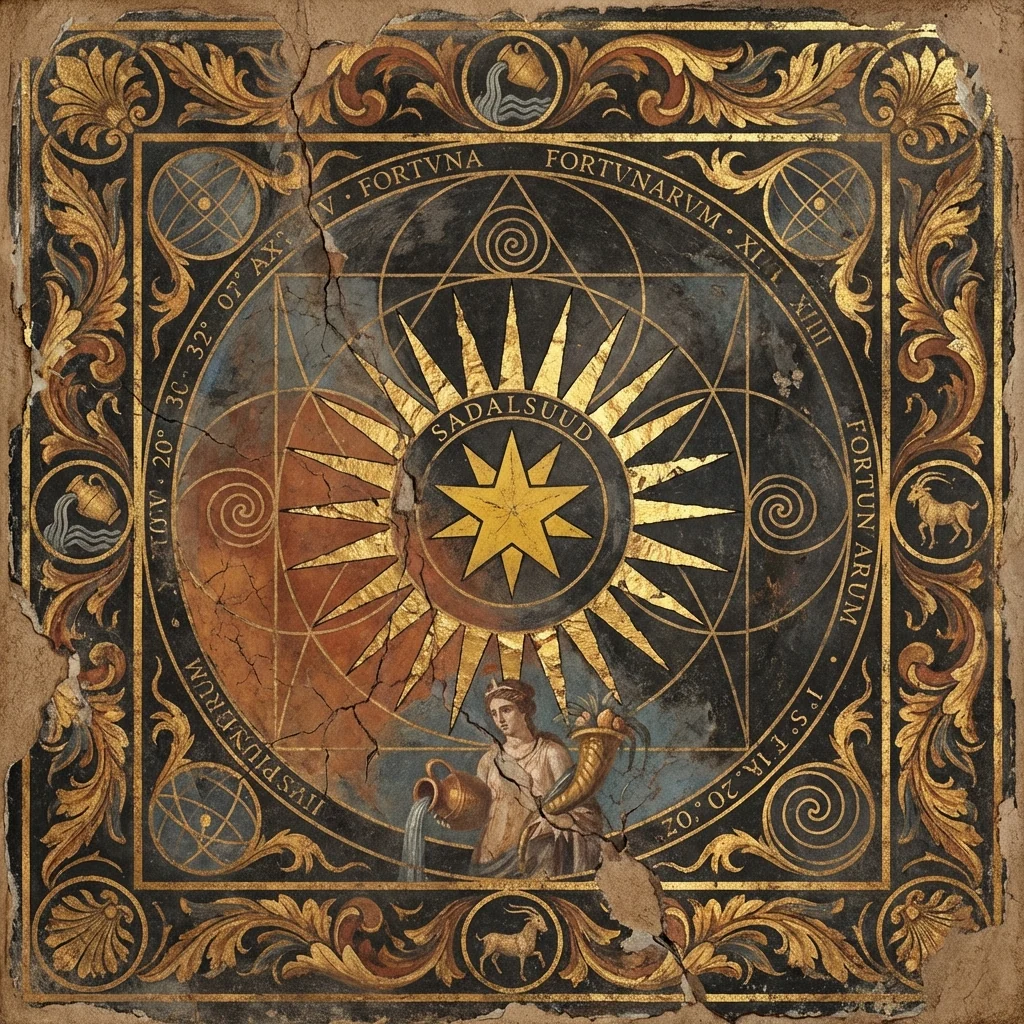
The Realm of Collective Dreaming
The eleventh house governs friendships, group affiliations, and hopes for the future—but not in the simple, straightforward way that textbooks describe. It's the domain where individual desires meet collective vision, where personal networking transforms into something approaching communion. When Neptune, the planet of dissolution and transcendence, occupies this territory, the usual rules of group dynamics begin to blur and shift like objects seen underwater.
Neptune operates through what we might call spiritual osmosis. Just as a membrane allows certain substances to pass through while blocking others, Neptune makes you permeable to the emotional and psychic currents that flow between people in groups. You absorb not just what people say they want, but what they secretly long for—the unacknowledged dreams that hover at the edges of their consciousness.
This placement often manifests first in adolescence or young adulthood, when the need to belong combines with the awakening of idealistic impulses. You may find yourself drawn to groups that promise transformation: activist organizations working for causes that seem just, spiritual communities exploring altered consciousness, artistic collaboratives pursuing beauty for its own sake. The common thread isn't the specific ideology but the quality of yearning these groups embody—the sense that something more is possible, that reality as currently configured isn't the final word.
The Ancient Inheritance of Sacred Community
Long before Neptune was discovered, astrologers recognized this part of the chart as connected to hopes and wishes, to the friends who support our aspirations and the communities that nurture our highest potentials. The traditional literature speaks of the eleventh house as the place of "good spirit"—beneficial forces that aid our development in ways we cannot orchestrate through individual effort alone.
Neptune's placement here connects you to an even older tradition: the understanding that human consciousness is not merely individual but participatory. Ancient mystery schools knew that certain realizations could only emerge through group work, that the isolation of purely personal spiritual practice had natural limits. The vessel of individual awareness, no matter how refined, could contain only so much of the infinite. True transformation required what they called sympatheia—the recognition that all consciousness is ultimately one consciousness, temporarily distributed among seemingly separate forms.
This is why Neptune in the eleventh house often brings experiences that feel simultaneously personal and transpersonal. You may find yourself in groups where the boundary between your insights and others' inspirations becomes impossible to trace. Ideas emerge from conversations like fish surfacing in a lake—you cannot say who caught them, only that they appeared when the conditions were right.
Beyond Ordinary Networking
Where other eleventh house placements might make you an effective networker or a natural leader of concrete initiatives, Neptune transforms group participation into something more like a spiritual practice. You're less interested in what a group can do for your career or social status than in the quality of consciousness it embodies. You're drawn to collectives that seem to be reaching for something just beyond articulation—whether that's social justice, artistic breakthrough, healing work, or spiritual awakening.
This creates a paradox that follows you through life. On one hand, you have an extraordinary capacity to sense what groups need to hear, to speak the dreams they haven't yet dared to voice. You become a kind of translator between the collective unconscious and ordinary waking awareness, helping communities recognize their own deepest aspirations. On the other hand, you may struggle with more mundane aspects of group participation: keeping track of meeting times, following through on practical commitments, or maintaining enthusiasm when the work becomes routine rather than inspirational.
The gift Neptune offers is the ability to see groups not as collections of separate individuals pursuing shared interests, but as temporary incarnations of larger patterns seeking to emerge into form. You recognize intuitively that every gathering of people has the potential to become a vessel for something greater than the sum of its parts. This recognition makes you a natural catalyst for group transformation, even when you hold no formal leadership role.
The Artist's Collective
Consider Maria, born with Neptune in the eleventh house, who found herself repeatedly drawn to artistic communities throughout her adult life. In her twenties, she joined a collective of painters and sculptors who had converted an abandoned warehouse into studios. What attracted her wasn't primarily the shared rent or even the artistic feedback, but something harder to name: the way conversations would spiral into unexpected territories, the sense that the group was collectively reaching toward new forms of expression that none of them could achieve alone.
Maria discovered that her presence seemed to catalyze these moments of collective creativity. She would ask questions that opened up new directions, suggest collaborations that hadn't occurred to others, or simply listen in a way that made people feel safe to share their most experimental ideas. She rarely initiated projects herself, but her involvement seemed to transform whatever emerged from group brainstorming sessions.
Over time, Maria realized that this pattern repeated itself regardless of the specific group. In graduate school, she became the unofficial facilitator for study groups that somehow evolved into profound discussions about the relationship between art and consciousness. Later, working at a nonprofit arts organization, she found that meetings she attended were more likely to generate innovative programming ideas, even when the agenda was purely administrative.
The shadow side of this gift became apparent when groups disbanded or when practical pressures forced them to become more businesslike and less exploratory. Maria would feel disoriented, as if a essential part of herself had vanished. She learned that her sense of purpose was intimately connected to being part of communities that were actively engaged in collective discovery, and that she needed to consciously seek out or create such environments rather than hoping they would simply appear.
Working with the Dissolution
Neptune in the eleventh house asks you to develop a mature relationship with the permeable boundaries that characterize your group experiences. This means neither rejecting your sensitivity to collective currents nor being overwhelmed by them, but learning to navigate the spaces between individual identity and group consciousness with skill and discernment.
The first practice is developing what we might call conscious participation. Before entering group situations, especially those with strong emotional or idealistic components, spend time connecting with your own center. Ask yourself: What are my genuine aspirations here? What am I hoping to contribute, and what am I hoping to receive? What are my actual limitations, and where might I be tempted to over-promise or lose myself in others' visions?
During group interactions, practice tracking the difference between inspiration that genuinely moves you and emotional contagion that sweeps you along without true conviction. Neptune's gift is the ability to sense collective possibilities, but its shadow is the tendency to merge with group energy so completely that your individual discernment becomes clouded. Learn to recognize the sensation of authentic resonance versus the feeling of being carried along by momentum that isn't actually yours.
The second practice involves what traditional mystics called discrimination—the ability to distinguish between different qualities of collective experience. Not all group energy is equally beneficial, and Neptune's influence can make you susceptible to communities that promise transcendence but deliver escapism, or that use idealistic language to mask power dynamics that are actually quite conventional. Your sensitivity to collective dreams makes you a valuable asset to any group, but it can also make you vulnerable to manipulation by those who understand how to invoke visionary language for personal gain.
Develop the ability to sense whether a group's energy is genuinely expansive—opening participants to larger possibilities while honoring their individual integrity—or merely intoxicating, creating temporary highs that leave people depleted and confused. True spiritual community has a quality of clarity alongside its transcendent moments; genuine social change movements combine vision with practical effectiveness; authentic artistic collaboratives balance inspiration with craft.
The path of Neptune in the eleventh house is ultimately about learning to serve the collective without losing yourself in it, and to maintain individual clarity while remaining open to transpersonal experience. Your gift to any group is the ability to help it recognize its own highest potential and to create the kind of atmosphere where collective wisdom can emerge. Your challenge is to offer this gift consciously, from a place of centered awareness rather than unconscious absorption.
When you master this balance, you become what the ancients might have called a wisdom-keeper for your communities—someone who helps groups remember their deepest purpose and stay connected to the larger patterns they're serving, even when practical pressures threaten to reduce their work to mere activity. You discover that your individual fulfillment and your service to collective evolution are not separate goals but different faces of the same calling.
The Book of the Self offers a complete exploration of your natal Neptune placement, including its aspects to other planets and its relationship to the larger patterns in your chart, helping you understand how this collective sensitivity weaves through every area of your life.