The hidden, the self-undoing, the sacred solitude.
You wake in the predawn darkness, caught between sleep and waking, carrying fragments of a dream that felt more real than your bedsheets. The images slip away like water through your fingers—a conversation with someone you've never met but somehow know, a landscape both foreign and familiar, emotions that belong to no particular memory yet resonate in your bones. This is the territory of the twelfth house: the realm where boundaries dissolve, where the self becomes porous, and where what we call "reality" reveals its arbitrary edges.
The ancients called this house the place of "bad spirit"—not because it was evil, but because it defied the daylight world's demand for clear categories. Here, in the final house before the wheel turns again toward birth, we encounter everything our conscious mind has relegated to shadow: our deepest fears, our most transcendent longings, our connection to forces larger than individual will.
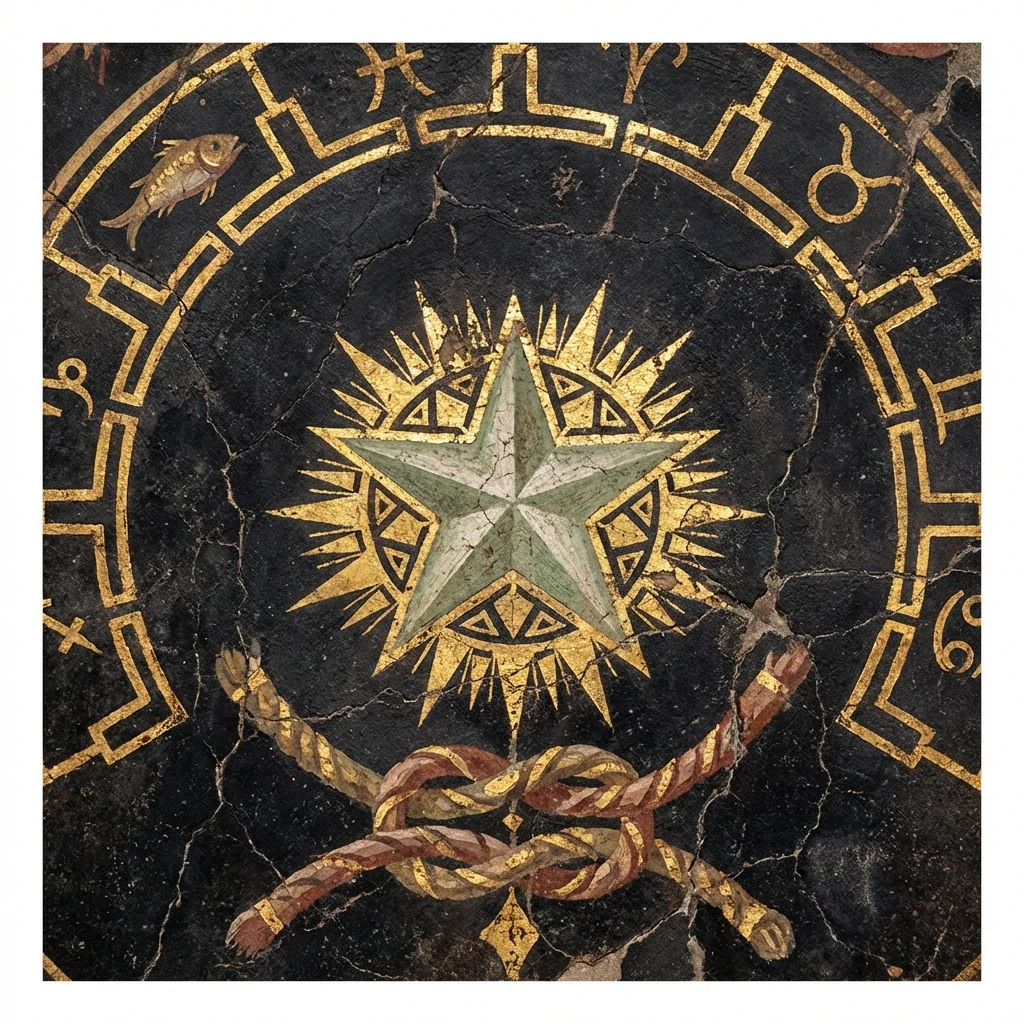
The Architecture of Dissolution
Traditional astrology places the twelfth house in the realm of hidden enemies, self-undoing, and places of confinement—hospitals, prisons, monasteries. But these seemingly disparate significations share a common thread: they all represent spaces where ordinary social identity breaks down. In a prison cell, your job title means nothing. In a hospital bed, your carefully constructed persona dissolves into vulnerability. In monastic silence, the chattering ego finally finds its off switch.
This house governs what happens when the boundaries that usually define us—between self and other, between conscious and unconscious, between individual will and universal flow—become permeable. It is the place where we discover that the fortress of personality we've spent years constructing has always been more like a tent than a castle, and the winds that shake it come from directions we cannot map.
The twelfth house rules the vast unconscious reservoir from which our dreams arise, but also the collective currents that move through us without our knowledge. You find yourself humming a song you've never heard, feeling inexplicably sad when passing certain street corners, or drawn to help a stranger for reasons you cannot articulate. These are twelfth house experiences—moments when the membrane between your inner world and the cosmic order grows thin.
Where Compassion is Born
The dissolution that occurs in this house is not merely destructive—it is the necessary precursor to genuine compassion. When you can no longer maintain the fiction that you are entirely separate from the suffering around you, when you feel others' pain as if it were your own, you have crossed into twelfth house territory. This is why the house governs both empathy and escapism, service and self-destruction. The same porosity that allows you to feel profound connection to all life can also make it impossible to function in a world that demands clear boundaries.
Here we find those who dedicate their lives to serving others—not from a sense of duty or moral obligation, but because the arbitrary line between self and other has worn so thin that helping others becomes as natural as breathing. The twelfth house person who works with the homeless, the addicted, the forgotten, often does so because they recognize something of themselves in every face they encounter. The house's association with institutions makes sense: these are the places where society sends those who cannot or will not maintain the boundaries that normal social life requires.
But the twelfth house also teaches us that what we exile from consciousness does not disappear—it gathers power in the shadows. Your unacknowledged anger becomes the "difficult" person who appears in your life to mirror your own hidden rage. Your disowned grandiosity attracts the narcissist who forces you to confront your own inflated expectations. The twelfth house is where we meet ourselves wearing other faces, where our projections return home to roost.
The Mystic's Territory
This house has always been associated with mystical experience, and for good reason. When the boundaries of ordinary consciousness dissolve, we may glimpse what lies beyond them. The saint's ecstasy and the psychotic's break share the same fundamental disruption of consensus reality—the difference lies in whether consciousness expands into coherent transcendence or fragments into chaos.
The twelfth house is where meditation takes us when it moves beyond technique into genuine absorption, where prayer becomes less about asking and more about listening, where the spiritual seeker finally stops seeking and simply becomes what they have always been. This is the house of surrender—not as defeat, but as the recognition that the small self's agenda was never large enough to contain the mystery of existence.
Yet this same dissolution can manifest as addiction, mental illness, or a paralyzing inability to function in ordinary reality. The twelfth house teaches us that transcendence and psychosis, spiritual awakening and nervous breakdown, are separated by the thinnest of lines. The key difference often lies in whether we have enough structure in the rest of our lives to contain the dissolution, whether we can return from the formless realms with our sanity intact.
A Living Example
Consider Maya, born with her Sun in Pisces in the twelfth house, conjunct Neptune. From childhood, she experienced the world as if through water—sounds seemed to come from far away, emotions had colors, and she often knew things about people that no one had told her. In school, she was the child who cried when others were punished, who befriended the outcasts, who seemed to absorb the mood of every room she entered.
As an adult, Maya struggled with boundaries. She would take on her friends' problems as if they were her own, stay up all night worried about strangers she'd glimpsed on the subway, give away money she couldn't afford to lose. Therapists called it codependency, but Maya experienced it as an inability to turn off her awareness of others' suffering.
The turning point came during a period of deep depression when she began volunteering at a hospice. Surrounded by people approaching death, she discovered that her permeability—what had always felt like a curse—was actually a gift. She could sit with the dying without flinching, could sense what they needed before they asked, could offer presence without trying to fix or change anything. Her twelfth house sensitivity, properly channeled, became a form of service that transformed both her life and the lives of those she served.
Maya learned to create conscious boundaries—daily meditation, regular retreats, clear limits on her availability to others' crises. But she no longer tried to eliminate her sensitivity. Instead, she developed it as a spiritual practice, understanding that her role was to be a permeable membrane between worlds, helping others navigate the dissolution that comes with loss, illness, and transition.
Working with Dissolution
The twelfth house asks us to develop a different relationship with control. Instead of trying to manage every aspect of our experience, we learn the art of conscious surrender—distinguishing between what requires our active intervention and what asks only for our presence and acceptance. This is not passive resignation but a highly refined spiritual skill.
Regular spiritual practice becomes essential for twelfth house development. Whether through meditation, prayer, art, music, or time in nature, we need ways to regularly dissolve the boundaries of ordinary consciousness without losing our capacity to function in daily life. The goal is not to escape the world but to bring something back from the formless realms that can serve life.
Learning to work with dreams, synchronicities, and subtle energies becomes part of navigating this house consciously. Keep a dream journal, pay attention to the messages that come through repetitive encounters, notice when the universe seems to be trying to tell you something through seemingly random events. The twelfth house speaks in symbols and suggestions rather than direct commands.
Most importantly, the twelfth house teaches us to embrace mystery. Not everything needs to be understood, controlled, or fixed. Sometimes our highest service is simply to bear witness to suffering without trying to eliminate it, to offer presence without having answers, to love without needing to possess or change.
In the end, the twelfth house reveals that the room with no doors is not a prison but a sanctuary. When we stop trying to escape and instead learn to inhabit the mystery consciously, we discover that what we thought were walls were only veils, and what we feared was dissolution was actually the gateway to a larger life.
The 36 Codex system recognizes that your twelfth house contains layers of meaning that extend far beyond these general principles, woven through the specific degrees, decans, and planetary placements that make up your unique astrological signature. In The Book of the Self, we map these deeper patterns with the precision they deserve, showing you not just what your twelfth house means, but how to work with its particular gifts and challenges as a conscious spiritual practice.