Uranus in Leo — the generation that carries it, and what it does in a private chart.
You remember the moment when someone your age first told you they had never learned to use a rotary phone. That small shock of recognition — not just the technology gap, but the sudden understanding that you carried something specific in your bones, something that marked you as belonging to a particular slice of time. This is what astrologers mean when we speak of generational signatures: the way certain planetary transits leave their mark not on individuals alone, but on entire cohorts moving through history together.
Uranus in Leo represents one such signature, and if you were born between 1955 and 1962, this placement lives in your natal chart as both gift and burden. But its influence extends far beyond the individuals who carry it directly. This generation has spent decades reshaping how we think about creativity, performance, and the relationship between individual expression and mass culture.
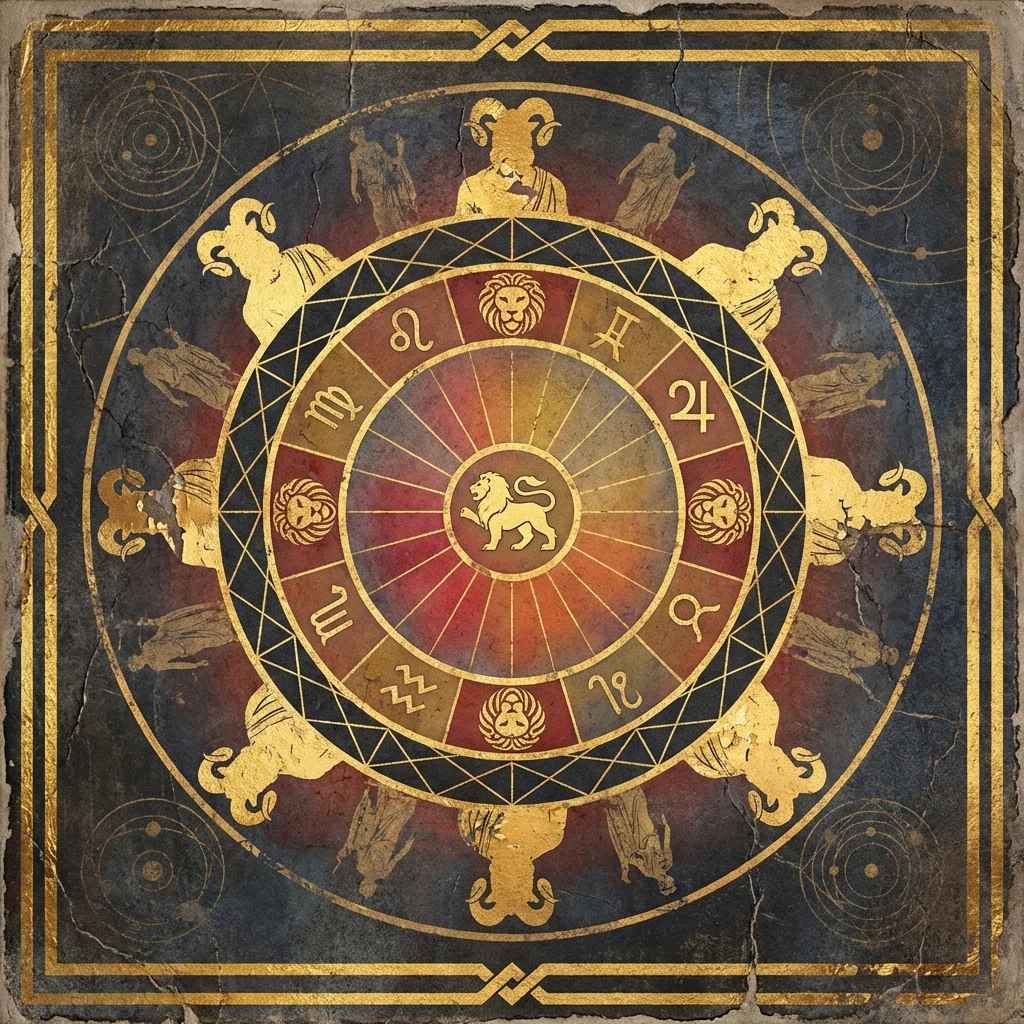
The Theater of Revolution
Leo governs the stage — literal and metaphorical — where individual will meets public recognition. It rules the heart as both organ and symbol, the place where personal fire burns brightest. When Uranus, the planet of sudden change and liberation, moves through Leo, it electrifies these themes with revolutionary voltage. The result is a generation that experiences creativity not as gentle self-expression, but as urgent rebellion.
This is the generation that gave us rock and roll as a cultural force, not just a musical style. They transformed entertainment from something you watched politely to something that demanded your entire body's participation. The Uranus in Leo cohort approached the spotlight with the understanding that performance could be a form of revolution, that putting yourself on stage was inherently political.
The first decan of Leo, known as THE SPOTLIGHT, carries the tension between exposure and courage. Those born with planets here understand intuitively that visibility is both opportunity and vulnerability. When Uranus transited this decan in the mid-1950s, it planted seeds that would bloom into the cultural upheavals of the 1960s. The children born under this influence would grow up to question not just what they were supposed to perform, but for whom, and why.
The Crowned Rebellion
As Uranus moved through Leo's second decan — A CROWN OF LAURELS, ruled by Jupiter — the generational theme shifted toward questions of legitimate authority and earned recognition. This decan, corresponding to the Six of Wands in tarot, speaks to victory that comes through authentic achievement rather than inherited position. The Uranus in Leo generation would grow up to challenge every assumption about who deserves the crown.
Consider how this generation approached celebrity itself. Unlike previous generations who maintained careful distance between public and private personas, the Uranus in Leo cohort insisted that authenticity required transparency. They pioneered the idea that genuine stardom meant revealing rather than concealing your real self. This was revolutionary: the notion that vulnerability could be a form of strength, that showing your wounds might be more powerful than displaying your armor.
The Jupiter influence in this middle decan suggests expansion of what counts as worthy of acclaim. This generation refused to accept narrow definitions of talent or beauty. They insisted that the garage band deserved the same respect as the symphony orchestra, that street art was as valid as museum pieces. They democratized the laurel crown.
The Banner Held High
In Leo's third decan, THE BANNER, Uranus encountered Mars-ruled territory where courage meets combat. The Seven of Wands energy here speaks to the embattled defender, the one who stands alone against the crowd. For the Uranus in Leo generation, this became literal in ways their parents never imagined. They would be called to defend their music, their hair, their clothes, their very right to exist as they chose to be.
But Mars in Leo understands something crucial: the most effective rebellion is often the most creative one. This generation didn't just protest — they performed their protests. They turned resistance into art, made theater out of their refusal to conform. The banner they carried wasn't just a political symbol; it was a work of art, a fashion statement, a new way of being human.
This decan reveals why the Uranus in Leo generation couldn't simply adopt their parents' models of quiet resistance or behind-the-scenes influence. Mars in Leo demands visible courage, the kind that puts your body on the line for what you believe. They had to make their rebellion into a show because the show was the medium through which their message could travel.
The Living Example
Maria was born in 1958 with Uranus in the second decan of Leo, conjunct her Midheaven. At twelve, she announced she wanted to be a drummer — not despite being a girl, but because no one expected girls to play drums. Her parents, products of an earlier generation, tried to redirect her toward piano or violin, something more "appropriate." But Maria had absorbed the Uranus in Leo message at a cellular level: the stage exists to be claimed by whoever has the courage to step onto it.
By sixteen, she was playing in clubs, her long hair flying as she attacked the kit with a ferocity that made audiences forget every preconception they'd carried about what drummers should look like. She wasn't trying to play like a man or prove women could do what men did. She was creating an entirely new category: herself, fully expressed, unapologetically taking up space.
Maria's story illustrates how Uranus in Leo operates. It doesn't just challenge existing hierarchies — it makes the challenge into entertainment, into art, into something so compelling that resistance becomes irrelevant. You can't argue with the power of authentic performance. You can only watch and be changed by it.
Decades later, Maria runs a music school where she teaches children that instruments have no gender, that stages belong to anyone brave enough to claim them. The revolutionary fire of Uranus in Leo has evolved into institutional change, the wild creativity of youth now serving as foundation for the next generation's explorations.
Working with the Signature
Whether you carry Uranus in Leo in your own chart or encounter it in others, understanding this generational signature offers practical wisdom. This is energy that cannot be suppressed or redirected — only channeled toward worthy stages. The key is recognizing that the Leo need for recognition is not vanity when it serves authentic expression.
If you have strong Leo placements, look to the Uranus in Leo generation for models of how creative rebellion can sustain itself over decades. Their example shows that the fire of individual expression, when properly tended, can warm entire communities without burning them down.
If you work with or parent Uranus in Leo individuals, remember that their need for creative autonomy is not negotiable. They will find a stage for their expression — the only question is whether it will be one you help them build or one they construct in opposition to your expectations.
For everyone, this generational signature offers a lesson in the relationship between individual authenticity and collective transformation. The Uranus in Leo cohort proved that personal creative expression, when pursued with enough courage and commitment, becomes a force for social change. They showed us that revolution could be beautiful, that rebellion could be joyful, that changing the world might require nothing more than the willingness to be completely yourself in public.
The 36 Codex contains detailed mappings of how generational signatures like Uranus in Leo interact with individual natal patterns. In The Book of the Self, you'll discover how your own chart carries echoes of the collective movements that shaped your era, and how understanding these larger rhythms can illuminate your personal path toward authentic expression.