Signs are the script; houses are the rooms. The system, plainly.
You have felt it before: that moment when someone asks where you work and your chest tightens with pride, or when mention of your childhood home brings up a complicated tangle of memory and longing. You know that certain conversations draw you alive while others drain you completely, that some relationships feel like destiny while others seem designed to teach you precisely what you don't want. These aren't accidents of circumstance. They are the houses of your birth chart speaking—the twelve domains where your planets perform the drama of your life.
Most people encounter astrology through their Sun sign, learning that they're a Scorpio or a Gemini and wondering why the horoscope columns never quite capture their experience. This happens because the signs describe the how of your planetary energies, but the houses reveal the where. Your Mercury might be in analytical Virgo, but whether that manifests as meticulous research, precise craftsmanship, or endless worry about your health depends entirely on which house Mercury occupies in your chart. The houses are the stage, and without understanding the stage, the actors—however talented—perform in a void.
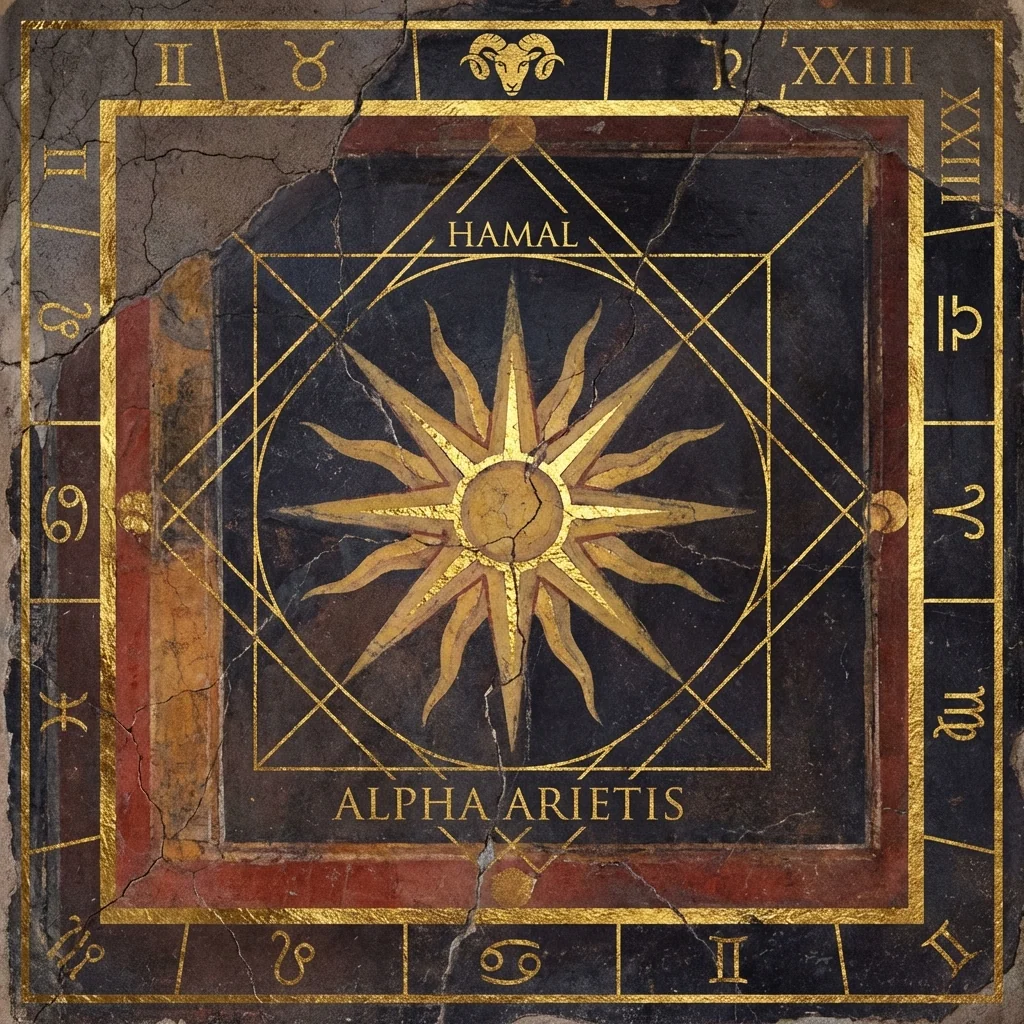
The Architecture of Experience
The twelve-house system emerged from humanity's most fundamental observations about the rhythm of daily life. Ancient astrologers watched the Sun rise in the east, culminate at midday, set in the west, and reach its nadir at midnight, then traced how this daily cycle intersected with the annual journey through the zodiac. What they discovered was that certain areas of the sky corresponded to specific departments of human experience with startling consistency.
The first house begins at the eastern horizon—the ascendant—where planets rise into visibility. Here is your physical body, your immediate presence, the mask you wear without knowing you wear it. Planets in the first house color everything about how you appear to the world and how you initiate action. The tenth house sits at the midday point where the Sun reaches maximum visibility, governing your career, reputation, and public standing. The seventh house occupies the western horizon where planets disappear from view, ruling partnerships and open enemies—those relationships that define you by reflection or opposition. The fourth house anchors the midnight point, governing home, family, and the private foundations of your life.
These four angular houses form the skeleton of experience, but the system's genius lies in the intermediate territories. The second house reveals how you relate to money, possessions, and resources—not just what you own, but how ownership feels to you. The third house governs your immediate environment: siblings, neighbors, short trips, daily communications, and the mental frameworks through which you process routine information. The fifth house rules creative expression, children, romance, and play—anything you produce from the overflow of your vital force. Each house represents not just external circumstances, but an entire mode of consciousness, a particular way your awareness focuses and operates.
The Planetary Performance
When a planet occupies a house, it doesn't merely influence that life area—it becomes the primary actor in that domain's ongoing drama. Consider someone with Mars in the seventh house. Mars seeks direct action, conquest, and individual assertion, but the seventh house demands cooperation, compromise, and relationship. This creates a fascinating tension: they attract partners who embody martial qualities—athletes, soldiers, competitors—or they find that their relationships consistently involve conflict, challenge, and the need to fight for what they want. The planet's essential nature doesn't change, but the house provides the context that determines how that nature manifests.
The traditional astrologers understood that planets could be more or less comfortable in different houses, just as actors might excel in certain types of roles while struggling in others. Venus in the fifth house feels completely at home, turning creativity and romance into expressions of beauty and harmony. Venus in the eighth house faces a more complex assignment, bringing grace and attraction into the realm of shared resources, psychological transformation, and encounters with mortality. The planet adapts, but the adaptation creates specific characteristics that skilled astrologers can read like a signature.
Multiple planets in the same house create what amounts to an ensemble cast for that life department. Someone with Sun, Mercury, and Venus all in the tenth house doesn't just have a career—their entire identity, communication style, and approach to relationships all become vehicles for their professional expression and public reputation. The tenth house becomes hyperactive, demanding constant attention and development, while other houses might remain relatively quiet throughout their lifetime.
The Secret Significations
Each house carries both obvious meanings and hidden dimensions that only emerge through careful observation of how they operate in actual lives. The sixth house, traditionally associated with work, service, health, and daily routines, also governs the relationship between consciousness and the physical world. People with strong sixth-house emphasis often become experts at embodiment—athletes, healers, craftspeople, or anyone whose work requires precise coordination between mind and matter. They intuitively understand that health isn't just the absence of disease, but the harmonious functioning of complex systems.
The eighth house presents perhaps the most misunderstood terrain in astrology. Yes, it rules death, taxes, and other people's money, but its deeper significance involves any experience that dissolves the boundaries of ordinary selfhood. Eighth-house people are natural psychologists, researchers, and transformational agents. They're drawn to whatever is hidden, taboo, or forbidden because they understand intuitively that power often lies in what society refuses to acknowledge. Their intimate relationships tend to be intense and transformative rather than merely pleasant, and they often possess an almost supernatural ability to help others through crises and transitions.
The ninth house governs not just higher education and foreign travel, but the entire quest for meaning that drives human consciousness beyond the immediate and familiar. Ninth-house emphasis creates philosophers, teachers, and perpetual students—people who need to understand the larger patterns and who feel suffocated by purely practical concerns. They often marry across cultural or educational differences, or find that their most important relationships involve teaching and learning.
The Cadent Mystery
The ancient astrologers divided the houses into three categories: angular (first, fourth, seventh, tenth), succedent (second, fifth, eighth, eleventh), and cadent (third, sixth, ninth, twelfth). The angular houses were considered most powerful because they correspond to the horizon and meridian axes. The succedent houses were seen as supportive and stabilizing. But the cadent houses—third, sixth, ninth, and twelfth—were often dismissed as weak or unfortunate.
This represents a profound misunderstanding of how consciousness actually operates. The cadent houses govern the preparatory work that makes angular house success possible. The third house develops the communication skills and local connections necessary for first-house self-expression. The sixth house builds the discipline and practical competence that enables tenth-house achievement. The ninth house expands the philosophical framework that gives seventh-house relationships depth and meaning. The twelfth house processes and releases whatever would otherwise sabotage conscious progress.
People with strong cadent emphasis often feel like they're working behind the scenes while others receive the recognition, but they're performing essential functions. They're the researchers, editors, assistants, and advisors whose contributions make other people's success possible. Their reward isn't public acclaim but the satisfaction of seeing complex systems function smoothly and watching others develop their potential.
Working with Your Houses
Understanding your house emphasis requires looking beyond just which planets occupy which houses. Empty houses aren't inactive—they're governed by whichever planet rules their cusp sign. If your seventh house is empty but begins in Leo, then your Sun becomes the functional ruler of partnership, and its condition by sign, house, and aspect determines how relationships unfold for you. The condition of house rulers often explains why certain life areas develop in unexpected ways.
Pay attention to which houses contain the most planets, which house cusps are occupied by the most powerful planets, and which houses are completely unoccupied. A crowded house demands constant attention and development throughout life. An empty house with a well-placed ruler might function smoothly without requiring conscious effort. An empty house with a poorly placed or heavily afflicted ruler often represents an area where you struggle precisely because you haven't developed conscious competence there.
The progressed Moon's passage through your houses creates a predictable rhythm of development, spending approximately two and a half years emphasizing each domain before moving on to the next. Tracking this cycle helps you understand why certain periods of your life were dominated by particular concerns and what areas are currently demanding your attention.
The houses ultimately reveal that your birth chart isn't just a collection of personality traits but a complete life curriculum. Each house represents lessons to be learned, skills to be developed, and gifts to be shared. The planetary placements show your natural talents and challenges, but the houses determine the classroom where the learning happens.
The 36 Codex creates a complete map of your personal curriculum, showing not only which planets perform in which houses, but how they interact with your progressed cycles, your annual transits, and the deeper timing mechanisms that orchestrate your development across decades. The houses become not just static descriptions but dynamic environments where your consciousness continues to grow, year after year, toward the full realization of your birth potential.