Not fortune-telling — a mirror with a vocabulary.
You pull a card and there it is: the Nine of Swords, that figure awake in bed at three in the morning, face buried in hands while sharp blades hover in the darkness behind. You know this moment. You've lived in that bed, felt those invisible swords pressing against your back while sleep fled and the mind turned cruel. The card doesn't predict this feeling—it reveals what was already there, waiting in the architecture of time itself.
This is what the 78 cards are actually for: not fortune-telling, but recognition. They map the invisible seasons that govern human experience, the way certain energies rise and fall according to patterns older than civilization. When you understand what tarot really is, you stop asking whether it "works" and start asking why it works so precisely.
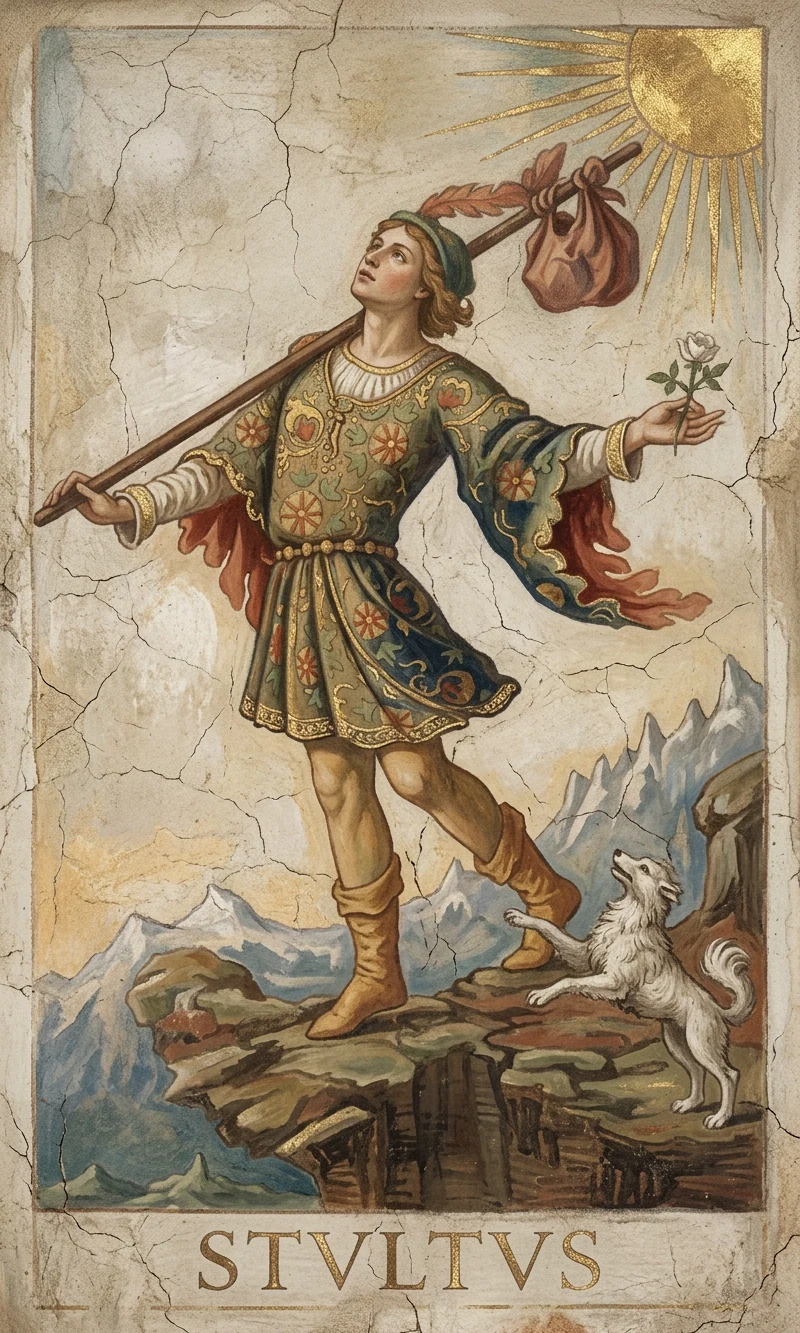
The Celestial Clockwork
The tarot deck is a book written in images, encoding a system of correspondences that links the movement of celestial bodies to the rhythms of earthly life. The 56 cards of the Minor Arcana—those numbered cards from Two through Ten in each of the four suits—correspond directly to the 36 decans, the ancient division of the zodiac into ten-degree segments. Each decan governs a specific quality of time, ruled by particular planetary combinations that create distinct energetic signatures.
Take the Nine of Swords, that card of midnight anxiety. It corresponds to the second decan of Gemini, a ten-degree slice of sky ruled by both Mars and Venus—warrior and lover locked in eternal contradiction. This isn't arbitrary symbolism but astronomical fact: when the sun moves through those degrees, it activates the tension between these planetary forces, manifesting as the split mind that cannot reconcile opposing truths. The hermaphrodite nature of this decan creates the psychological state the card depicts—a consciousness torn between irreconcilable dualities.
The system emerged from centuries of careful observation. Ancient astronomers noticed that certain degrees of the zodiac consistently produced specific types of events and psychological states. They mapped these patterns, creating what became the decan system—a celestial calendar that tracks the subtle seasons of human experience. When medieval scholars encountered tarot, they recognized it as a perfect vehicle for preserving this knowledge, encoding each decan's essential nature into memorable images.
The 22 Major Arcana cards operate on a different level entirely, corresponding to the paths between the ten spheres of the Tree of Life and the twelve zodiacal signs. These are the archetypal forces—Death, Justice, The Star—that represent fundamental principles of transformation and cosmic law. While the Minor Arcana tracks the weather of consciousness, the Major Arcana maps its underlying geography.
The Secret History
The tarot's origins reach back to the mystery schools of Alexandria, where Greek, Egyptian, and Babylonian wisdom traditions converged into a sophisticated system of correspondences. The Chaldean order of planetary rulership—Mars, Sun, Venus, Mercury, Moon, Saturn, Jupiter—creates the backbone of the decan system, cycling through the zodiac in endless repetition like a celestial mantra.
This wasn't mere intellectual exercise but practical magic. The ancient practitioners understood that consciousness itself has seasons, that creativity and destruction, love and strife, wisdom and folly each have their appointed times. By mapping these cycles, they created a technology for navigating the invisible currents that shape human life. The images they developed—the crowned figure in the Four of Wands, the blindfolded seer in the Two of Swords, the departing traveler in the Eight of Cups—became vessels for transmitting precise information about these temporal qualities.
The medieval period saw this knowledge encoded into playing cards, disguised as entertainment while preserving its essential structure. The four suits represented the four elements and their psychological correlates: Wands for the fire of will and inspiration, Cups for the water of emotion and intuition, Swords for the air of thought and communication, Pentacles for the earth of material manifestation. Each suit's journey from Ace to King tells the complete story of how that elemental force develops from potential through mastery.
The Renaissance brought renewed interest in hermetic philosophy, and tarot emerged from the shadows as scholars like Antoine Court de Gébelin recognized its profound symbolic content. The Golden Dawn synthesized centuries of scattered knowledge, creating the first complete system of correspondences that linked each card to specific astrological, qabbalistic, and elemental attributions. This work culminated in the Rider-Waite-Smith deck of 1909 and Aleister Crowley's Thoth tarot of 1944, both of which made the ancient wisdom accessible through carefully crafted imagery.
The Mechanics of Recognition
What makes tarot uniquely powerful is its ability to translate invisible energetic patterns into concrete, recognizable images. When you draw the Seven of Cups—Scorpio's third decan, ruled by Venus and Mars—you're not getting a random symbol but a precise description of a specific type of consciousness. This decan produces the intoxication that comes from too many options, the debauch that results when desire meets unlimited possibility. The card shows a figure overwhelmed by seven chalices offering different treasures, each one a potential trap.
This is why tarot readings feel so uncannily accurate: they're not predicting the future but diagnosing the present energetic conditions. The cards reveal which seasonal influences are currently active in your life, what psychological weather you're experiencing, what archetypal forces are seeking expression through your circumstances. A skilled reader doesn't tell fortunes but reads the signs of the times, interpreting the cosmic conditions that shape available possibilities.
Consider the Four of Swords, corresponding to Libra's third decan ruled by Jupiter, Mercury, and Saturn—a complex combination that produces the profound rest that comes after achieving dynamic equilibrium. The card shows a knight lying in peaceful repose within a church, having found the eye of the storm where perfect balance allows complete stillness. When this card appears, it indicates that you've reached a point where the competing forces in your life have achieved temporary harmony, creating space for genuine restoration.
The precision extends to timing as well. Each decan governs roughly ten days of the solar year, meaning the cards can indicate not just what kind of energy is present but when it's likely to be strongest. The Eight of Wands, corresponding to Sagittarius's first decan, carries the swift, arrow-like energy of Jupiter and Mercury combined. When it appears in a reading, it often indicates a period of rapid movement and clear direction—qualities that are strongest when the sun actually transits those degrees in early December.
A Living Example
Sarah draws three cards for her creative project: the Five of Pentacles, the Knight of Cups, and the Ten of Wands. The traditional reader might see financial struggle, emotional idealism, and burdensome completion. But understanding the decan system reveals a more precise story.
The Five of Pentacles corresponds to Taurus I, ruled by Mercury and Venus—the decan of material worry that emerges when intellectual concerns contaminate the natural abundance of Taurus. This isn't poverty but the anxiety that prevents you from recognizing resources already available. Sarah realizes she's been so focused on what she lacks—funding, connections, time—that she's overlooked the skills and materials she already possesses.
The Knight of Cups represents the active principle of the water element, suggesting that emotional inspiration needs to be channeled into concrete action rather than remaining in the realm of feeling. Combined with the previous card, this indicates that her creative vision is sound but requires practical grounding.
The Ten of Wands, corresponding to Sagittarius III ruled by Sun and Saturn, depicts the oppression that comes in the final stages of any ambitious project. The card shows a figure carrying ten heavy staves toward a distant city—burden and destination both visible. This isn't failure but the inevitable weight of bringing vision into manifestation. Sarah understands that her sense of overwhelm isn't a sign she's on the wrong path but confirmation that she's in the final, most difficult phase before completion.
The reading doesn't predict her future but reveals the energetic dynamics currently active in her situation. The Five of Pentacles identifies her core challenge—shifting from scarcity consciousness to abundance recognition. The Knight of Cups suggests her strategy—translating emotional inspiration into decisive action. The Ten of Wands confirms her stage in the process—the heavy lifting that precedes achievement.
Working With the System
True tarot practice begins with understanding that the cards reflect cosmic conditions rather than creating them. You don't use tarot to change your fate but to align with the natural rhythms that govern manifestation. Each card represents a specific quality of time, a particular energetic signature that brings certain possibilities into focus while obscuring others.
Start by learning the decan correspondences, understanding which cards connect to which degrees of the zodiac. When you draw the Three of Swords—Libra II, ruled by Saturn and Mercury—you're encountering the necessary sorrow that comes when relationships must be restructured according to truth rather than comfort. This isn't random suffering but the precise pain required for authentic connection.
Pay attention to the seasonal quality of each card. The Cups cards (Cancer, Scorpio, Pisces) carry the emotional depth of water signs, dealing with feelings, intuition, and psychic connection. The Wands cards (Aries, Leo, Sagittarius) embody the creative fire of inspiration, will, and spiritual vision. The Swords cards (Gemini, Libra, Aquarius) represent the mental realm of communication, justice, and innovation. The Pentacles cards (Taurus, Virgo, Capricorn) govern material manifestation, health, and earthly wisdom.
Use the cards as a calendar of consciousness, checking which energies are currently active and how to work with them most effectively. When Scorpio season brings the transformative intensity of the Cups cards, lean into emotional depth rather than fighting the natural tendency toward psychological excavation. During Gemini season, embrace the mental agility of the Swords cards, using the increased communicative energy for learning and connection.
The Major Arcana cards indicate when archetypal forces are seeking expression in your life. The appearance of Death doesn't predict literal mortality but signals that some fundamental transformation is necessary—a psychological death and rebirth that clears space for new growth. The Hermit suggests a period of introspective seeking, when wisdom comes through solitary contemplation rather than external activity.
Keep a record of which cards appear repeatedly in your readings, noting the seasonal patterns of your personal psychology. You may discover that certain decans consistently activate in your life during periods of creativity, relationship change, or career transition. This creates a personal map of your psyche's seasonal rhythms, helping you anticipate and prepare for recurring patterns.
Remember that tarot's purpose isn't to eliminate uncertainty but to help you navigate it with greater awareness. The cards reveal the cosmic weather conditions that influence available possibilities, but the choices within those conditions remain yours. A skilled navigator doesn't control the wind but uses knowledge of atmospheric patterns to chart the most effective course toward their destination.
When you understand what the 78 cards are actually for—mapping the invisible seasons that govern human experience—you gain access to a technology for conscious living that has been tested and refined over centuries. This isn't superstition but applied cosmology, a practical method for aligning personal will with cosmic rhythm.
The Book of the Self integrates this understanding with your personal astrological signature, showing how the universal patterns of the tarot manifest through your specific planetary configuration, creating a complete map of your consciousness and its seasonal rhythms.