Every planet reports to someone. Trace the chain to the top.
You have felt it before—that moment when you realize your carefully laid plans depend entirely on forces beyond your control. The promotion you seek hinges on your supervisor's mood, which depends on her marriage, which depends on her husband's business, which depends on market conditions no one fully understands. You are not the author of your own story so much as a character in someone else's, and that someone else is merely a character in yet another tale. This sensation of being caught in an endless hierarchy of influence is what astrology calls the dispositor chain—the celestial command structure that governs every placement in your birth chart.
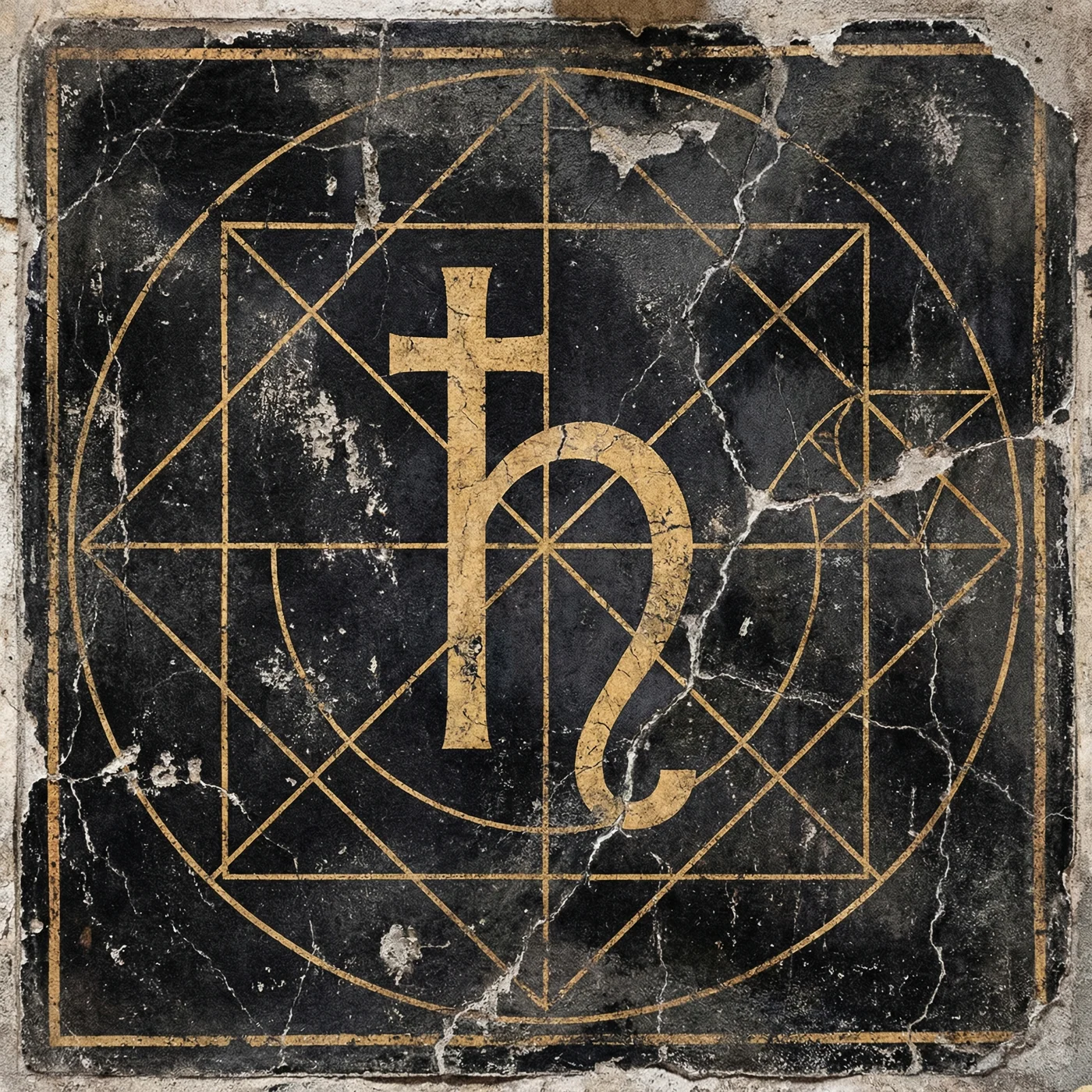
The Architecture of Authority
Every planet in your chart sits in a sign, and every sign has a ruler. That ruler becomes the dispositor—literally, the "one who disposes" or commands—of any planet visiting its domain. Mars in Gemini answers to Mercury. Venus in Capricorn takes orders from Saturn. The Sun in Pisces reports to Jupiter. But the chain does not end there. If Mars in Gemini answers to Mercury, and Mercury sits in Scorpio, then Mars ultimately answers to Pluto, Scorpio's ruler. Follow each thread upward, and you discover the hidden power structure of your psyche.
Most chains eventually terminate in what astrologers call a final dispositor—a planet sitting in the sign it rules, answering to no one but itself. Mars in Aries commands its own authority. The Moon in Cancer bows to no higher celestial power. These planets become the ultimate executives of your chart, the final arbiters to whom all other planetary energies must ultimately appeal.
But not all charts resolve so neatly. Some create mutual reception—two planets sitting in each other's signs, like Mars in Taurus while Venus occupies Aries. They share power in an eternal loop, neither commanding nor commanded, like two kings who have sworn fealty to each other. Others generate complex networks where multiple planets participate in longer cycles of authority, or where no planet achieves final sovereignty, leaving the psyche in a perpetual state of seeking higher approval that never comes.
The Ancient Logic of Celestial Hierarchy
The concept emerges from the fundamental astrological principle that planets are guests in the houses of the signs, and every guest must observe the customs of their host. When Venus enters Virgo—a sign ruled by Mercury—she must express herself according to Mercurial protocols. Her natural inclination toward beauty and harmony becomes filtered through Mercury's demand for precision and utility. She cannot simply do as she pleases; she must ask permission, follow procedures, submit to oversight.
This is not mere metaphor. The ancients understood that consciousness itself operates through hierarchical structures. Desires arise and must be processed through the faculties of judgment, which themselves depend on the clarity of perception, which relies on the stability of attention, and so forth. Nothing acts in isolation. Every impulse travels up and down chains of command, being modified, approved, rejected, or transformed at each level.
The dispositor chain maps this psychological bureaucracy with startling precision. It reveals not just what you want, but who gets to decide whether you may have it. It shows not just your talents, but which internal authority figures must approve their expression. Most importantly, it exposes the ultimate source of power in your psyche—the final dispositor that sits at the top of your personal hierarchy, accountable to no higher court.
The Decan's Shadow Command
Within each sign, the decans add another layer of authority. A planet may answer to the sign's ruler, but it must also reckon with the specific decan it occupies. Mars at five degrees of Gemini does not just report to Mercury as Gemini's ruler; it must also contend with THE APPLE OF EDEN, the first decan of Gemini, ruled by Jupiter and Mercury in their ancient partnership. Here, Mars encounters not just Mercurial intellectualism, but the specific flavor of intellectual temptation that comes with this decan—the dangerous sweetness of forbidden knowledge.
Consider Saturn placed in the second decan of Virgo, THE HAMMER AND THE ANVIL. Saturn already struggles in Mercury's domain, its slow, structural approach at odds with Virgoan analysis and refinement. But in this particular decan, ruled by Venus and Saturn together, a fascinating dynamic emerges. Saturn finds itself in its own decan-level domain while still answering to Mercury as the sign ruler. The planet becomes both master and servant, commanding its immediate environment while remaining subordinate to the larger Virgoan agenda of perfection through process.
This creates a complex political situation within the psyche. The Saturn function—discipline, limitation, structure—gains local authority over the crafting process itself, becoming the internal foreman who ensures quality through rigorous standards. Yet it must still submit its finished products to Mercury's editorial review. The result is often a personality that exhibits extraordinary skill in execution while remaining eternally dissatisfied with the final result, always seeing flaws that Mercury's analytical eye demands be corrected.
The Executive Decision
Understanding your dispositor chains transforms how you work with challenging aspects and difficult transits. Instead of battling a problem planet directly, you can appeal to its dispositor—the authority it must obey. If Mars in Libra creates indecisiveness in your career sector, the solution may not involve forcing Mars to be more aggressive, but rather strengthening Venus's capacity to make clear judgments about values and priorities. Mars will follow Venus's lead; ensure Venus knows what she wants, and Mars will find his direction.
When transiting planets activate your chart, they often trigger entire dispositor chains rather than single placements. Saturn's transit to your natal Mercury may seem like a straightforward test of your communication and thinking. But if Mercury disposes of three other planets in your chart, Saturn is actually examining the entire network of functions that depend on Mercury's clarity. The challenge becomes systemic rather than isolated.
The final dispositor reveals your chart's ultimate source of power and, consequently, its primary vulnerability. A chart with Mars as final dispositor operates from willpower and direct action, but collapses when courage fails. One culminating in Venus seeks harmony and beauty above all, but crumbles when forced to make harsh but necessary choices. Jupiter as final dispositor creates expansion and optimism as the highest values, but struggles when contraction and pessimism become temporarily necessary for survival.
Multiple final dispositors suggest a psyche with several competing executive functions, each claiming ultimate authority in different domains. This can create remarkable versatility—the ability to shift leadership styles as circumstances require—but also potential internal conflict when the executives disagree about policy. Mutual reception between final dispositors often indicates a personality that has learned to balance opposing principles, finding creative solutions that honor multiple values simultaneously.
The dispositor chain analysis works because it reflects how consciousness actually operates. We do not experience our desires, thoughts, and actions as isolated events, but as movements within an integrated system of internal governance. Some parts of us have veto power over others. Some functions serve as advisors while others make final decisions. Some aspects of personality operate with great autonomy while others require constant supervision and approval.
By mapping these relationships through dispositor chains, you gain insight into your own psychological constitution. You discover which planets in your chart wield real power and which merely follow orders. You identify the internal authorities whose approval you unconsciously seek, and the aspects of yourself that operate with genuine sovereignty. Most importantly, you learn to work with your chart's natural hierarchy rather than against it, appealing to the proper authorities and strengthening the executive functions that govern your most important life domains.
This knowledge becomes particularly valuable during periods of major transition or decision-making. Instead of trying to force change through willpower alone, you can trace the dispositor chains to find the planetary authorities that must approve and implement any significant life shift. You learn to speak the language that your own psyche understands, addressing your requests to the proper departments and following the chain of command that your birth chart establishes as law.
The Book of the Self, our comprehensive natal chart analysis, traces every dispositor chain in your chart to reveal the hidden power structure of your consciousness. Discover which planets truly govern your life's major themes and learn to work with your chart's natural authority system rather than against it.