The master of time — and the warden of fear.
You know the moment when someone asks what you do for work, and you find yourself straightening slightly, your voice taking on a different cadence as you recite your title and accomplishments. There's a weight behind your words—not quite pride, not quite performance, but something heavier. The mask of competence settles across your features with practiced ease, and for a heartbeat, you forget where the role ends and you begin. This is Saturn speaking through you, the archetypal Elder whose domain encompasses not just authority and achievement, but the complex shadow of becoming trapped within the very structures that once served your growth.
Saturn moves through your life as the cosmic teacher who refuses to grade on a curve. Unlike Jupiter's expansive optimism or Venus's harmonious attractions, Saturn demands that you earn every advancement through sustained effort and genuine mastery. This planet governs the slow accumulation of wisdom through experience, the development of inner authority through tested competence, and the gradual construction of lasting achievements. Yet Saturn's gifts always come wrapped in paradox: the very discipline that builds your strength can become a prison, the authority that serves others can corrupt your soul, and the mastery you've worked decades to achieve can calcify into rigid dogma.
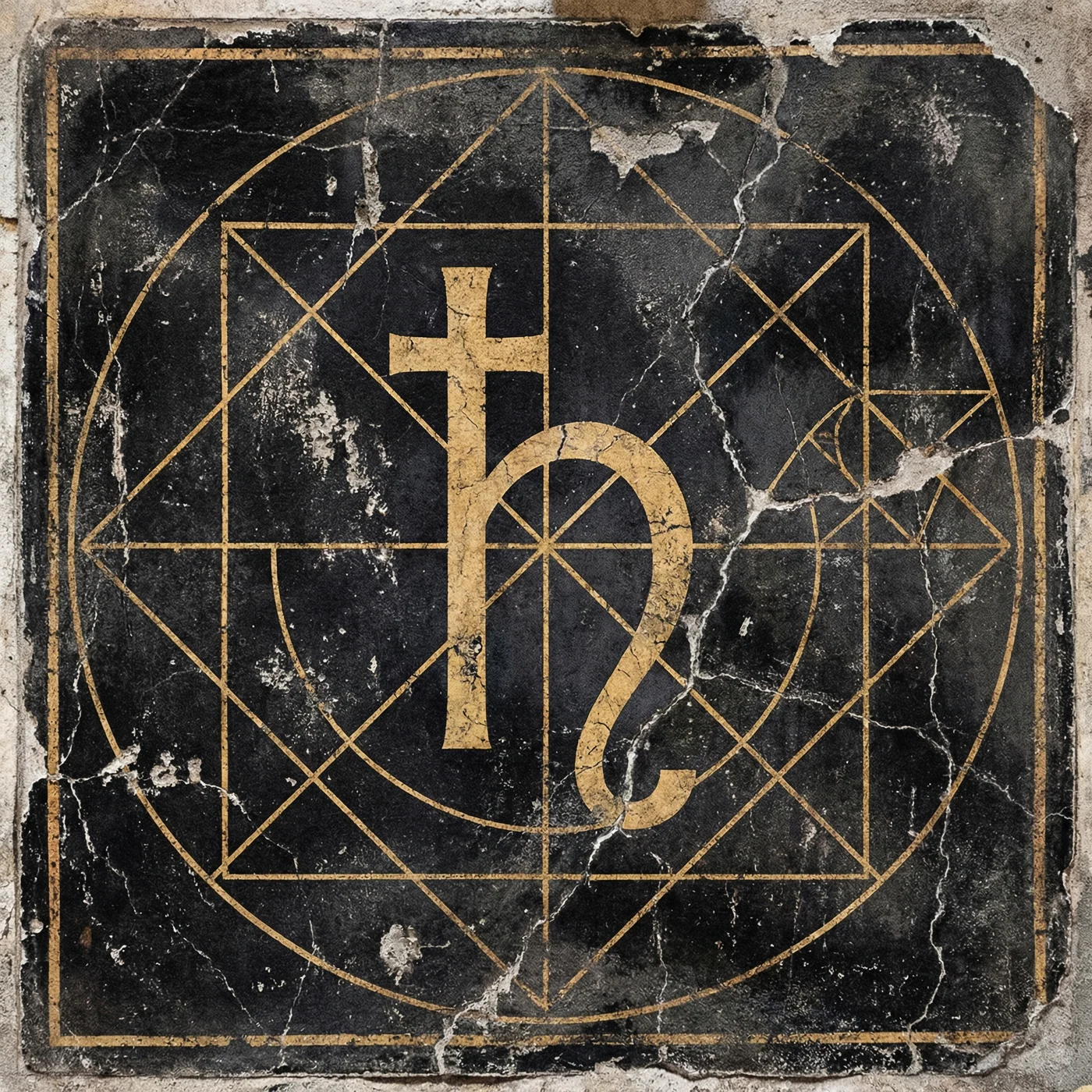
The Weight of the Crown
Saturn's mythology reveals the archetype's deepest tensions. The ancient Greeks knew him as Kronos, the Titan who devoured his own children to prevent them from usurping his throne. This image carries profound psychological truth—Saturn represents that aspect of consciousness that accumulates power and wisdom only to become terrified of losing it. The Elder archetype manifests as the part of you that has worked tirelessly to build something of value: expertise in your field, a respected position, a carefully constructed identity. But Kronos's story warns of what happens when the guardian becomes the tyrant, when the wise elder transforms into the jealous king who sees every younger voice as a threat to be silenced.
In Roman mythology, Saturn ruled the Golden Age—a time when humans lived in harmony with natural law, before the need for written codes or enforced hierarchies. This points to Saturn's highest expression: authentic authority that flows from genuine wisdom rather than imposed power. The Elder, in its mature form, governs through earned respect rather than demanded obedience. Such figures become living repositories of cultural wisdom, their very presence conveying the distilled essence of experience transformed into understanding.
The shadow emerges when this authority becomes attached to external validation rather than internal development. Saturn's dark side manifests as the professor who crushes students' enthusiasm to maintain superiority, the executive who creates unnecessary bureaucracy to justify position, or the spiritual teacher who mistakes followers' devotion for personal enlightenment. The Elder's shadow appears whenever wisdom becomes weaponized against growth, when the teacher forgets that true authority serves learning rather than ego.
The Architecture of Limitation
Saturn's power operates through structure and constraint, but these limitations serve a sacred purpose. Consider how a river gains its power not from the absence of banks but from their presence—the constraints focus and direct the flow, transforming scattered droplets into a force capable of carving canyons. Saturn works similarly in human development, creating the boundaries within which authentic strength can develop. The musician's daily practice creates the discipline that eventually enables spontaneous improvisation. The scientist's methodical research builds the foundation for intuitive breakthroughs. The parent's consistent boundaries provide the security within which a child's natural creativity can flourish.
This understanding illuminates Saturn's role in the decanic system, where the planet's influence takes on distinctive flavors depending on the sign and degree. In Taurus III: A String of Prayer Beads, Saturn operates with sole rulership, manifesting through the Seven of Pentacles—The Invisible Reckoning. Here, Saturn's energy focuses on patience and long-term cultivation, the slow accumulation of resources through sustained effort. The prayer beads represent repetitive spiritual practice, each bead a moment of conscious attention that builds toward eventual illumination. Yet the shadow appears as the Seven of Disks—Failure in the Thoth tradition, warning of projects that collapse through excessive attachment to outcome rather than dedication to process.
The prayer beads also reveal Saturn's connection to time and mortality. Each bead marks a moment that will not return, teaching the practitioner to honor the present while working toward future harvest. This decan carries the wisdom of accepting limitation as the pathway to transcendence—understanding that spiritual development requires the same patient accumulation as material success, but with even greater attention to motive and method.
The Crucible of Competence
Saturn's initiation always involves the transformation of raw potential into refined capability through sustained trial. Unlike Mars's explosive action or Mercury's quick adaptation, Saturn insists on thorough preparation, methodical development, and patient accumulation of experience. The planet governs those periods when progress seems impossibly slow, when each small advancement requires enormous effort, when the gap between aspiration and achievement feels insurmountable.
Yet these Saturnian passages serve essential functions in human development. They build the psychological foundation necessary to handle greater responsibilities without being corrupted by them. They develop the inner resilience needed to maintain equilibrium during success and failure alike. They create the deep competence that allows authentic authority to emerge naturally rather than being grasped desperately or imposed artificially.
The shadow of this process appears when the trials become ends in themselves rather than means toward greater service. Saturn's dark face emerges in the workaholic who equates exhaustion with virtue, the perfectionist who uses impossible standards to avoid completion, or the ascetic who mistakes deprivation for spiritual advancement. The Elder's shadow manifests whenever the tools of development become weapons of self-punishment or instruments of superiority over others who haven't endured similar trials.
Consider the master craftsperson who has spent decades perfecting technique. In Saturn's light, this figure becomes a repository of wisdom, capable of teaching through example and guiding others through the inevitable frustrations of learning. In Saturn's shadow, the same figure becomes possessive of knowledge, resentful of shortcuts or innovations, demanding that others suffer through identical struggles as proof of worthiness. The difference lies not in the expertise itself but in whether that expertise remains connected to its original purpose of creation and service.
The Alchemy of Authority
Saturn's greatest mystery involves the transformation of external authority into internal sovereignty. The planet governs the long journey from seeking approval and permission to becoming a source of wisdom and guidance for others. This process requires distinguishing between authentic power—which serves something greater than personal agenda—and false authority, which uses position or expertise to manipulate outcomes or control others.
True Saturnian authority emerges through what might be called "earned emptiness"—the paradoxical development of power through the release of attachment to power. The genuine Elder has moved beyond the need to prove competence because competence has become so thoroughly integrated that it operates transparently. Such figures command respect not by demanding it but by embodying principles worth respecting. They teach not by lecturing but by living examples of what sustained dedication can achieve.
The shadow appears when authority becomes confused with identity, when the role consumes the person rather than being held lightly as a function. Saturn's dark side emerges in leaders who cannot step down gracefully, teachers who punish students for surpassing them, or experts who defend outdated methods because admitting error would threaten their carefully constructed sense of self. The Elder's shadow manifests whenever wisdom becomes rigid dogma, when the very expertise that once served growth begins to inhibit further development.
This transformation requires what the alchemists called the solve et coagula—dissolve and reconstitute. Saturn periodically demands that you release attachment to previous achievements in order to access new levels of mastery. The professor must become a student again when entering unfamiliar territory. The executive must acknowledge limitations when facing unprecedented challenges. The parent must evolve methods when children reach new developmental stages. Each transition requires the humility to admit that previous knowledge, while valuable, may be insufficient for current circumstances.
Saturn's alchemy operates through cycles of building, testing, refining, and rebuilding. Each iteration develops greater sophistication and reliability, but only if the ego remains flexible enough to learn from failure and wise enough to question success. The Elder archetype matures through recognizing that true authority comes not from having all the answers but from asking better questions, not from avoiding mistakes but from learning faster from them.
Understanding Saturn's archetype and shadow provides essential guidance for navigating the planet's transits and natal placements. When Saturn aspects your chart, it asks: Where have you been avoiding necessary discipline? What structures need strengthening or rebuilding? How can you transform current limitations into future capabilities? The Elder within you seeks not to dominate but to serve, not to control but to guide, not to preserve static forms but to honor eternal principles through evolving expressions.
In your personal practice with Saturn's energy, remember that the planet rewards patience over urgency, depth over breadth, quality over quantity. Saturn teaches through repetition and refinement, building competence through accumulated experience rather than sudden illumination. Yet the goal remains freedom—the liberation that comes from developing such thorough mastery that technique becomes transparent, allowing authentic expression to flow unimpeded by self-doubt or external pressure.
For deeper exploration of how Saturn's archetype manifests through the specific degrees and aspects in your birth chart, detailed analysis awaits in The Book of the Shadow, where the Elder's influence through each decan reveals the particular flavor of authority and wisdom seeking expression through your unique celestial pattern.