The four numbers that arrive with a bill attached.
You've felt it before—that peculiar weight when certain numbers appear in your life, as if they carry more than mere mathematical value. Perhaps it arrives in your birth date, reduced to its final form, or surfaces in the calculations that reveal your life path. These are not ordinary numbers. They bear the accumulated gravity of unfinished business, the residue of choices that echo across lifetimes.
The karmic debt numbers—13, 14, 16, and 19—stand apart from their companions in numerological tradition. Where other numbers offer gifts or challenges, these four demand payment. They represent debts incurred through the misuse of power, the abandonment of responsibility, the corruption of sacred trust, or the willful destruction of what was meant to endure. To carry one of these numbers is to inherit an obligation that transcends this single lifetime.
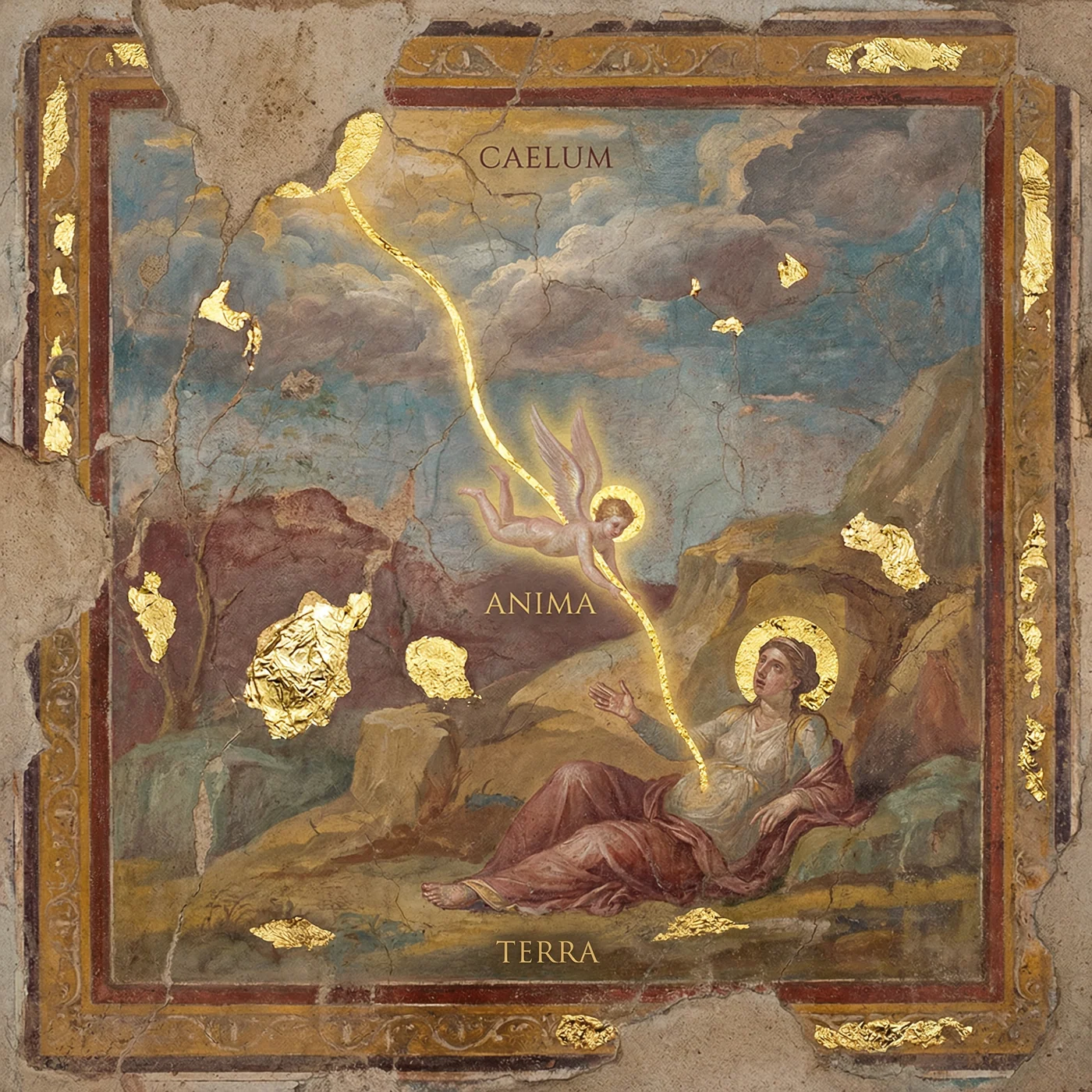
The Architecture of Debt
Karmic debt emerges from a specific understanding of numerical consciousness—that numbers themselves hold memory. In the esoteric traditions that preserve these teachings, each digit carries the imprint of every choice made under its influence. When patterns of misuse accumulate around certain numbers across lifetimes, they become vessels of correction. The universe, in its relentless pursuit of balance, ensures that what was taken must be returned, what was abandoned must be reclaimed, and what was corrupted must be purified.
The four karmic debt numbers represent the four fundamental ways spiritual law can be violated. Each corresponds to a different aspect of divine order that, when transgressed, creates an energetic imbalance requiring resolution. These are not punishments in the vindictive sense, but natural consequences—the soul's own deeper wisdom ensuring that every lesson is eventually learned.
Unlike ordinary challenging numbers, karmic debt numbers cannot be avoided or transcended through simple spiritual bypassing. They must be worked through, paid in full through conscious choice and deliberate action. The debt is not absolved by suffering alone, but by developing the very qualities that were lacking when the original transgression occurred.
The Lazy Tyrant: Karmic Debt 13
Thirteen carries the memory of power abandoned and responsibility shirked. In past lifetimes, souls bearing this debt held positions of authority but chose the path of least resistance, allowing their domains to fall into chaos while they pursued personal pleasure. They were the kings who abandoned their kingdoms for hunting expeditions while their people starved, the mothers who neglected their children for social advancement, the teachers who collected their wages while failing to educate their students.
The specific nature of this debt lies not in malicious intent, but in willful negligence. These souls knew their duties and possessed the capacity to fulfill them, yet consistently chose ease over obligation. They wielded power when convenient and abandoned it when effort was required. The karmic consequence is a lifetime where nothing comes easily—where every achievement demands persistent, methodical effort, and where the temptation to quit arrives at precisely the moment when breakthrough beckons.
Consider Sarah, born with a life path of 13/4, who finds herself repeatedly drawn to leadership positions she then wants to abandon when they become demanding. In her corporate career, she excels at initiating projects but struggles with follow-through. Her romantic relationships follow similar patterns—intense beginnings followed by retreat when commitment requires daily effort. Her debt is paid not through self-punishment, but by learning to stay present through difficulty, to choose persistence over pleasure, and to honor her commitments even when—especially when—they become inconvenient.
The path through karmic debt 13 requires developing what the ancients called "the discipline of the craftsman." Every task must be completed fully, every promise honored completely, every responsibility embraced without reservation. The soul learns that true power lies not in the ability to command, but in the willingness to serve faithfully, day after day, regardless of recognition or reward.
The Hedonistic Destroyer: Karmic Debt 14
Fourteen holds the vibration of freedom corrupted into license. In previous lifetimes, these souls were gifted with extraordinary personal liberty—perhaps as wealthy merchants, traveling artists, or members of privileged classes—but used their freedom to indulge every desire without consideration for consequence. They were the libertines who destroyed families through infidelity, the adventurers who abandoned children in pursuit of experience, the pleasure-seekers who consumed without creating, took without giving, and left destruction in their wake.
The original sin here was not the enjoyment of pleasure, but the transformation of sacred freedom into selfish indulgence. These souls mistook license for liberty, believing that spiritual evolution meant following every impulse without restraint. They failed to understand that true freedom requires the wisdom to choose wisely, not the ability to choose without limit.
The karmic consequence manifests as a lifetime where moderation must be learned through extremes. Souls carrying debt 14 often struggle with addiction, compulsion, or the inability to establish healthy boundaries. They may swing between periods of rigid self-denial and complete abandon, gradually learning to find the middle path that their past lives abandoned.
Marcus, whose birth date reduces to 14/5, exemplifies this pattern. In his twenties, he cycled through relationships with alarming speed, unable to commit because every new person seemed to offer experiences he might miss. His career followed similar patterns—brilliant bursts of creativity followed by self-destructive behavior that sabotaged his success. His karmic work involves learning that true freedom comes not from having infinite options, but from making conscious choices and honoring their consequences. Each time he chooses commitment over novelty, discipline over impulse, he pays down his debt.
The resolution of karmic debt 14 requires what mystics call "sacred restraint"—the recognition that limitation, voluntarily chosen, becomes the foundation of authentic freedom. The soul must learn to say no to lesser pleasures in service of greater purposes, to choose depth over breadth, quality over quantity.
The Corrupted Sanctuary: Karmic Debt 16
Sixteen carries perhaps the heaviest burden—the memory of spiritual corruption. In past incarnations, these souls held sacred trust as priests, healers, teachers, or guides, but used their positions to manipulate, control, or exploit those who came to them for help. They were the temple priests who sold spiritual favors, the healers who created dependency rather than cure, the teachers who hoarded knowledge to maintain power, the gurus who used spiritual authority for sexual or financial exploitation.
The profound nature of this debt lies in the betrayal of sacred trust. Spiritual authority carries with it the responsibility to serve the highest good, to facilitate others' connection with the divine, and to protect the vulnerable who seek guidance. When this trust is violated, it creates a karmic wound that affects not only the perpetrator but everyone they misled, creating ripples of spiritual confusion and cynicism that can persist across lifetimes.
The karmic consequence manifests as a lifetime of spiritual crisis and reconstruction. Souls with debt 16 often experience dramatic upheavals—sudden loss of status, public humiliation, or the collapse of carefully constructed identities. These events, though painful, serve to strip away the ego's pretensions and force a confrontation with authentic spiritual truth.
Consider Elizabeth, born on a date that reduces to 16/7, who spent her early career as a successful New Age teacher, subtly manipulating her students' devotion to maintain her lifestyle and ego gratification. The karmic reckoning arrived when her methods were publicly exposed, destroying her reputation and forcing her into years of genuine spiritual practice. Her debt is paid through rebuilding from authentic humility—learning to serve without ego, to teach without claiming superiority, to guide without controlling.
The path through karmic debt 16 requires complete spiritual surrender and reconstruction. The soul must learn to distinguish between genuine spiritual authority and ego inflation, between true service and subtle manipulation. Only by experiencing the complete collapse of false spiritual identity can authentic spiritual power eventually emerge.
The Selfish Sovereign: Karmic Debt 19
Nineteen carries the memory of independence twisted into isolation. In previous lifetimes, these souls were granted exceptional personal power and capability, but used their gifts solely for self-advancement while ignoring their obligations to others. They were the brilliant inventors who hoarded their discoveries, the gifted leaders who served only their own interests, the capable individuals who could have lifted many but chose to elevate only themselves.
The specific transgression was not the development of personal power, but the refusal to use that power in service of the collective good. These souls believed that strength meant needing no one and helping no one—that independence required isolation and that personal advancement justified any means.
The karmic consequence appears as a lifetime where cooperation must be learned through enforced interdependence. Souls carrying debt 19 often find their natural capabilities somehow blocked or their independent efforts repeatedly frustrated until they learn to work with others. They may experience repeated failures when working alone, followed by unexpected success when they allow others to contribute.
James, whose life path calculates to 19/1, exemplifies this pattern. A natural entrepreneur with brilliant ideas, he repeatedly failed when attempting to build businesses single-handedly, refusing partners or employees until financial necessity forced collaboration. Each time he succeeded, it was because he learned to value others' contributions, to share credit and power, to use his capabilities in service of something larger than personal ambition.
The resolution of karmic debt 19 requires developing what the traditions call "enlightened leadership"—the recognition that true power serves the whole, that genuine independence comes through interdependence, and that the highest expression of individual capability is its conscious dedication to collective benefit.
Working with Karmic Debt
The presence of a karmic debt number in your chart is not a curse but an opportunity for accelerated spiritual growth. These numbers indicate areas where your soul has chosen to focus its evolutionary work in this lifetime. The debt can be paid through conscious choice, deliberate practice, and the gradual development of the qualities that were lacking in previous incarnations.
Recognition is the first step. If you carry one of these numbers, observe the patterns in your life that reflect its particular challenge. Notice where you encounter repeated obstacles, where your natural tendencies lead to difficulty, where the same lessons appear in different forms. These patterns point toward the specific nature of your karmic work.
The second step is acceptance without victimization. Karmic debt is not punishment but opportunity. Your soul chose this work because it was ready to transcend the limitations that created the original imbalance. Every challenge presents a chance to choose differently, to develop the qualities that transform debt into wisdom.
The third step is conscious practice. Each karmic debt number requires the cultivation of specific virtues: persistence and responsibility for 13, moderation and conscious choice for 14, spiritual humility and authentic service for 16, cooperative leadership and enlightened independence for 19. Daily practice of these qualities, especially when they feel difficult or unnatural, gradually dissolves the karmic pattern.
The ultimate goal is not the elimination of challenge but its transformation into wisdom. When karmic debt is fully resolved, its number becomes a source of extraordinary strength. The soul that has learned true responsibility gains unshakeable reliability. The one who has mastered sacred restraint enjoys authentic freedom. The spirit that has rebuilt from spiritual humility becomes a pure channel of divine wisdom. The consciousness that has learned enlightened leadership becomes an unstoppable force for collective good.
For those seeking deeper understanding of how karmic debt numbers interact with the full spectrum of astrological influences in your chart, The Book of the Pattern offers comprehensive analysis of these numerical threads woven through your personal celestial mandala, revealing how ancient debts and eternal gifts combine to create your unique path of spiritual unfoldment.