Each in the other's sign — the old remedy for hard placements.
You've felt it before — that uncanny moment when two seemingly separate parts of your life suddenly reveal themselves as mirror images, each one holding the key the other desperately needs. The ambitious project that finally clicks when you stop forcing it and let your intuition guide the way. The relationship that transforms from struggle to symbiosis when both people recognize they've been offering exactly what the other lacks. The creative breakthrough that arrives not through raw effort alone, but through the marriage of discipline and inspiration.
This is mutual reception at work — one of astrology's most elegant and powerful dynamics, where two planets become cosmic trading partners, each dwelling in the sign the other rules, each offering the other a home away from home.
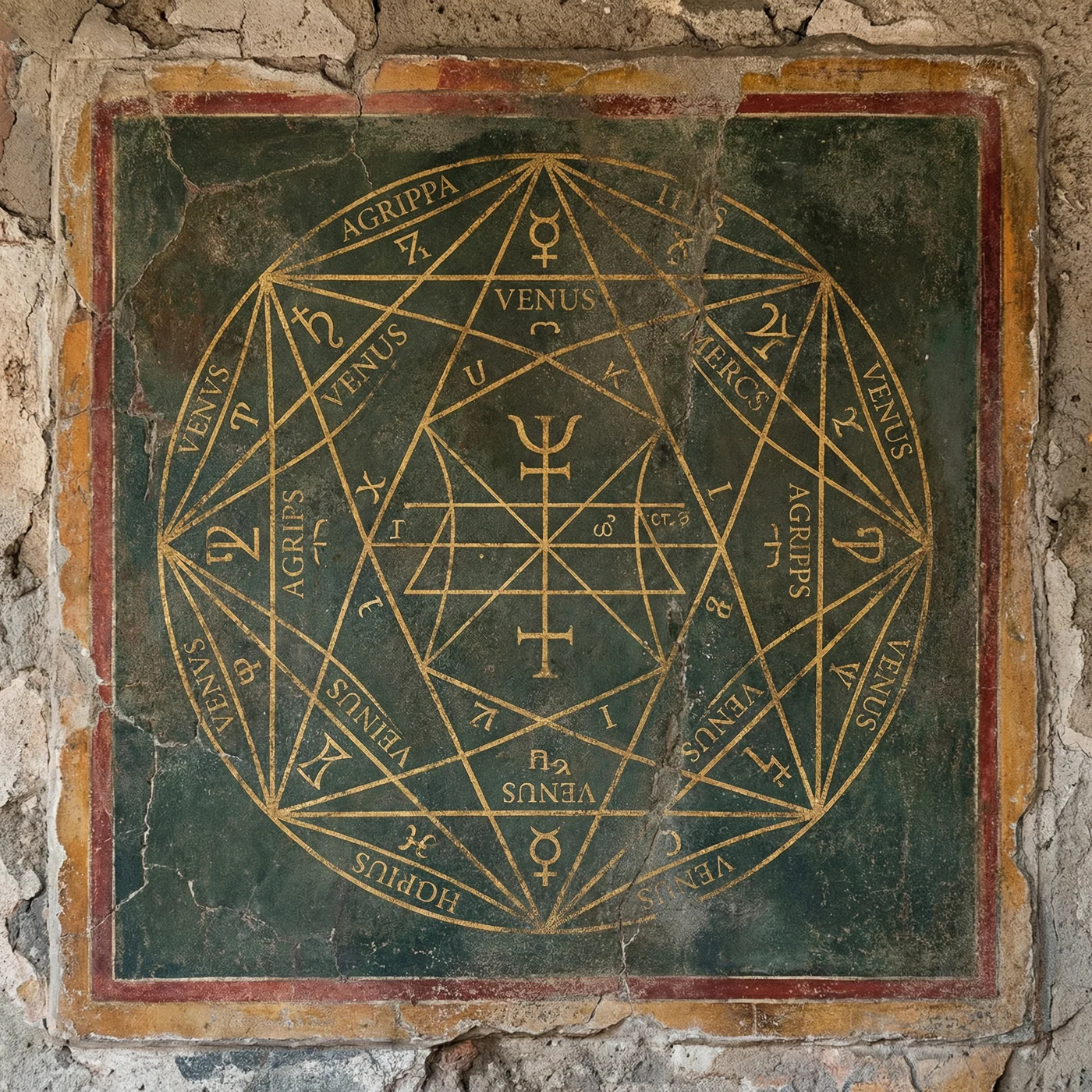
The Ancient Art of Planetary Exchange
In the medieval courts of 8th-century Baghdad, astrologers spoke of reception as they might describe diplomatic relations between kingdoms. When a planet found itself in a foreign sign, its condition depended entirely on the relationship between its own nature and that of its host. But mutual reception represented something far more sophisticated — a formal exchange of ambassadors, a treaty of mutual support that elevated both parties above their individual circumstances.
The tradition understood that planets, like people, could find themselves in situations where their natural expression faced obstacles. Mars in Libra, for instance, struggles to assert itself directly in the sign of balance and compromise. Venus in Aries finds her natural grace overwhelmed by the ram's urgency and combativeness. But when these two planets occupy each other's signs simultaneously — Mars in Libra while Venus transits Aries, or when they hold these positions in your birth chart — something remarkable occurs. Each planet gains access to its own kingdom through the other, creating a bridge that allows both to function with renewed strength and purpose.
This celestial diplomacy transforms what might otherwise be challenging placements into sources of creative tension and mutual empowerment. The planets become allies rather than strangers in foreign lands, each one serving as the other's advocate and pathway home.
The Alchemy of Symbiosis
Mutual reception operates like a sophisticated switching system in the architecture of your psyche. Rather than two separate functions struggling in isolation, you gain access to an integrated circuit where energies can flow back and forth, each one informing and strengthening the other. The houses involved become equally connected — if Mars occupies your 7th house of relationships while Venus dwells in your 10th house of career, these life areas develop an intricate dialogue that enriches both.
Consider the person born with Mercury in Pisces and Neptune in Gemini — a mutual reception between the planet of rational thought and the planet of dreams and intuition. Mercury typically struggles in Neptune's watery sign, where logic dissolves into impression and feeling. Neptune, in turn, can feel scattered in Mercury's airy domain, where its vast visions must be articulated in words and concepts. But their mutual reception creates a unique gift: the ability to think poetically and dream logically, to communicate the ineffable and give structure to inspiration.
The houses they occupy become equally entwined. If Mercury in Pisces occupies the 5th house of creativity while Neptune in Gemini resides in the 8th house of transformation, this person's creative expression becomes deeply transformative, while their approach to life's profound changes maintains a playful, experimental quality. They might be the therapist who heals through storytelling, the artist whose work guides others through their darkest passages, the teacher who transforms lives through imagination made manifest.
The Dance of Complementary Tensions
What makes mutual reception so powerful is not the elimination of tension, but its transformation into productive dialogue. The planets don't simply cancel out each other's difficulties — they create a dynamic system where apparent contradictions become sources of strength and creativity.
Take the mutual reception between Saturn in Cancer and the Moon in Capricorn. Saturn, the planet of structure and discipline, feels uncomfortable in Cancer's emotional, nurturing waters. The Moon, governing instinct and feeling, struggles in Capricorn's ambitious, goal-oriented landscape. Yet their exchange creates individuals who can build lasting emotional security and nurture others through practical support. They become the mother who teaches independence through steady encouragement, the leader who guides through emotional intelligence, the architect of institutions that truly serve human needs.
The houses involved develop a similar symbiosis. If Saturn in Cancer occupies the 2nd house of resources and values while the Moon in Capricorn dwells in the 9th house of higher learning and philosophy, this person's approach to security becomes philosophically informed, while their wisdom-seeking takes on a practical, resource-building quality. They might be the professor who creates educational programs that provide real financial opportunity for students, or the financial advisor whose investment philosophy stems from deep study of human nature and social cycles.
The Decan's Deeper Message
The power of mutual reception becomes even more nuanced when we consider the decans involved. A Mars in Libra II, A BLINDFOLD AND A SWORD — ruled by Venus — creates a different flavor of reception with Venus in Aries than Mars in Libra III, A GYROSCOPE, ruled by Jupiter, Mercury, and Saturn. The first brings Venus's diplomatic skills into Mars's strategic thinking, creating someone who fights for justice through measured, beautiful action. The second adds layers of philosophical depth and communicative precision to the exchange.
When Venus occupies Aries I, THE AXE — ruled by Mars — her receptive relationship with Mars in any decan of Libra takes on the quality of the pioneer, the one who blazes trails in relationships and aesthetics. But Venus in Aries III, THE BURNING ROSE — ruled by Venus and Jupiter — creates a more expansive, generous quality to the mutual support, where both planets serve not just each other but a larger vision of harmony and growth.
Living the Exchange
Working consciously with mutual reception begins with recognizing that the planets involved are not separate functions but parts of an integrated system. Rather than trying to balance them or choose between them, you learn to let them inform each other. The person with Mercury in Pisces and Neptune in Gemini doesn't need to become more logical or more intuitive — they need to discover how logic and intuition can dance together, how clear thinking can serve visionary purposes and how dreams can organize themselves into communicable form.
The houses involved offer clues about where this integration wants to manifest in your life. They become areas of natural synthesis, where you can most easily access the gifts of your planetary exchange. If your mutual reception connects the 3rd house of communication and the 11th house of community, your everyday interactions become vehicles for building the future you envision, while your involvement in groups and causes enriches your ability to connect with individuals.
Pay attention to transits that activate both planets simultaneously — these periods often bring opportunities to experience the full power of your reception. When a transit planet forms aspects to both ends of your mutual reception, it's like adding a third voice to the conversation, often catalyzing new levels of integration and expression.
The work is not to resolve the tension between the planets but to become fluent in their exchange, to develop the capacity to move consciously between their domains and to recognize how each one's gifts can serve the other's purposes. This is the art of living multiple truths simultaneously, of being complex enough to hold apparent contradictions as sources of richness rather than confusion.
Your birth chart maps not just who you are, but how all the parts of who you are can work together in increasingly sophisticated ways. The Book of the Self reveals these patterns of mutual support and creative tension, showing you not just your planetary placements but the intricate web of relationships that connects them into a living, breathing system of consciousness.