Neptune in the third house — where that energy actually plays out in a life.
You know that moment when someone asks you a direct question and instead of answering, you find yourself telling them a story that somehow contains the truth they were seeking, but sideways, like light refracted through water? Or when you sit down to write an email and three hours later discover you've filled twelve pages with observations about the quality of afternoon light, the neighbor's cat, and a half-remembered dream—everything except what you meant to say? This is the signature of Neptune in the third house, where the boundary between message and mystery dissolves.
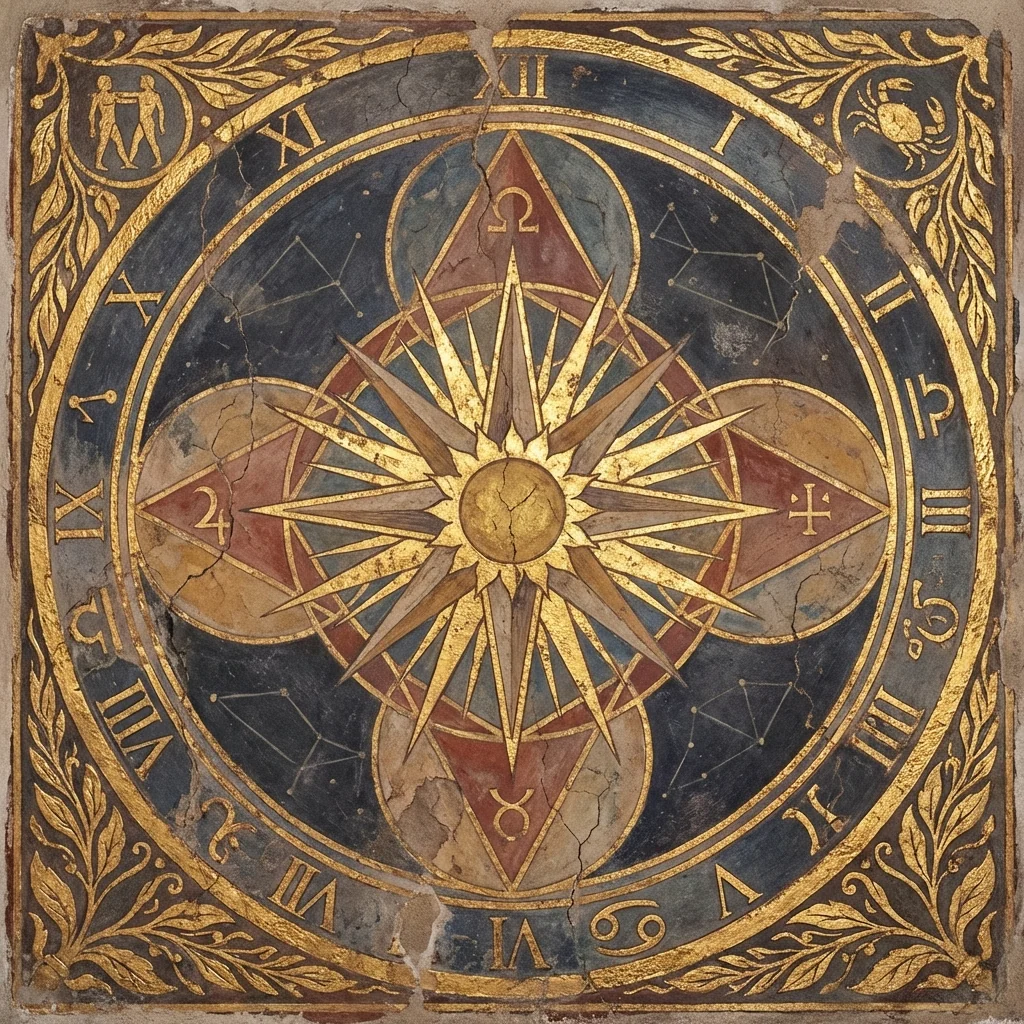
The Mercurial Waters
The third house belongs to Mercury—swift messenger, keeper of facts, ruler of the immediate environment where information flows like quicksilver between siblings, neighbors, and the familiar landmarks of daily life. It governs your morning commute, the conversations that happen over coffee, the way your mind processes the constant stream of data that modern life demands. Mercury wants clarity, efficiency, the shortest distance between question and answer.
But when Neptune settles into this house, something altogether different begins to happen. Neptune is the planet of dissolution, the force that erases boundaries and reveals the fluid nature of what seemed solid. Where Mercury seeks to categorize and compartmentalize, Neptune arrives with its endless capacity to blur edges, to show you that every fact contains a mystery and every word carries depths that rational analysis cannot fathom.
This is not a comfortable arrangement. Mercury's realm operates on the principle that communication should be clear, that learning should be measurable, that the mind should function like a well-ordered filing system. Neptune introduces an entirely different logic—the logic of dreams, where symbols speak louder than statements, where meaning arrives through intuition rather than instruction, where the most important truths can only be approached indirectly.
Those who carry this placement often discover early that their relationship with language is more complex than their teachers expected. They may struggle with traditional learning methods not because they lack intelligence, but because their minds naturally seek the poetry hidden within prose, the emotional undertones beneath surface meanings. They are the students who understand the feeling of a mathematical concept before they grasp its mechanics, who remember the story but forget the dates, who can sense when someone is lying long before they can explain why.
The Dissolution of Boundaries
The third house encompasses your immediate environment—the neighborhood you navigate, the siblings you grew up with, the short journeys that weave through your daily existence. With Neptune here, these familiar territories become something more mysterious. The boundary between your inner world and the external landscape begins to blur. You might find yourself unusually sensitive to the emotional atmosphere of places, able to sense the stories that linger in old buildings or feel the collective mood of a crowded street.
This sensitivity extends to your relationships with siblings and neighbors. Where others experience these connections as straightforward family dynamics or casual social interactions, you encounter something more layered. You may find yourself unconsciously absorbing the emotions and thoughts of those closest to you, becoming a kind of psychic sponge that soaks up the unspoken feelings circulating through your immediate environment. This can manifest as an uncanny ability to know what your sister is thinking before she calls, or to sense when trouble is brewing in a neighbor's household.
The challenge lies not in the sensitivity itself, but in learning to distinguish between your own thoughts and feelings and those you're unconsciously collecting from others. Without clear boundaries, you might find yourself thinking thoughts that don't belong to you, feeling emotions that have no obvious source, or becoming overwhelmed by the subtle psychic static that most people naturally filter out.
Your daily commutes and routine journeys take on a different quality as well. Rather than simply moving from point A to point B, you're likely to find these travels becoming meditative passages where insights arise unbidden, where you notice synchronicities that others miss, where the rhythm of movement becomes a kind of moving meditation. You might discover that your best ideas come not at your desk, but while walking, driving, or riding the bus—when your conscious mind relaxes and allows Neptune's more fluid awareness to surface.
The Language of Dreams
Communication itself undergoes a fundamental transformation when Neptune inhabits Mercury's domain. Your natural speaking and writing style likely carries an undercurrent of poetry, even when you're discussing mundane matters. You may find that you communicate more through implication than direct statement, trusting that your listeners will pick up on the emotional frequencies you're transmitting alongside your words.
This can create both profound connections and frustrating misunderstandings. When speaking with someone who operates on Neptune's wavelength, your conversations may flow like a dance, each participant intuitively understanding not just what's being said, but what remains unspoken. These exchanges often feel less like information transfer and more like mutual recognition—moments when you realize you're both seeing the same invisible patterns, feeling the same subtle currents.
But when interfacing with purely Mercury-ruled communicators—those who expect linear arguments, concrete examples, and measurable outcomes—you may find yourself struggling to translate your intuitive insights into acceptable formats. Your natural tendency to communicate through metaphor and suggestion can be misinterpreted as vagueness or confusion, when in fact you're operating from a more subtle and often more accurate understanding of the situation.
Learning, for you, happens through absorption rather than analysis. You're likely to understand concepts by allowing them to permeate your consciousness over time, rather than through systematic study. This can make traditional educational environments challenging, especially those that emphasize memorization, rigid timelines, or purely logical approaches to complex subjects. Your mind works more like a tidal pool than a computer—slowly collecting information, allowing it to settle and transform, until suddenly you discover you understand something you never consciously studied.
A Practical Example
Consider Sarah, who has Neptune in the third house in Pisces. As a child, she struggled in traditional classrooms where teachers expected immediate, factual responses to direct questions. When asked to explain a historical event, Sarah would naturally begin by describing how it felt to live through that time period, painting atmospheric pictures that captured the emotional reality of the situation. Her teachers often marked these responses as "off-topic," missing the profound accuracy of her intuitive grasp of historical forces.
Her relationship with her younger brother developed along similarly non-linear patterns. Rather than the typical sibling dynamic of competition and clear boundaries, Sarah found herself unconsciously tuning into his emotional states, often knowing when he was upset or excited before he expressed it directly. This created a deep bond between them, but also periods of confusion when Sarah couldn't distinguish between her own feelings and those she was picking up from him.
In her daily life, Sarah discovered that her morning walks to the coffee shop had become a kind of informal divination practice. She would set out with questions on her mind and consistently found that answers would arrive—not through logical reasoning, but through the interplay of overheard conversations, chance encounters, and sudden insights that seemed to emerge from the rhythm of her footsteps. What began as a simple routine gradually evolved into a sophisticated form of intuitive problem-solving.
As Sarah learned to work consciously with Neptune's influence, she developed techniques for distinguishing between her own intuition and psychic static from her environment. She began keeping a daily journal where she recorded not just events, but the emotional atmosphere surrounding them. This practice helped her recognize patterns and develop trust in her non-linear way of understanding the world.
She also discovered that her natural communication style, while challenging in purely logical contexts, was tremendously effective in situations requiring empathy, creativity, or the ability to translate complex emotional realities into understandable language. She found work as a counselor, where her Neptune-influenced communication became a gift rather than a handicap.
Working with the Depths
Living consciously with Neptune in the third house requires developing what might be called "fluid boundaries"—the ability to open and close your psychic sensitivity as situations demand. This begins with recognizing that your different way of processing information is not a deficit, but an alternative form of intelligence that can perceive subtleties others miss.
Develop a daily practice of distinguishing between your own thoughts and those you're unconsciously collecting from your environment. This might involve spending a few minutes each morning in silence, noting what thoughts and feelings are present before you engage with other people. Similarly, taking time to "clear" yourself after intense interactions can prevent you from carrying others' emotional residue.
Create space for non-linear learning in your life. Rather than forcing yourself into purely analytical approaches, experiment with study methods that allow for Neptune's more fluid style of understanding. This might mean studying history through historical fiction, approaching science through its philosophical implications, or learning languages through immersion in their cultural contexts rather than through grammar rules alone.
Pay attention to the synchronicities and subtle patterns that emerge in your daily environment. Neptune in the third house often manifests as an increased sensitivity to the meaningful coincidences and symbolic communications that surround us constantly. Keeping a record of these observations can help you recognize and trust your intuitive navigation system.
Most importantly, learn to value the different kind of truth that emerges through Neptune's influence. While Mercury seeks facts, Neptune reveals meaning. While logical analysis provides clarity about how things work, Neptunian awareness offers insight into what things mean and why they matter. Both forms of understanding are necessary; your challenge is to honor your natural affinity for Neptune's deeper currents while developing enough Mercurial skill to communicate your insights effectively.
The path of Neptune in the third house is ultimately about becoming a bridge between the visible and invisible worlds, learning to translate the subtle languages of feeling, symbol, and intuition into forms that can serve both your own understanding and your ability to help others navigate the mysterious depths that lie beneath the surface of everyday communication.
For those seeking to explore the full depth of Neptune's influence across all areas of life, The Book of the Self offers a complete analysis of how this planet of dreams and dissolution shapes your personal journey through its placement by sign, house, and aspect within the larger symphony of your birth chart.