Life Path 3, Destiny 3, Soul Urge 3 — the digit's full character.
You have felt it before—that moment when something incomplete suddenly finds its resolution. Two voices arguing until a third perspective emerges that encompasses both. A melody that plays its theme, develops it, then returns transformed. The breath that moves from emptiness through fullness back to emptiness, but changed. This is the signature of three: not mere addition, but the birth of something entirely new from the marriage of opposites.
Three carries within itself the entire arc of manifestation. Where two creates tension, three creates resolution. Where two establishes polarity, three establishes direction. It is the first number that contains both unity and multiplicity, both the journey and its completion. In the language of the ancients, three is the number of time itself—past, present, and future woven into a single thread.
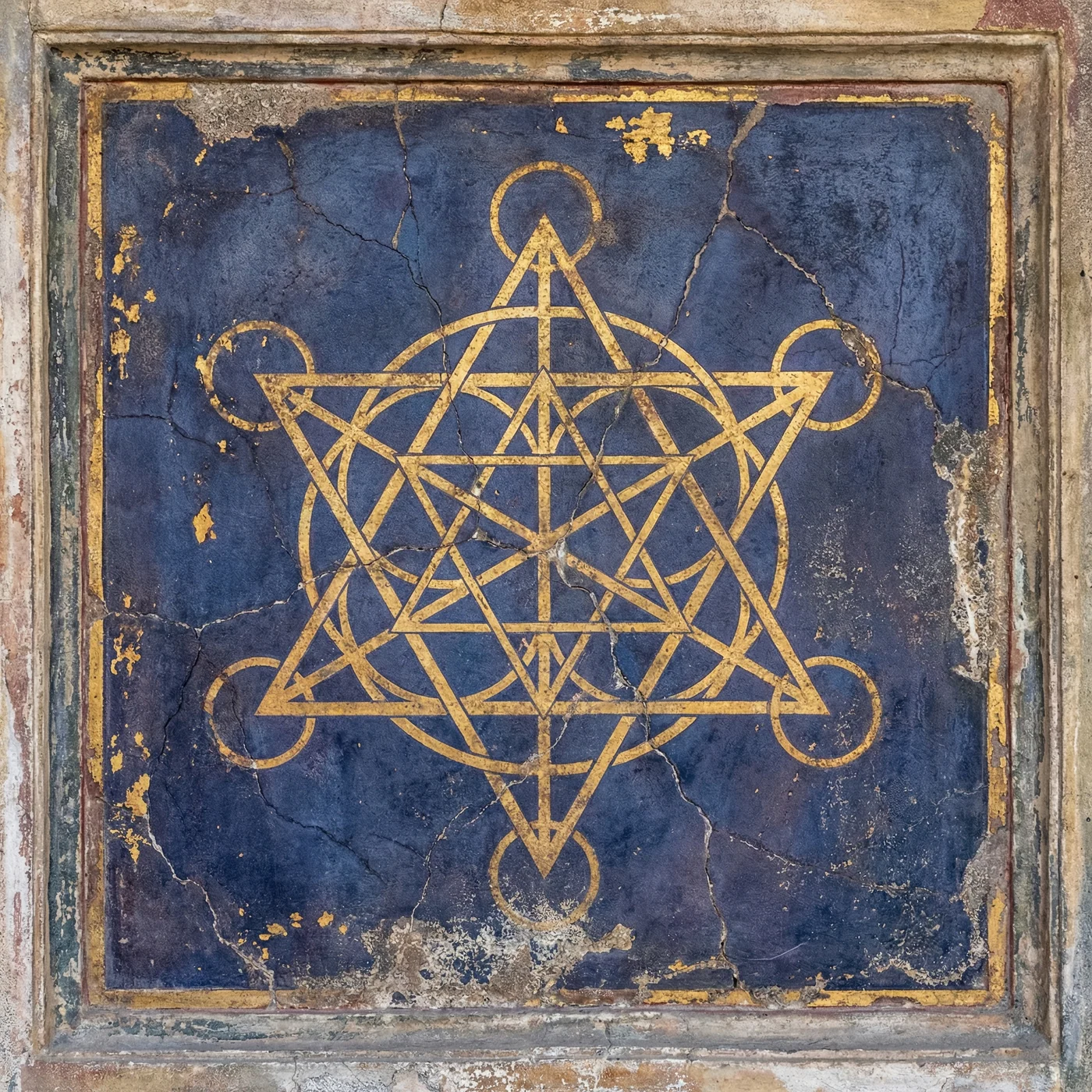
The Architecture of Becoming
Every process that creates lasting change follows the hidden geometry of three. First comes the initial impulse, the cardinal moment when something new enters the world. This is the spark that disrupts the existing order, the seed that carries within itself the entire oak. Then follows the period of stabilization, when the new reality establishes itself, puts down roots, finds its form. Finally arrives the moment of release, when what has been accomplished must let go of its rigid structure to become something greater.
The zodiac itself is built upon this threefold foundation. Each sign unfolds through three faces—three ten-degree segments that ancient astrologers called decans. The first decan initiates, bursting forth with the pure essence of the sign. The second decan stabilizes, developing and deepening that essence into something substantial. The third decan transforms, preparing for the transition into the next sign's territory.
Consider Aries, the great initiator. Its first decan, The Axe, splits through obstacles with pure Martian force. Its second decan, The Crown, establishes that force as royal authority under the Sun's influence. Its third decan, The Burning Rose, transforms aggression into art through Venus, preparing for Taurus's earthly concerns. Each sign follows this same pattern—cardinal impulse, fixed development, mutable transformation.
This is not merely astronomical convenience but reflects something fundamental about how consciousness itself evolves. Every learning follows this arc. First we encounter something new that shatters our existing understanding. Then we work to integrate this new knowledge, making it stable and reliable. Finally we transcend our previous limitations, ready for the next level of understanding.
The Alchemical Trinity
The medieval alchemists, those physician-priests of transformation, encoded this wisdom in their trinity of principles. They spoke of Salt, Mercury, and Sulphur—not the crude physical substances, but the archetypal forces that govern all change. Salt represented the principle of crystallization, the force that gives form and structure to the ethereal. Mercury embodied the principle of flow and communication, the bridge between worlds. Sulphur carried the principle of combustion, the fire that dissolves what has become rigid.
Every alchemical work—whether performed in the laboratory or the soul—required all three principles working in harmony. Too much Salt produced dead crystallization, beautiful perhaps but lifeless. Too much Mercury created endless flux without substance. Too much Sulphur burned everything to ash before it could mature. The art lay in knowing when each principle should predominate.
The same trinity appears in astrology as the modes: Cardinal, Fixed, and Mutable. Cardinal signs (Aries, Cancer, Libra, Capricorn) embody the Sulphur principle, igniting new cycles at each season's turning. Fixed signs (Taurus, Leo, Scorpio, Aquarius) manifest the Salt principle, stabilizing what the cardinal signs initiated. Mutable signs (Gemini, Virgo, Sagittarius, Pisces) express the Mercury principle, dissolving rigid forms to prepare for new creation.
This pattern repeats at every level of astrological analysis. Within each sign, the three decans follow the same progression. Within each decan, the planets themselves dance through the same threefold cycle of emergence, establishment, and transcendence.
The Net of Happiness
In the watery depths of late Pisces lies a decan called The Net, governed by the interplay of Jupiter and Mars. Here we find the Nine of Cups, known in the Rider-Waite tradition as the card of wishes fulfilled, but in the deeper Hermetic current as the Lord of Material Happiness. This placement illustrates perfectly how three operates in the realm of lived experience.
The figure in The Net has learned the most difficult art of all—how to hold simultaneously the spiritual and material dimensions of existence without sacrificing either. This is not the naive happiness of getting what we want, but the mature contentment of one who has learned to want what serves both heaven and earth. The net itself represents the skill of catching what nourishes while allowing what depletes to pass through.
This decan falls in the third phase of the third water sign, making it triply concerned with the completion of emotional and spiritual development. Those touched by this influence often find themselves called to serve as bridges between worlds—the mystic who can speak to merchants, the artist who transforms suffering into beauty, the healer who works as comfortably with insurance forms as with subtle energies.
The traditional image shows a man inverted, his feet where his head should be, offering sustenance from a tray that appears to have been well-used. This inversion signals that his priorities have been reversed from the common understanding. He is grounded not in material security but in spiritual truth, yet from this inverted position he provides real nourishment to others. This is the paradox of three—by embracing the tension between opposites, it creates something that serves both.
The path to this mastery is neither simple nor comfortable. Jupiter brings expansion and optimism, the faith that life is fundamentally benevolent. Mars brings the warrior's discipline and the willingness to fight for what matters. When these forces combine in the mutable water of late Pisces, the result is a person who can remain optimistic while doing battle, who can fight without hatred, who can win without destroying the opponent.
The Sacred Geometry of Threes
Ancient architects knew that three points define a plane—the minimum structure needed to create stable space. Two points create only a line, which has direction but no substance. Add a third point and suddenly you have area, volume, the possibility of construction. This geometric truth mirrors the metaphysical principle: two creates relationship, but three creates reality.
In human psychology, we see this same pattern. The child exists in unity with the mother. Then comes the recognition of otherness, the discovery that mother and child are separate beings—the fundamental experience of two-ness that creates both love and suffering. Only later comes the mature recognition that separation and unity are both partial truths, that relationship itself is the third thing that transcends both merger and isolation.
Every healthy relationship requires this threefold structure. There is you, there is the other, and there is the relationship itself—a third entity with its own needs and wisdom. Couples who understand this give attention not just to individual needs but to feeding the relationship as a living thing. Parents know that the family is more than the sum of its members, requiring its own care and tending.
In the larger cycles of civilization, we can trace this same pattern. A culture begins with a powerful founding vision—the cardinal moment of creation. It develops institutions and traditions that embody this vision—the fixed period of establishment. Finally it must transform or die, releasing what has become rigid while preserving what remains vital—the mutable phase of renewal.
Working with the Power of Three
To work consciously with the principle of three requires patience and discernment. It means learning to recognize where you are in any particular cycle—are you in the initiating phase, where bold action is needed? The stabilizing phase, where patient development serves? Or the transforming phase, where letting go creates space for the new?
In practical terms, this might mean structuring your projects in three phases: conception, development, and completion. Each phase has its own rhythm and requirements. The conception phase needs space for inspiration and experimentation. The development phase requires discipline and sustained effort. The completion phase demands the wisdom to know when to stop perfecting and the courage to release your creation into the world.
The same principle applies to personal growth. Spiritual development rarely happens through steady linear progress but through cycles of breakthrough, integration, and transcendence. The breakthrough moments are gifts of grace that cannot be forced. The integration periods require patient daily practice to stabilize new insights. The transcendence phases ask us to release our attachment to previous levels of understanding to make room for continued growth.
In relationships, honoring the principle of three means recognizing that every significant partnership will move through seasons. There will be times of passionate beginning, times of steady building, and times of necessary change. Each phase has its gifts and challenges. The art lies in not trying to force all relationships into the same mold but in recognizing what each phase requires and offering it willingly.
The number three also teaches us about the nature of wisdom itself. First comes information—raw facts and data. Then comes knowledge—the ability to organize information into useful patterns. Finally comes wisdom—the capacity to apply knowledge appropriately in the unique circumstances of each moment. This progression cannot be rushed. Wisdom emerges only through the patient integration of knowledge with experience over time.
Most importantly, three reminds us that completion is not an end but a beginning. Every cycle that reaches its natural conclusion creates the conditions for a new cycle to begin. The oak that grew from the acorn eventually produces new acorns. The master craftsman eventually becomes a teacher of apprentices. The elder who has learned life's lessons becomes an ancestor whose influence continues beyond physical death.
This is perhaps the deepest teaching of three—that true fulfillment comes not from achieving some permanent state of satisfaction but from participating consciously in the eternal dance of creation, preservation, and transformation. To understand three is to make peace with the fact that nothing remains static, while simultaneously learning to find the eternal within the ever-changing flow of experience.
When you find yourself caught between two seemingly irreconcilable positions, remember the wisdom of three. Look for the third option that honors the truth in both extremes while transcending their limitations. When you feel stuck in repetitive patterns, ask yourself which phase of the cycle you are in and what that phase requires of you. When you achieve something significant, prepare for the next beginning that your completion makes possible.
The path forward lies not in choosing sides but in discovering the creative synthesis that serves a larger wholeness. This is what three carries—not just the resolution of two, but the seed of all futures yet to be born.
If you would like to explore how the principle of three manifests in the unique configuration of your own birth chart, The Book of the Self offers a comprehensive analysis of the decanic influences that shape your particular path of becoming.