The margin that decides whether an aspect whispers or shouts.
You feel it before you can name it — that moment when someone walks into a room and the entire atmosphere shifts, even though they haven't said a word. Or when you glance at your phone at exactly 11:11 for the seventh time this month. There's something happening beyond the obvious, a connection that defies the neat boundaries we usually draw around cause and effect. In your birth chart, these invisible threads of influence have a name: orbs. They measure not just distance, but the mysterious space where separate things begin to merge, where influence bleeds across the clean lines of degrees and creates the living, breathing reality of who you are.
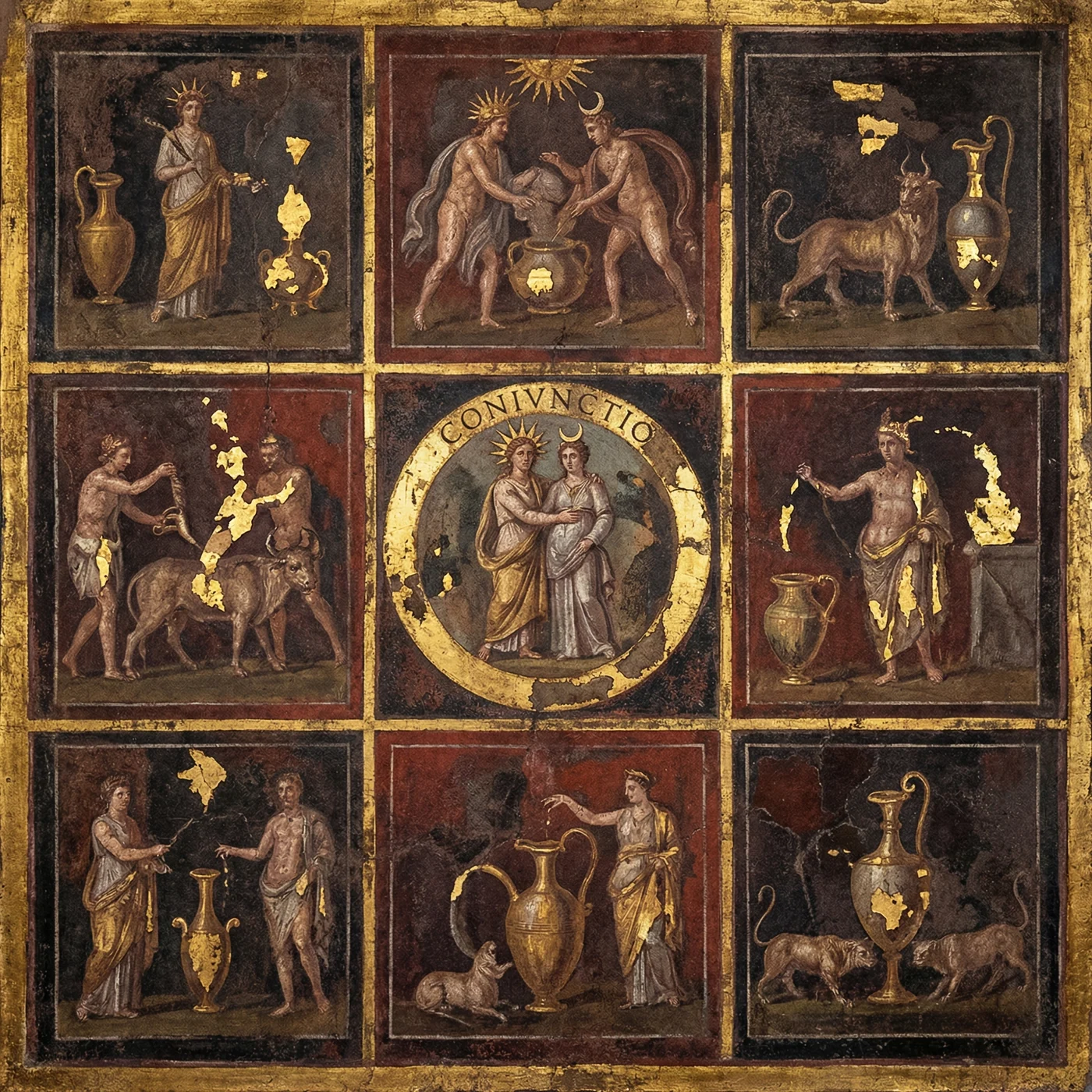
The Architecture of Influence
An orb is astrology's way of acknowledging that planetary influence doesn't stop and start like a light switch. When Mars sits at 15 degrees Aries and your Sun rests at 18 degrees Aries, they're not exactly conjunct — but they're close enough to matter. The orb is that sphere of influence around each aspect, the zone where separate planets begin to speak to each other in whispers before their conversation becomes a full-throated dialogue.
Traditional astrology recognized this long before modern practitioners began debating precise degree measurements. The ancient texts speak of planets "beholding" each other, "regarding" one another across the zodiac with gazes that could be friendly, hostile, or indifferent. This wasn't metaphor — it was practical observation of how celestial bodies seemed to influence each other across space that appeared empty but wasn't.
The orb represents astrology's most sophisticated insight: that influence operates on a spectrum rather than in absolutes. Just as your peripheral vision catches movement before your direct gaze can focus, planetary aspects gather strength gradually, reach peak intensity, then slowly fade. The tighter the orb, the more unavoidable the aspect's expression in your life. The wider the orb, the more subtle its manifestation, requiring consciousness to activate what remains merely potential.
The Living Boundaries
Different aspects demand different orbs because they represent different qualities of relationship. A conjunction — planets occupying nearly the same space — can operate effectively within 8 to 10 degrees because merger is its essential nature. The closer the planets, the more completely they blend their energies into something new. When your Venus at 12 degrees Scorpio meets Jupiter at 15 degrees Scorpio, you experience the full alchemical fusion of beauty and expansion, creating something neither planet could achieve alone.
Oppositions, those 180-degree confrontations across the zodiac, also command wide orbs because they represent the fundamental tension that drives consciousness. Your Moon at 5 degrees Cancer opposing Saturn at 10 degrees Capricorn creates the eternal dialogue between emotional need and practical responsibility that shapes your entire approach to security. The 5-degree separation doesn't diminish this conversation — it gives it room to breathe, to develop complexity.
The trine and sextile aspects, flowing at 120 and 60 degrees respectively, require tighter orbs precisely because their gifts come so easily. When your Mercury at 22 degrees Gemini trines your Mars at 25 degrees Aquarius, the natural harmony between quick thinking and innovative action operates within a narrower band. Extend the orb too far, and the ease dissolves into mere potential that may never manifest without conscious effort.
Squares, those 90-degree angles of creative tension, occupy the middle ground. Your Venus at 8 degrees Taurus square your Pluto at 12 degrees Leo creates exactly the kind of productive friction that transforms superficial attractions into profound encounters with beauty and power. The 4-degree orb maintains enough edge to generate the necessary sparks while allowing room for the slow work of integration.
The Dance of Degrees
Consider Sarah, born with Mercury at 18 degrees Virgo and Jupiter at 23 degrees Virgo. By the strictest measurements, this conjunction operates within a 5-degree orb — close enough to matter, wide enough to require consciousness. In her daily life, this manifests as a mind that naturally expands whatever it touches. When she analyzes a problem, she doesn't just solve it; she sees its connections to larger patterns, its implications for systems beyond the immediate concern.
The wide orb means this gift isn't automatic. In casual conversation, Sarah might appear purely Mercurial — precise, detailed, practical. But when she becomes passionate about a subject, when consciousness focuses the aspect's potential, the Jupiter influence emerges. Suddenly she's speaking in broad strokes, connecting seemingly unrelated concepts, transforming technical details into universal principles. The 5-degree separation creates the space where Mercury can maintain its integrity while gradually opening to Jupiter's expansive influence.
During transits, this conjunction responds differently depending on what triggers it. When transiting Mars forms a tight conjunction to her Mercury, the aspect with Jupiter remains dormant — the orb is too wide for Mars's quick energy to bridge. But when slower-moving Saturn approaches either planet, it activates the entire conjunction weeks before making exact contact with either individual planet. The orb becomes a zone of preparation, where Sarah begins experiencing the characteristic challenges and gifts of her natal Mercury-Jupiter conjunction being tested and refined by Saturn's demanding standards.
The Practitioner's Eye
Working with orbs requires developing what traditional astrologers called "the eye of the heart" — the ability to sense influence before it becomes obvious. In your own chart, notice which aspects feel tight and unavoidable, expressing themselves whether you're conscious of them or not. These are your tight-orb aspects, the planetary relationships that form the backbone of your personality.
Then observe the aspects with wider orbs, the planetary conversations that emerge only under certain conditions. These become your tools of conscious development, the aspects you can learn to activate deliberately. A wide-orb Mars-Venus square might remain dormant until you enter intimate relationships, then suddenly animate with all its characteristic tension between desire and action.
When examining transits, remember that approaching aspects often prove more powerful than separating ones, even at identical orb distances. A transit that's still 3 degrees from exact carries the momentum of increasing influence, creating an atmosphere of anticipation and preparation. The same transit at 3 degrees past exact has already delivered its primary message and now offers integration and understanding.
The question of how close is close enough cannot be answered with rigid rules because orbs describe something essentially alive — the breathing space around perfection where influence gathers strength, speaks its truth, then gradually fades into wisdom. Your birth chart is not a static map but a living mandala, with each aspect pulsing in its own rhythm of approach, culmination, and release.
In the end, orbs teach us that astrology itself operates in the spaces between certainties, in the fertile darkness where separate things recognize their hidden kinship and begin their long dance of becoming one.
For those seeking to explore the intricate relationships within their own celestial architecture, The Book of the Self offers a complete analysis of how orbs operate within your unique natal configuration, revealing the subtle conversations that shape your deepest patterns of growth and transformation.