Every hour has a ruler. The day as a ladder of governors.
You know that moment when you glance at your phone and it reads 3:33, or when you consistently wake at 4:17 without an alarm, or when every important conversation seems to happen during your lunch break on Tuesday? There's a rhythm beneath the rhythm, a timing that has nothing to do with your calendar app or the industrial precision of Greenwich Mean Time. Your life moves to a deeper drumbeat—one that our ancestors mapped with surgical precision and called the planetary hours.
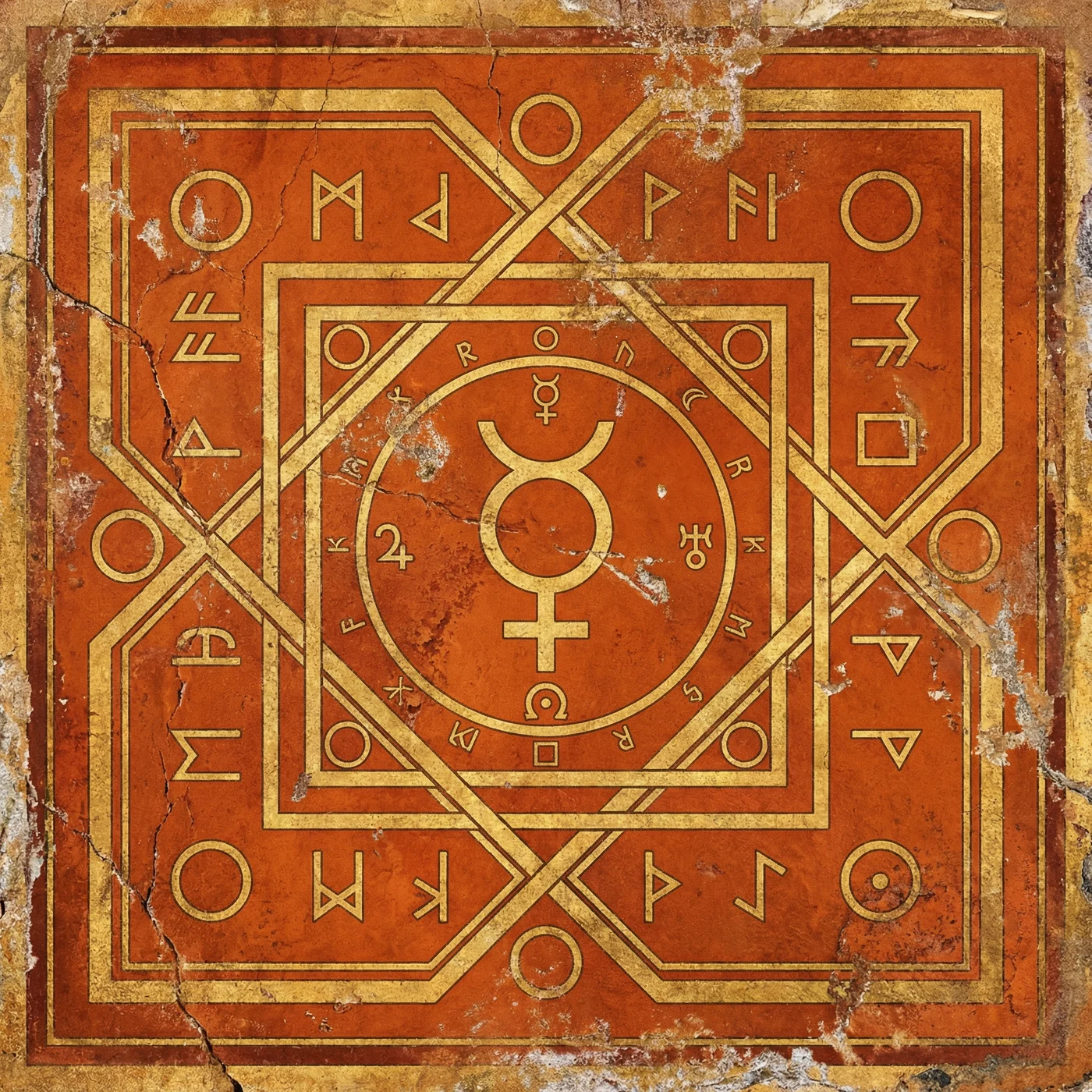
The Ancient Chronometer
Long before atomic clocks carved time into identical, sterile segments, the wise understood that time itself has character. Each hour carries the signature of a planetary ruler, cycling through the seven classical planets—Sun, Moon, Mercury, Venus, Mars, Jupiter, and Saturn—in an endless spiral that began at sunrise and continues still.
The system emerged from Hellenistic Alexandria, where Greek mathematics met Egyptian star-wisdom and Chaldean timing techniques. These weren't abstract philosophers but working astrologers whose clients needed to know when to plant, when to negotiate, when to make war, and when to make love. They discovered that the first hour after sunrise belongs to the planet ruling that day: Sunday begins with the Sun, Monday with the Moon, Tuesday with Mars. But from there, the sequence follows the ancient Chaldean order—Saturn, Jupiter, Mars, Sun, Venus, Mercury, Moon—cycling through all seven before returning to the first.
This creates a cascade effect. If Sunday's first hour belongs to the Sun, the second belongs to Venus, the third to Mercury, and so on. By the time you reach the twenty-fifth hour—the first hour of Monday—the Moon has naturally claimed its throne. The mathematics are elegant, inevitable, and reveal why Wednesday feels different from Saturday at the cellular level.
The Living Clock
Unlike our modern temporal grid, planetary hours breathe with the Earth itself. They expand and contract with the seasons, growing longer during the planet's favor and shorter during its exile. A solar hour in July might stretch for seventy minutes, while in December it contracts to fifty. This isn't imprecision—it's attunement to the actual rhythms of light and darkness, expansion and contraction, that govern all living systems.
Each planetary hour creates a temporal environment as distinct as walking from a library into a nightclub. During Mercury's hours, conversations flow, emails get answered, and connections spark across unlikely distances. Venus hours soften the edges of conflict and make beauty irresistible. Mars hours demand action, decision, and the cutting away of what no longer serves. The Moon's hours draw you inward, toward reflection, dreams, and the tending of what grows in darkness.
Jupiter expands whatever it touches—a compliment during his hour carries more weight, a business proposal finds more receptive ears, a party attracts more interesting guests. Saturn's hours demand structure, discipline, and the patient building of things meant to last. Solar hours illuminate, reveal, and place you at the center of whatever drama wants to unfold.
The Merchant's Discovery
Consider Marcus, a silk trader in medieval Palermo, who kept detailed records not just of prices and quantities but of timing. He noticed that negotiations during Venus hours—roughly every seventh hour starting from Friday's dawn—consistently yielded better terms. Not because he changed his approach, but because Venus hours soften the heart's armor and make generosity feel natural rather than foolish.
His most profitable deals happened during Jupiter hours on Thursdays, when expansion feels like destiny rather than risk. His most disastrous negotiations occurred during Mars hours on Tuesday afternoons, when every minor disagreement escalated into theatrical conflict. Within two years, Marcus had synchronized his entire business to the planetary hours. He scheduled contract signings during Mercury hours for clarity, inventory during Moon hours for thoroughness, and debt collection during Saturn hours when even the most creative debtors found themselves compelled toward responsibility.
The other merchants called it luck. Marcus called it paying attention to the clock under the clock.
The Modern Practice
You don't need medieval calculation tables or sunrise charts to work with planetary hours—though the precision brings its own rewards. Start by noticing the rhythm that already exists in your days. When do you naturally feel most social? Most focused? Most creative? Most restless? Track these patterns against the planetary hours for a month and you'll begin to see your personal resonance with the celestial timing.
For practical application, align your most important activities with their natural planetary sponsors. Schedule creative work during Venus hours, when beauty flows more easily from mind to hand. Plan difficult conversations during Mercury hours, when understanding bridges difference more readily than during Mars hours, when every word becomes a weapon. Begin new projects during Solar hours, when initiation carries the most power, and complete long-term goals during Saturn hours, when persistence feels less like suffering and more like natural law.
The most sophisticated practitioners learn to work with planetary hours as temporal spaces, the way a painter works with different qualities of light. A Venus hour on Wednesday carries different possibilities than a Venus hour on Friday—Mercury's influence creates a more intellectual beauty, while Venus ruling her own day allows for pure aesthetics and pleasure.
Some hours resist certain activities entirely. Trying to force practical decisions during Moon hours often leads to choices you'll regret when the Sun returns. Attempting delicate relationship conversations during Mars hours frequently creates conflict where none existed before. Learning when not to act becomes as valuable as knowing when to strike.
The Deeper Recognition
What emerges through sustained practice with planetary hours isn't just better timing—it's a recognition that you live within multiple temporal realities simultaneously. The linear time of schedules and deadlines coexists with the cyclical time of planets and seasons, which coexists with the eternal time of what never changes. Planetary hours teach you to dance with all three.
Your ancestors knew this dance intimately. They planted by the Moon, traveled by Mercury, married by Venus, and went to war by Mars. Not because they were superstitious, but because they were practical people who noticed that some activities flow with the current while others fight against it. The current still flows. Most of us have simply forgotten how to feel it.
The Book of the Shadow contains complete planetary hour calculations for your specific location and birth data, integrating this ancient timing system with your personal natal patterns to reveal when the cosmos most strongly supports your deepest intentions.