Not theater — repeated attention with a shape.
You know the moment when something shifts from being an occasional thing you do into something that does you. It happens quietly, without announcement. One day you realize you've been lighting the same candle at the same time for weeks, or you've started checking the moon phases before making decisions, or your morning coffee has become a ceremony of attention rather than caffeine delivery. The boundary between habit and ritual has been crossed, though you never saw the border.
This crossing matters more than most people understand. What lives on the other side isn't just repetition with spiritual seasoning—it's a technology for becoming someone else.
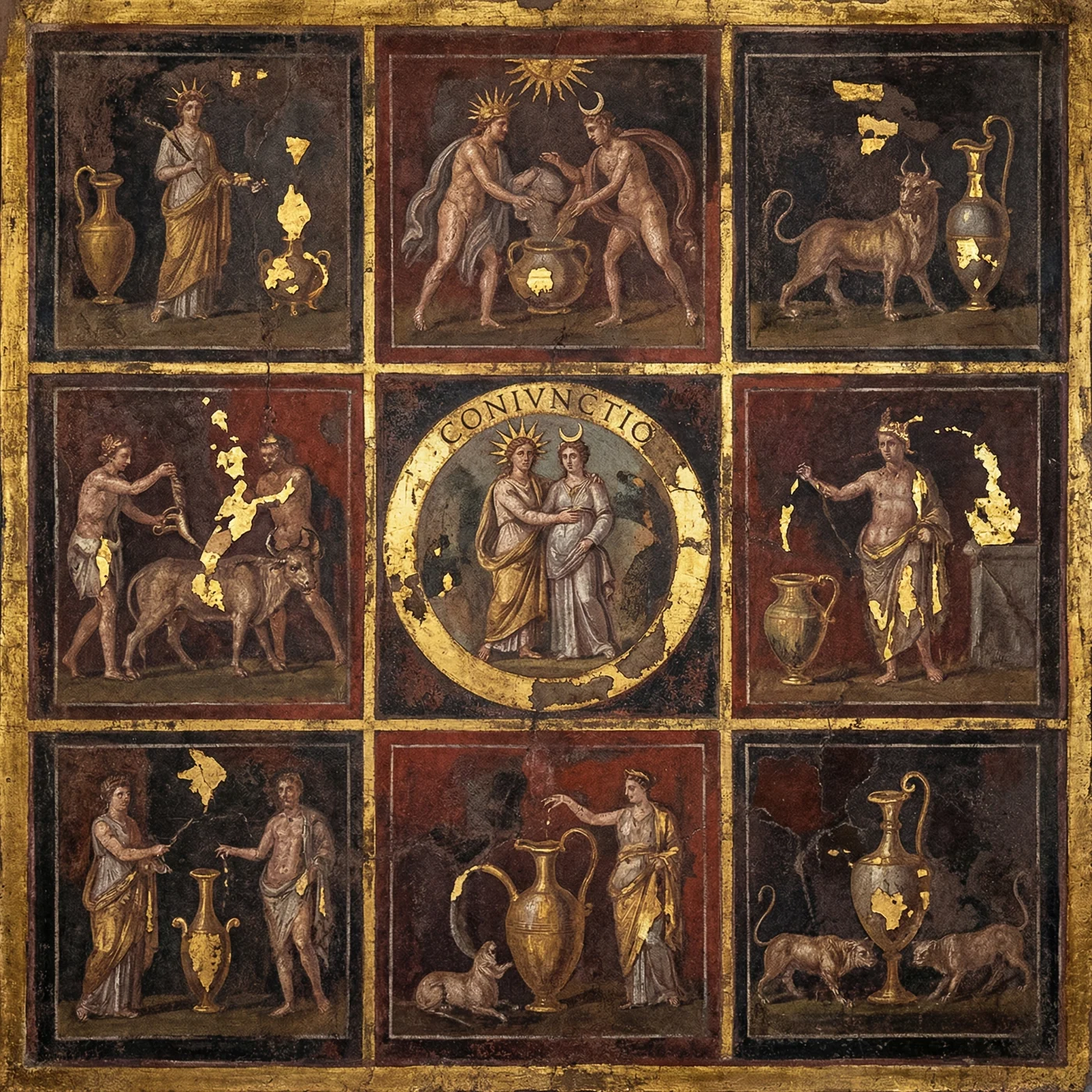
The Architecture of Transformation
A ritual is fundamentally different from a routine, though they share the scaffolding of repetition. The difference lies not in what you do but in what does the doing through you. When you perform a routine, you remain the same person accomplishing a task. When you engage in genuine ritual, you create a space where something larger can work through your actions to reshape you from within.
The word itself comes from the Indo-European root that gave us "arithmetic"—the art of arrangement, of putting things in right relationship. This arrangement is both external and internal. You arrange objects, words, timing, and attention in precise ways that invite specific forces to participate in your transformation. The precision matters because you're not just organizing a performance; you're constructing a doorway between ordinary consciousness and whatever lies beyond it.
Traditional cultures understood this technology intimately. The elaborate ceremonial cycles of ancient Egypt, the seasonal festivals of pre-Christian Europe, the daily prayers of contemplative traditions—all recognized that humans need structured opportunities to step outside their habitual identity and align with larger patterns of meaning. These weren't just cultural expressions but survival technologies, ways of staying psychologically and spiritually connected to the forces that sustain life.
The Birth of Sacred Time
Ritual creates what scholars call "sacred time"—a quality of temporal experience fundamentally different from ordinary duration. In sacred time, the past, present, and future collapse into a single eternal moment where transformation becomes possible. This isn't mystical speculation but observable psychology. When you enter genuine ritual space, your normal sense of linear progression suspends itself, allowing deeper patterns of change to emerge.
This suspension happens through what the tradition calls "separation, transformation, and return"—the three-act structure that underlies all effective ritual work. First, you separate from ordinary consciousness through preparatory actions: the lighting of incense, the casting of a circle, the donning of special clothing, the invocation of protective forces. These aren't theatrical flourishes but necessary psychological technologies that signal to your unconscious mind that different rules now apply.
The transformation phase is where the actual work occurs. Here, in the protected space you've created, you engage with forces larger than your everyday personality. You might invoke planetary intelligences, work with archetypal energies, or simply create focused attention on your intention to change. The key is that you're no longer operating from your habitual identity but from a more expanded sense of what's possible.
The return phase grounds the transformation in ordinary reality. You close the circle, extinguish the candles, and return to regular time—but you return changed. The ritual has created a new possibility in your psyche, a seed that will continue developing long after the ceremony ends.
Where Practice Becomes Poison
Understanding what ritual is requires equally understanding what it isn't. The most common corruption is turning ritual into spiritual materialism—using ceremonial forms to reinforce rather than transform the ego. This happens when you perform rituals to get things rather than to become someone capable of different things. The form remains intact, but the transformative function dies.
Another corruption is what we might call "aesthetic spirituality"—performing beautiful ceremonies that create pleasant feelings but catalyze no actual change. These pseudo-rituals often feel more spiritual than genuine practice because they avoid the discomfort that real transformation requires. They're spiritual entertainment rather than spiritual technology.
The most dangerous corruption, however, is unconscious ritual—repetitive actions that shape you without your awareness or consent. Consumer culture is full of these: the daily scroll through social media, the weekly shopping expedition, the nightly Netflix binge. These activities follow ritual structure but serve forces that diminish rather than expand your capacity for conscious choice. They separate you from ordinary time, transform your consciousness, and return you to regular life—but the transformation serves purposes other than your development.
The Decan of Discipline
Consider how this operates in the astrological tradition. Saturn in Taurus III, A STRING OF PRAYER BEADS, governed by Saturn alone and connected to the Seven of Pentacles—The Invisible Reckoning. This decan teaches the patience required for genuine spiritual development, the willingness to engage in practices whose benefits may not be visible for years.
When someone has natal planets in this decan, they often struggle with the tension between wanting immediate spiritual results and needing to develop the discipline for long-term transformation. Their lesson involves learning to find satisfaction in the practice itself rather than in dramatic spiritual experiences. They discover that the most profound changes happen through steady, unremarkable repetition—the daily lighting of candles, the weekly observance of lunar phases, the seasonal celebration of solar festivals.
The prayer beads of this decan represent the technology of repetitive practice that gradually wears new channels in consciousness. Each bead, each repetition, each return to the same form creates incrementally deeper access to the transformative forces the ritual invokes. But this happens slowly, invisibly, requiring a kind of faith that contemporary culture rarely encourages.
Those working with this decan often find that their spiritual practice becomes the foundation from which everything else in their life flows. Their ritual work isn't something they do in addition to living—it becomes the structure through which they live. Their daily routines become expressions of their deepest values, their seasonal observances become opportunities for conscious evolution, and their life itself becomes a form of extended ceremony.
The Technology of Becoming
Genuine ritual practice operates on multiple levels simultaneously. On the psychological level, it uses repetition and symbolism to communicate directly with the unconscious mind, bypassing the rational defenses that normally resist change. On the energetic level, it works with timing, intention, and focused attention to align your personal field with larger cosmic patterns. On the spiritual level, it creates opportunities for forces beyond your ordinary personality to participate in your transformation.
The specific forms matter less than the underlying structure. Whether you work with traditional ceremonial magic, create your own seasonal observances, or develop daily practices around meals or bedtime, the key elements remain the same: conscious separation from ordinary consciousness, focused engagement with transformative forces, and intentional return to regular life carrying the seeds of change.
What matters most is consistency and sincerity. The forces that ritual invokes respond to genuine intention sustained over time rather than to perfect execution or elaborate ceremonial props. A simple daily practice maintained for months will create more profound transformation than an elaborate ceremony performed once and then forgotten.
The goal isn't to become someone who performs rituals but to become someone shaped by the forces ritual invokes. Eventually, the boundary between practice and life dissolves. Your entire existence becomes a form of extended ceremony, a conscious collaboration with the intelligences that guide human development.
This is why the tradition speaks of ritual as a path rather than a technique. It's not something you master and then apply to your problems—it's something that gradually masters you, reshaping your capacity to participate consciously in your own becoming.
For those drawn to explore these deeper currents of transformation, The Book of the Shadow offers a complete system of ritual practice keyed to your natal chart. Each practice is designed specifically for your astrological signature, creating a personalized path of development that honors both ancient wisdom and your unique spiritual needs.