Saturn in the second house — where that energy actually plays out in a life.
You know the feeling of standing in a grocery store, calculator in hand, adding and subtracting items from your cart not based on what you want, but on what you can afford. Or perhaps it's the opposite—the hollow sensation that no matter how much you acquire, how full your accounts grow, some fundamental security never quite materializes. You work, you earn, you save, yet there remains an unshakeable sense that your worth, your very right to exist in comfort, hangs by a thread that could snap at any moment.
This is Saturn in the second house speaking. Not the voice of practical budgeting or reasonable financial planning, but something deeper and more haunting—the ancient teacher who insists that your relationship with the material world become a spiritual discipline, whether you signed up for that curriculum or not.
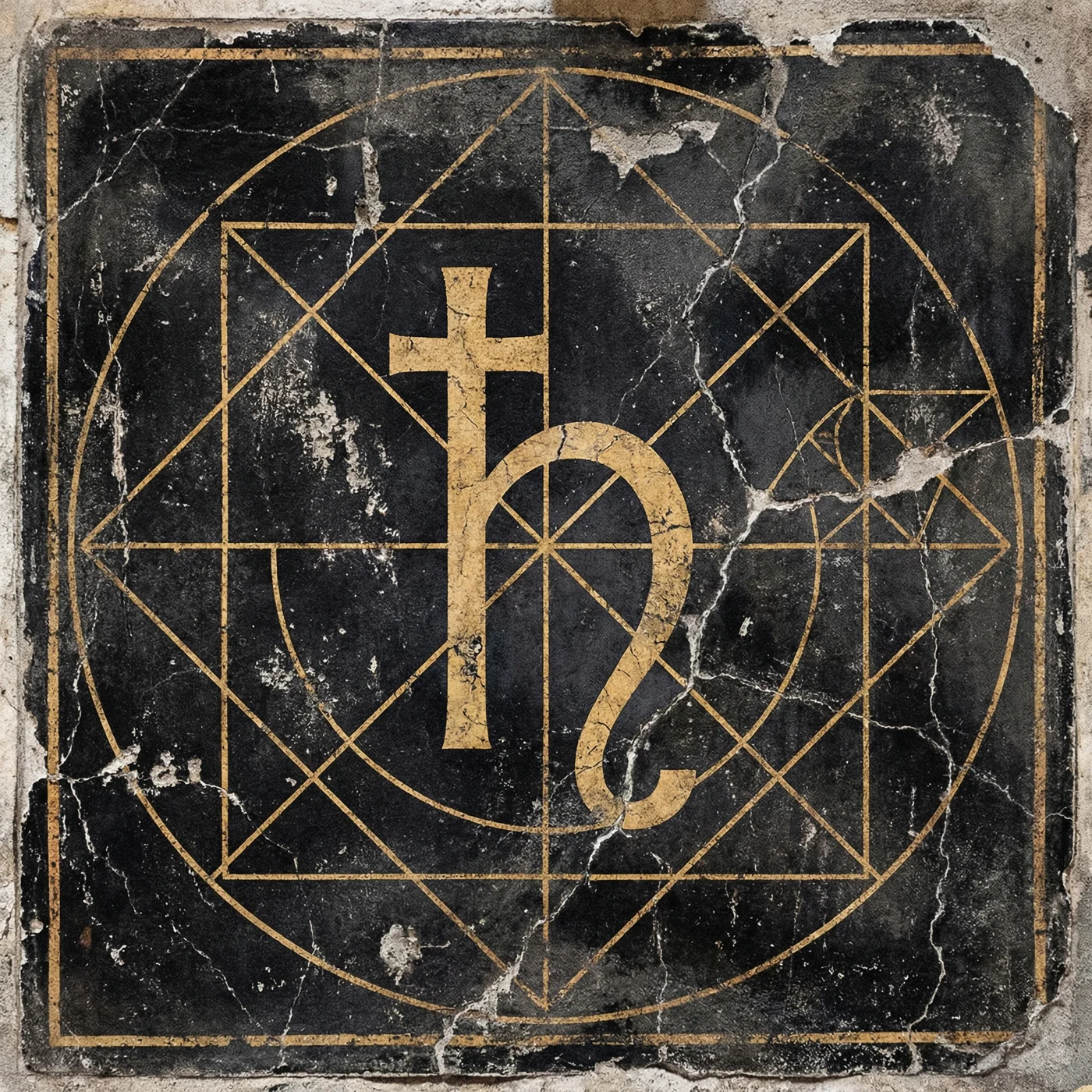
The Weight of Worth
The second house governs what astrologers call your "moveable resources"—money, possessions, skills, talents, and the subtler but equally crucial sense of self-worth that underlies all material manifestation. When Saturn, the planet of limitation, structure, and hard-won wisdom, takes up residence here, it transforms this entire sphere into a classroom where the lessons never end and the examinations are always practical.
Saturn doesn't simply make you poor, despite what cookbook astrology might suggest. Instead, it makes you viscerally aware of the weight of matter itself—how much everything costs, not just in dollars but in time, energy, and spiritual currency. Those born with this placement often report feeling that they have to work twice as hard for half the results, at least initially. The universe seems to demand proof of worthiness before releasing its material blessings.
But Saturn's lessons in the second house run far deeper than bank balances. This placement fundamentally questions the relationship between having and being. It asks: Who are you when stripped of your possessions? What is your value when it cannot be counted, catalogued, or converted to currency? The native learns that security is not something you possess but something you become.
The Long Apprenticeship
Saturn's presence here often manifests first through scarcity—not necessarily poverty in the dramatic sense, but a persistent awareness that resources are finite and must be carefully stewarded. Many with this placement grow up in households where money was either genuinely tight or where the adults carried such anxiety about financial security that abundance never felt safe, even when present.
This early conditioning creates what might be called "scarcity consciousness," but Saturn's ultimate purpose is to transform this into something far more valuable: mastery. The native learns to extract maximum value from minimum resources, to build lasting wealth rather than flashy displays, to distinguish between wants and needs with surgical precision.
The apprenticeship is long because Saturn teaches through time and experience, not through sudden insights or windfalls. Those with Saturn in the second house often find that their relationship with money and resources undergoes major restructuring every seven to fourteen years—during Saturn's squares and oppositions to its natal position. Each crisis forces a deeper understanding of what wealth actually means.
The Paradox of Accumulation
Here lies one of Saturn's most subtle teachings in the second house: the more desperately you grasp for material security, the more elusive it becomes. This placement can create a psychological trap where the native accumulates possessions or savings compulsively, yet never feels secure. The storage units and investment accounts become monuments to anxiety rather than sources of peace.
Conversely, those who learn Saturn's deeper lesson often discover they can live richly on less than others consider minimal. They develop what might be called "material wisdom"—the ability to recognize quality over quantity, lasting value over temporary pleasure, and the profound difference between wealth and money.
Some natives with this placement become master craftspeople, developing skills so refined that their work commands premium prices. Others become expert builders of systems and structures that generate sustainable income. Still others learn to find wealth in non-monetary forms—rich relationships, deep knowledge, or spiritual practices that make external abundance feel less urgent.
The Sacred Transaction
Consider Maya, born with Saturn in the second house in Taurus's third decan—A String of Prayer Beads, ruled by Saturn alone and corresponding to the Seven of Pentacles. This is the decan of The Invisible Reckoning, where apparent failure masks deeper spiritual success.
Maya spent her twenties watching friends advance in lucrative careers while she struggled through a series of low-paying jobs that nonetheless taught her profound skills. She worked in a community garden, learning to coax abundance from difficult soil. She apprenticed with a master weaver, spending years perfecting techniques that machines could replicate in minutes. To others, it looked like she was falling behind, accumulating skills instead of capital.
But Saturn's lesson was unfolding perfectly. By thirty-five, Maya had developed such expertise in sustainable agriculture and traditional crafts that her consultation was sought by wealthy clients wanting to create self-sufficient estates. Her hourly rate exceeded what many lawyers charged, not because she marketed aggressively, but because her knowledge had become genuinely rare and valuable.
More importantly, her relationship with material security had transformed completely. She could live abundantly in a small cabin with a garden, or adapt to luxury accommodations with equal ease. Her security came not from accumulation but from competence, not from having but from knowing.
Working with the Teacher
Saturn in the second house asks you to redefine wealth from the ground up. This begins with honest assessment of your current relationship with money and possessions. Do you spend to feel better about yourself? Do you save compulsively without ever feeling safe? Do you undervalue your skills and time? Do you accumulate objects as substitutes for experiences or relationships?
The work Saturn requires here is both practical and spiritual. On the practical level, it demands financial discipline—budgeting, saving, investing, and spending with intention rather than impulse. But it also requires developing skills that have lasting value, the kind that can't be outsourced or automated.
More subtly, this placement calls for regular practice in non-attachment. This doesn't mean living in poverty or rejecting material comfort, but rather holding possessions lightly. Use what you have fully and gratefully, but don't let your identity depend on having it.
Many with Saturn in the second house find profound value in practices that connect them to the earth and to the true sources of abundance—gardening, cooking, making things with their hands, or learning traditional skills that connect them to the long chain of human knowledge. These practices teach that real wealth comes from relationship—with the earth, with knowledge, with community, with the sacred dimension of existence that makes everything else possible.
Saturn here ultimately teaches that you are not what you own, but you are also not separate from the material world. You are a conscious participant in the great circulation of resources that sustains all life. When you understand your place in this vast economy of energy and matter, scarcity reveals itself as an illusion and abundance as your birthright—not to be grasped, but to be stewarded, not to be hoarded, but to be shared in the great dance of giving and receiving that is existence itself.
The path is long, the lessons sometimes harsh, but Saturn's gifts in the second house are among the most practical and lasting in all of astrology. They transform not just how you handle money, but how you inhabit your life on earth.
For those seeking to understand their complete relationship with Saturn and all the planetary teachers in their personal sky, The Book of the Self offers a comprehensive exploration of your individual celestial blueprint—a lifetime companion for the long work of becoming who you were born to be.