Who rules Scorpio — Mars or Pluto? Both, and here's how to hold that.
You know that moment when someone asks about your Scorpio rising and you hesitate—not because you don't know your chart, but because you're caught between two different astrological worlds. In one, Mars rules your ascendant with its ancient blade of focused will. In the other, Pluto holds dominion with its promise of psychological transformation and regenerative power. This isn't merely an academic debate between old and new schools. It's a living tension that affects how you understand the fundamental architecture of your birth chart and, by extension, the hidden mechanics of your own nature.
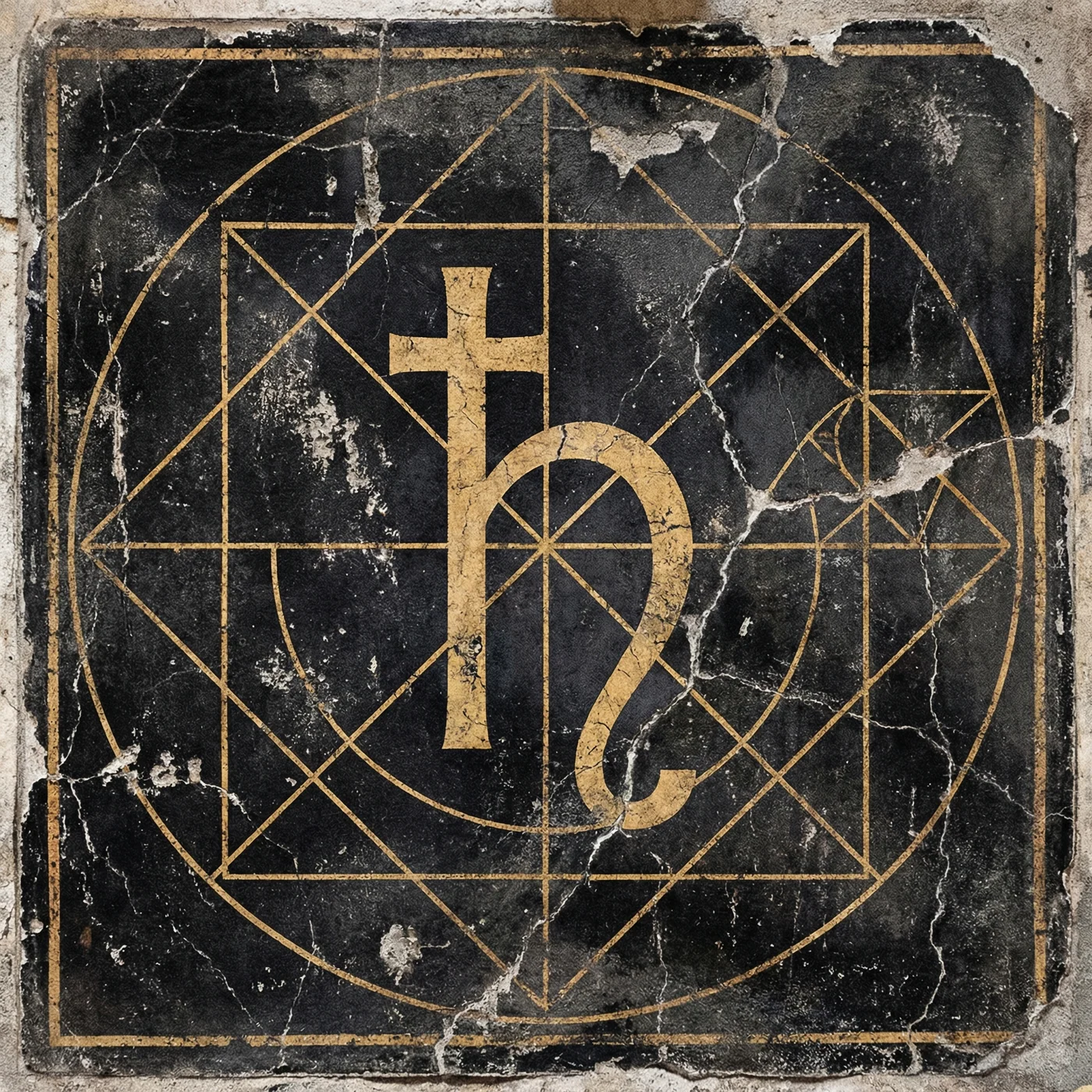
The Ancient Inheritance
Traditional astrology operated for over two millennia with seven planetary rulers—the luminaries Sun and Moon, plus Mercury, Venus, Mars, Jupiter, and Saturn. These were the wandering stars visible to the naked eye, each governing two signs except for the Sun and Moon, which held singular dominion over Leo and Cancer respectively. Mars ruled both Aries and Scorpio, Venus claimed Taurus and Libra, Mercury governed Gemini and Virgo, Jupiter commanded Sagittarius and Pisces, and Saturn held sway over Capricorn and Aquarius.
This system emerged from direct observation and centuries of careful correlation between celestial movements and terrestrial events. The ancient astrologers weren't working with telescopes or theoretical frameworks—they were watching the sky night after night, season after season, recording the relationships between planetary positions and the unfolding of human affairs. When Mars transited through Scorpio, they observed certain themes: battles won through strategy rather than brute force, deaths that led to inheritance, sexual encounters that transformed the participants. The red planet's rulership over both the ram and the scorpion made perfect sense within the logic of elemental polarities—fire and water, cardinal and fixed, but both sharing Mars's essential nature of directed force and the willingness to engage in conflict.
The traditional system possessed an elegant symmetry. Each planet except the luminaries ruled one fire or air sign (yang, diurnal) and one earth or water sign (yin, nocturnal). This created what astrologers called essential dignities—a planet was stronger in one of its own signs, especially the one matching the sect (day or night) of the birth chart. Mars in Scorpio during a night birth was considered more essentially dignified than Mars in Aries during the same nocturnal chart, because Scorpio was Mars's night sign, better suited to the subtle, underground expression of martial energy.
The Modern Revolution
The discovery of Uranus in 1781, Neptune in 1846, and Pluto in 1930 shattered this ancient equilibrium. Here were three new planetary bodies, invisible to naked-eye observation but undeniably real and apparently influential. Modern astrologers faced a crucial question: how to integrate these outer planets into a system that had functioned coherently for centuries without them?
The solution that emerged assigned each outer planet to rule one of the signs previously governed by the traditional planets. Uranus claimed Aquarius from Saturn, Neptune took Pisces from Jupiter, and Pluto assumed control of Scorpio from Mars. The reasoning seemed compelling—Uranus's sudden, revolutionary nature matched Aquarius's reputation for innovation and rebellion. Neptune's dissolution and illusion resonated with Pisces's mystical, boundary-less character. Pluto's association with death, transformation, and hidden power appeared to suit Scorpio's intensity and psychological depth far better than Mars's more straightforward aggression.
This reassignment reflected broader cultural shifts. Psychology was emerging as a distinct field, and astrology began incorporating concepts from depth psychology, particularly the work of Carl Jung. Pluto's rulership over Scorpio allowed astrologers to explore themes of psychological transformation, unconscious motivations, and the death-rebirth cycle in ways that Mars's more literal, physical energy seemed inadequate to address. The outer planets offered access to transpersonal dimensions of experience—collective forces, generational influences, and archetypal patterns that operated beyond individual will.
The Decan Solution
Consider how this debate plays out in the microcosm of the decans—the ten-degree subdivisions that divide each sign into three distinct faces. In Scorpio's first decan, THE JAWBONE, we encounter the essential Mars-Pluto dilemma in concentrated form. Traditional decan rulership assigns this face to Mars alone, emphasizing themes of direct confrontation, the warrior's courage to face death, and the primitive power to survive through strength. The jawbone itself—whether Samson's weapon or the predator's killing tool—speaks to Mars's fundamental nature as the planet of severing, cutting, and decisive action.
Yet modern astrologers often invoke Pluto as co-ruler here, pointing to the psychological complexity of this decan's natives, their capacity for profound transformation through crisis, and their intuitive understanding of power dynamics that operate beneath the surface of ordinary awareness. They argue that Mars alone cannot account for the depth of regenerative capacity found in this face, the ability to die and be reborn multiple times within a single lifetime.
The tension becomes even more pronounced in Scorpio's second decan, AN APPARATUS FOR MUTUAL DISTILLATION, where traditional rulership assigns the Sun as ruler. Here we find themes of alchemical transformation, the willing dissolution of ego-boundaries in intimate union, and the solar principle's power to generate heat sufficient to transform base material into something more refined. The apparatus suggests conscious, directed work—the Sun's essential dignity lies in its capacity for purposeful, creative action. Yet Pluto's themes of psychological merging, sexual transformation, and death-like surrender into union seem equally present.
The Living Tension
This isn't a question that admits of easy resolution because both systems illuminate different aspects of the same complex reality. When someone with Mars in Scorpio describes their experience, they might emphasize the surgical precision of their anger, their capacity to strike at exactly the right moment with devastating effectiveness—classic Mars themes. But they might equally speak of how conflict serves as a catalyst for profound self-transformation, how each major confrontation strips away another layer of who they thought they were—distinctly Plutonian territory.
The traditional approach offers the virtue of proven continuity. When ancient astrologers observed Mars transiting Scorpio, they developed techniques for timing and interpretation that had been refined across centuries. These methods work because they're grounded in the actual observable relationship between Mars and the constellation Scorpio as experienced from Earth's perspective. There's something irreducibly real about Mars's martial energy expressing itself through Scorpio's fixed water nature—the result is strategy rather than pure aggression, endurance rather than quick victory, the willingness to fight dirty when necessary rather than adherence to abstract codes of honor.
The modern assignment of outer planets acknowledges psychological dimensions that traditional astrology, while sophisticated, didn't explicitly address. Pluto's 248-year orbit means its influence operates across multiple generations, creating collective undercurrents that individual Mars energy cannot adequately describe. The discovery of the outer planets coincided with humanity's recognition of forces—radioactivity, the unconscious mind, the vast scales of geological and cosmic time—that operate beyond the reach of direct human perception or control.
Integration and Practice
Rather than choosing sides, skilled astrologers often work with both systems simultaneously, using traditional rulers for timing and technique while invoking modern rulers for psychological insight and transpersonal context. A Mars in Scorpio transit might be timed using traditional methods that emphasize Mars's essential dignity and speed of motion, while the interpretation incorporates Plutonian themes of psychological excavation and regenerative crisis.
The key lies in recognizing what each system does best. Traditional rulers excel at describing the mechanics of how planetary energies operate—their speed, strength, and manner of expression in different signs. Modern rulers offer access to collective and psychological dimensions that extend beyond individual personality and immediate circumstances. Mars in Scorpio describes how you fight; Pluto in Scorpio describes what you're fighting for on the deepest level, and how that struggle connects to larger evolutionary currents.
In your own chart, you might experiment with both approaches. Track Mars transits through Scorpio as moments of strategic action and focused will. Simultaneously, observe Pluto's slow movement through signs as marking generational themes and long-term psychological development. Notice how Mars-ruled Scorpio planets respond to Mars transits with immediate activation, while the same placements might undergo slower, deeper shifts during major Pluto aspects.
The debate between traditional and modern rulers ultimately reflects a deeper question about astrology's purpose and scope. Traditional astrology emerged from and serves the needs of practical timing and concrete prediction. Modern astrology addresses psychology and spiritual development in ways that reflect contemporary understanding of human complexity. Both approaches have earned their place through decades of practical application and insight.
Your birth chart contains the complete story, written in both ancient and modern dialects. Learning to read both languages allows you to access the full depth of what the stars have written about the intricate clockwork of your becoming.
For the complete exploration of how traditional and modern rulers interact throughout your entire chart, including detailed analysis of every planetary placement and aspect, The Book of the Self provides a comprehensive synthesis of both traditional and contemporary approaches.