Uranus in Cancer — the generation that carries it, and what it does in a private chart.
You recognize them instantly—the quiet revolutionaries who transformed the very meaning of home. They dismantled the nuclear family not with manifestos but with communes, food co-ops, and kitchens where strangers became chosen family. They are the generation born when Uranus moved through Cancer between 1949 and 1956, carrying within their cells a fundamental disruption of everything their parents believed about security, belonging, and what it means to nurture.
The Lightning in the Womb
When Uranus, the great awakener, enters Cancer's domain of roots and refuge, the result is a generation that cannot accept inherited definitions of family. These are souls born to electrify the domestic sphere, to make the personal political in ways their predecessors never imagined. Where their parents sought to preserve tradition, they were compelled to reinvent it entirely.
Cancer governs the foundational experiences of safety and nourishment—the breast, the hearth, the homeland. Uranus brings sudden change, rebellion, and flashes of insight that shatter conventional wisdom. The marriage of these forces produces individuals who understand, at a cellular level, that the old ways of creating security are not just inadequate but potentially dangerous. They are the first generation to collectively question whether the suburban dream their parents fought for was actually a prison.
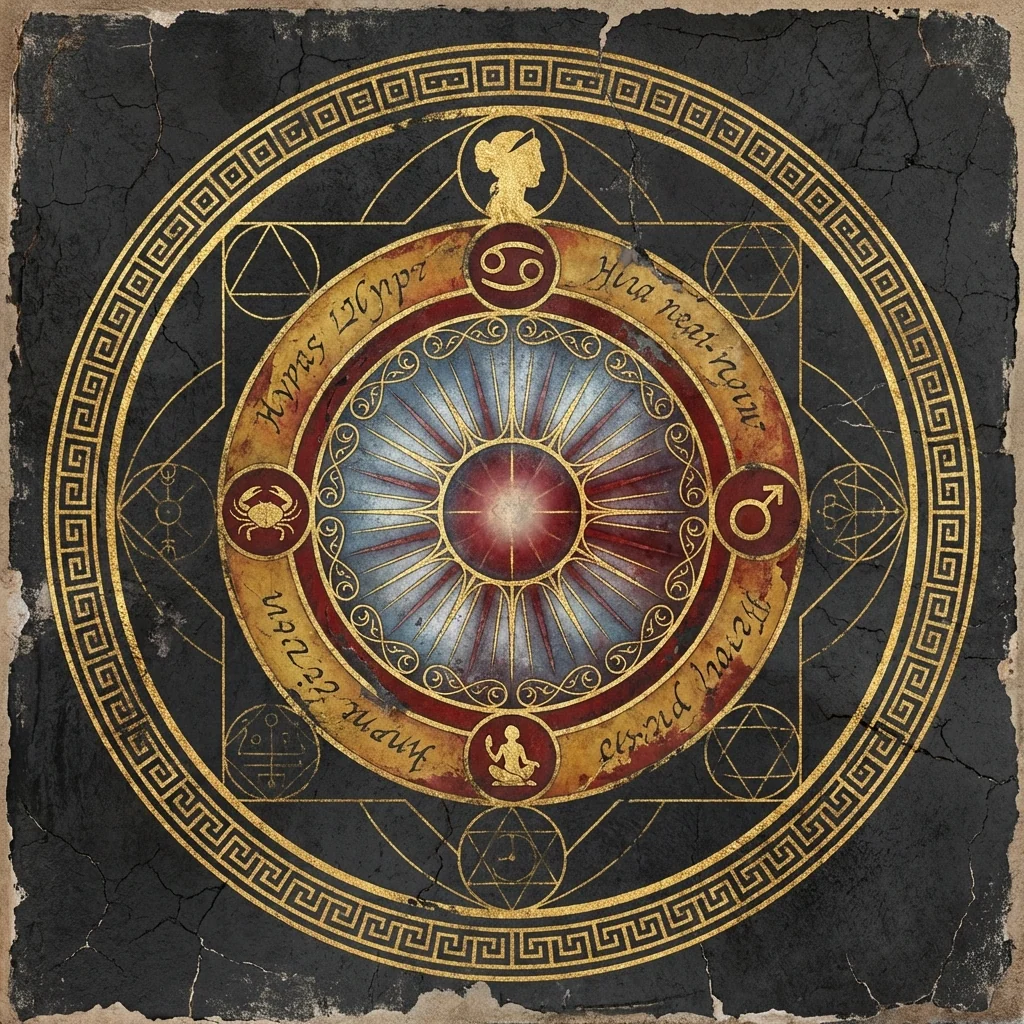
This signature spans from THE MOTHER AND CHILD through A WALLED GARDEN to THE OVERFLOWING CUP—a progression that tells the story of their generational task. In the first decan, Venus and the Moon combine to create the deepest bonds, but Uranus ensures these bonds will not follow traditional patterns. The second decan presents the protected space where new forms of intimacy can develop, while the third reveals the abundance that flows when emotional barriers are dissolved.
The Great Disruption
The Uranus in Cancer generation came of age during the late 1960s and early 1970s, when everything their parents held sacred about home and family was being questioned. But this was not merely rebellion for its own sake—it was a lightning strike of recognition that the nuclear family model was failing to nourish the human soul. They saw through the facade of suburban perfection to the isolation and emotional starvation beneath.
Their parents, shaped by economic depression and world war, had created homes as fortresses against uncertainty. The Uranus in Cancer generation transformed homes into laboratories for human connection. They opened their doors to strangers, shared resources without legal contracts, and created extended families bound not by blood but by choice and commitment to growth.
This generation pioneered the concept that emotional intimacy could exist without possession, that security could be found in flexibility rather than rigid structures. They were the first to widely embrace therapy, to speak openly about childhood trauma, to understand that healing the family meant healing society. Their innovation was recognizing that the mother-child bond, sacred as it is, was just the beginning of what human nurturing could become.
The Revolutionary Kitchen Table
Consider Sarah, born in 1952 with Uranus in Cancer's second decan, A WALLED GARDEN. By 1974, she had transformed her small apartment into a hub for what would now be called intentional community. Every Tuesday, her kitchen table hosted a rotating group of friends, lovers, ex-lovers, and strangers who shared not just meals but the intimate details of their emotional lives. There were no rules about who could attend, no hierarchy of belonging—only the understanding that everyone deserved to be witnessed and fed.
What made this revolutionary was not the communal living itself, but the consciousness behind it. Sarah's generation understood that the walled garden of traditional family had become too small for the human heart. They expanded the walls to include anyone willing to participate in the sacred work of mutual nourishment. Their dinner tables became altars where the ancient bond between feeding and loving was restored to its full power.
When Sarah's parents visited, they were bewildered by the seemingly chaotic household—children with multiple caregivers, adults sharing resources without marriage contracts, decisions made by consensus rather than patriarchal authority. But what they witnessed was actually a return to older, deeper patterns of human organization, adapted for modern consciousness.
Working with the Lightning
If you carry this signature in your chart, or if you seek to understand those who do, the key is recognizing that disruption and nurturing are not opposites but dance partners. The Uranus in Cancer individual is called to revolutionize care itself—to find new ways of creating safety that don't depend on exclusion, new forms of emotional intimacy that don't require possession.
The shadow of this placement appears when the disruption becomes destructive rather than creative—when the rejection of traditional family leads to an inability to commit to any form of stability. The lightning can burn as easily as it can illuminate. The work is learning to channel the electrical charge of insight into structures sturdy enough to support genuine intimacy.
For those seeking to harness this energy, begin by questioning your inherited definitions of security. What if home were not a place but a practice? What if family were not a structure but a verb? The Uranus in Cancer signature calls you to experiment with new forms of belonging, to create containers for intimacy that can expand without breaking.
Practice begins with the recognition that your need for emotional revolution is not a personal failing but a generational gift. You are the bridge between the isolated nuclear families of the past and the conscious communities of the future. Your discomfort with traditional arrangements is not something to overcome but to follow—it leads toward forms of connection your ancestors could barely imagine.
The work requires patience, for true revolution in the realm of Cancer unfolds slowly, like roots growing deeper rather than flames consuming quickly. Trust your instinct to expand the definition of family, to create homes that heal rather than hide, to nurture in ways that liberate rather than bind. This is your inheritance and your gift to the generations that follow.
Your birth chart holds the complete story of how these generational signatures interact with your individual nature. The Book of the Self offers a comprehensive exploration of how planetary placements like Uranus in Cancer express through the unique conditions of your personal astrology, revealing the deeper patterns that guide your path toward authentic expression.